Solar eclipse ‘diamond ring’ as seen from the moon

A little snippet of space-pr0n for ya; last week, the Japanese SELENE/Kaguya lunar orbiter probe shot some video footage of the Earth passing between the Moon and the Sun.

The ‘diamond ring’ effect is only ever seen on Earth on the rare occasion that we witness a total solar eclipse; this is probably the easiest way to see something otherwise incredibly rare (and mind-expandingly awesome, as far as I’m concerned). [via PinkTentacle]

You are reading Futurismic. You find a post about how you imagine the events described in narratives…

406px-Kuniyoshi_Utagawa,_Woman_reading I mostly write novels in third person, although one of my YA novels (Andy Nebula: Interstellar Rock Star) was written in first. Now research has come along that examines how pronouns influence the way we imagine events being described in narratives (Via PhysOrg):

In these experiments, volunteers read sentences describing everyday actions. The statements were expressed in either first- (“I am…”), second- (“You are…”) or third-person (“He is…”). Volunteers then looked at pictures and had to indicate whether the images matched the sentences they had read. The pictures were presented in either an internal (i.e. as though the volunteer was performing the event him/herself) or external (i.e. as though the volunteer was observing the event) perspective.

The results, reported in Psychological Science, a journal of the Association for Psychological Science, indicate that we use different perspectives, depending on which pronouns are used. When the volunteers read statements that began, “You are…” they pictured the scene through their own eyes. However, when they read statements explicitly describing someone else (for example, sentences that began, “He is…”) then they tended to view the scene from an outsider’s perspective. Even more interesting was what the results revealed about first-person statements (sentences that began, “I am…”). The perspective used while imagining these actions depended on the amount of information provided – the volunteers who read only one first-person sentence viewed the scene from their point of view while the volunteers who read three first-person sentences saw the scene from an outsider’s perspective.

So if you really want someone to imagine they’re experiencing the events described in a story first-hand, you need to write in second person. Even with first-person fiction, your readers step outside your narrator’s point of view and imagine things as if they’re viewing it on TV.

Does this presage a vast upswelling of second-person fiction?

I hope not. ‘Cause the one thing the researchers haven’t explained is why second-person fiction is so intensely annoying. Plus it makes everything sound like a Choose Your Own Adventure book.

“You are reading a novel written entirely in second person. You try one paragraph, then a second. Then a third. You get fed up with the constant repetition of the word ‘you’. You swear at the author. You throw the book across the room…”

(Image: Kuniyoshi Utagawa, via Wikimedia Commons.)

[tags]reading, writing, fiction, brain, psychology[/tags]

Cure your cancer by contracting a virus

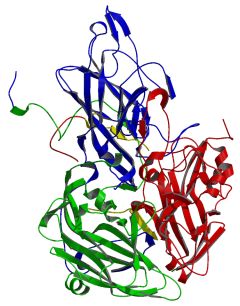
Seneca Valley oncolytic virus structureThe race to find a cure for cancer continues among a number of vectors, the better known of which are chemotherapy and gene therapy. But there are other methods being developed, including oncolytic viruses.

The Seneca Valley Virus is a naturally-occurring (and untweaked) virus which has been shown in clinical trials to be remarkably effective at treating some of the more nasty human cancer types while presenting no threat to the human body itself.

The biggest upside of oncolytic viral treatments is that they can be used on cancers for which there is no viable surgical procedure, though their ability to travel through the bloodstream and work on metastatic cases as well as local ones is good news too. [image from Wikimedia Commons]

First clone of an extinct animal created

While plenty of endangered species have had the honour, the Pyrenean ibex has become the first completely extinct species to be cloned from banked genetic material. It didn’t last long, though:

“We are not especially disappointed for the death of the cloned newborn,” Folch explained in an email, because such deaths in cloning experiments are common.

“We will try to improve the technology in order to increase the efficiency of the cloning process.”

Inevitably, the hand of Michael Crichton reaches out beyond the grave and forces the biologists to reassure us that this isn’t the first step on the road to Jurassic Park. More pertinently, the cloned critter’s death (of respiratory failure) demonstrates that the technology for banging out copies of extinct species is far from perfected.

But it begs the question of which species we should attempt to bring back once we’re able – if any. What should the selection criteria be?

Spiral skyscrapers for our dystopian future

Thought I’d try my hand at io9-style headlines – just for fun, you understand. 🙂

But with valid reason, too – the perforated biomimic skyscraper-arcology design below has been named Dystopian Farm by its creator, Eric E Vergne.

Eric Vergne's Dystopian Farm skyscraper design

Designed for the Hudson Yard area of Manhattan, Eric Vergne’s Dystopian Farm aims to provide New York with a sustainable food source while creating a dynamic social space that integrates producers with consumers. Based upon the “material logic of plant mechanics”, the biomorphic skyscraper is modeled after the plant cells of ferns and provides space for farms, residential areas, and markets. These organic structures will harness systems such as airoponic watering, nutrient technology and controlled lighting and CO2 levels to meet the food demands of future populations.

Vergne’s design is one of many entries in this year’s Evolo Skyscraper Competition, so we can probably safely assume that it’ll never actually be built – which will either disappoint you or make you heave a sigh of relief.

But speculative architecture eventually feeds back into the buildings we end up living in, and the need for sustainable urban food sources is pretty unavoidable. I can think of worse things to clutter a skyline with… but Vergne might want to think about giving it a slightly less grim name should it come to erection time.