Writing the mega-corporation realistically

corporate headquartersJason Stoddard has gotten tired of stories and novels featuring shadowy and nefarious mega-corporations seeking to enslave the globe, and with good reason – it’s just not a realistic or logical thing for a corporation to do, and it’s becoming a modern iteration of the moustache-twirling Snidely Whiplash villain cliché. [image by victoriapeckham]

A corporation doesn’t care if you’re living in a 300 square foot studio apartment or a 6000 square foot McMansion. They don’t want to wipe out the McMansion dwellers, or elevate the studio apartment owners. They only care about one thing: that you buy their stuff.

For everything they do, they’ll have justification. There’s no hidden business plan with a top-line mission statement of “Destroying Civilization As We Know It.”

But there will be hundreds or thousands of decisions, all based on maximizing profit. Substituting cheaper ingredients: maximize profit. Use low-income countries for labor: maximizing profit. Driving smaller competitors out of business: ensuring growth, which maximizes profit. Extending credit to anyone: maximizes profit.

If they can make a bigger profit selling you a “green” condo and a Prius rather than a McMansion and an Escalade, that’s exactly what they’ll do. If they think they’ll make an even larger profit renting you an apartment and leasing you a bike, that’s what they’ll do.

While we’re on the subject of capitalist economics, ethics and prosperity, here’s Matt Ridley at Wired UK explaining why robber barons always end up on top – it’s because they find ways to make things cheaper for you, the consumer:

It’s still happening today. Wal-Mart, Aldi and Ryanair won their market shares by ruthlessly charging us viciously lower prices. And here lies a cause for optimism in the midst of this recession. Even though jobs are being lost, houses repossessed and firms bankrupted, the underlying deflation caused by innovation is still going on – indeed, on the web, it’s accelerating. All over the internet, people are dreaming up ways of making things available to you more cheaply, more conveniently, more copiously and more quickly. That is what will cause prosperity to return one day.

That’s a brave op-ed, given the current econo-political climate, but I suspect he’s at least half right. However, I was somewhat amused to note that Ridley’s masthead note says he was a non-executive chairman for Northern Rock for three years; make of that what you will. 😉
Best way to clean up the environment? Make everyone richer.

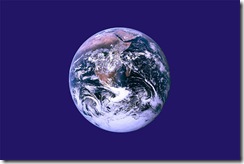
800px-Earth_flag_PD

John Tierney at the New York Times has a couple of predictions for Earth Day:

1. There will be no green revolution in energy or anything else. No leader or law or treaty will radically change the energy sources for people and industries in the United States or other countries. No recession or depression will make a lasting change in consumers’ passions to use energy, make money and buy new technology — and that, believe it or not, is good news, because…

2. The richer everyone gets, the greener the planet will be in the long run.

Tierney acknowledges that that second prediction may be hard to believe with concerns about U.S. carbon emissions and increasing emissions from India and China as they get richer, but he backs it up with data:

By the 1990s, researchers realized that graphs of environmental impact didn’t produce a simple upward-sloping line as countries got richer. The line more often rose, flattened out and then reversed so that it sloped downward, forming the shape of a dome or an inverted U — what’s called a Kuznets curve. (See nytimes.com/tierneylab for an example.)

In dozens of studies, researchers identified Kuznets curves for a variety of environmental problems. There are exceptions to the trend, especially in countries with inept governments and poor systems of property rights, but in general, richer is eventually greener. As incomes go up, people often focus first on cleaning up their drinking water, and then later on air pollutants like sulfur dioxide.

As their wealth grows, people consume more energy, but they move to more efficient and cleaner sources — from wood to coal and oil, and then to natural gas and nuclear power, progressively emitting less carbon per unit of energy. This global decarbonization trend has been proceeding at a remarkably steady rate since 1850, according to Jesse Ausubel of Rockefeller University and Paul Waggoner of the Connecticut Agricultural Experiment Station.

“Once you have lots of high-rises filled with computers operating all the time, the energy delivered has to be very clean and compact,” said Mr. Ausubel, the director of the Program for the Human Environment at Rockefeller. “The long-term trend is toward natural gas and nuclear power, or conceivably solar power. If the energy system is left to its own devices, most of the carbon will be out of it by 2060 or 2070.”

Tierney says the U.S. and other Western countries seem to be near the top of the curve for carbon emissions and ready to start the downward slope. He points out that the amount of carbon emitted by the average American has been fairly flat for twenty years now, and per capita carbon emissions are declining in some other Western countries. Increasing forest land, also a by-product of increasing wealth and better agricultural technology, helps take more carbon out of the atmosphere in richer countries, too, whereas in poor countries, deforestation runs rampant as people seek fuel and farmland.

By this argument, tough restrictions on carbon dioxide emissions from developing countries could actually harm the environment by slowing their economic growth and delaying the point at which they top the curve and reach downward slope.

Tierney finishes with this:

While some American environmentalists hope that the combination of the economic crisis and a new president can start an era of energy austerity and green power, Mr. Ausubel says they’re hoping against history.

Over the past century, he says, nothing has drastically altered the long-term trends in the way Americans produce or use energy — not the Great Depression, not the world wars, not the energy crisis of the 1970s or the grand programs to produce alternative energy.

“Energy systems evolve with a particular logic, gradually, and they don’t suddenly morph into something different,” Mr. Ausubel says. That doesn’t make for a rousing speech on Earth Day. But in the long run, a Kuznets curve is more reliable than a revolution.

(Image: Unofficial Earth Day Flag, Wikimedia Commons.)

[tags]Earth Day, environment, pollution, economy, energy[/tags]

Space-borne solar-powered hurricane killer

Hurricane Reduction System diagramOK, folks, here’s your weird and way-out patent application for the week: a method for destroying or weakening hurricanes by beaming a heat ray at them from an orbital platform.

Maybe it is crazy, but that same company, Solaren, took a first step in that direction this week when it inked a deal with the northern California utility, PG&E, to provide 200 megawatts of power capacity transmitted from orbit in 2016.

That’s just the start though:

By heating up the upper and middle levels of an infant hurricane, they say they could disrupt the flows of air that power the enormous storms. Air warmed by tropical waters flows up through a hurricane and is vented through the eye into the upper atmosphere. Theoretically, you could heat up the top of the storm and lower the pressure differential between layers, resulting in a weaker storm.

Thanks to regular commenter Robert Koslover for tipping me off to that one; I think HAARP just got a serious relegation in the tin-foil hat weather-modification paranoia league. And it makes the Vatican’s planned solar plant look a bit pathetic by comparison, eh? [image ganked from linked article]