All posts by Paul Raven

Welcome to the Networked City

urban anglesAdam “Everyware” Greenfield doesn’t seem to have much luck with editors mangling his articles and essays before publishing them. His misfortune is our gain, however, as it means he ends up putting the originals up on his website, as with “The Kind of Program A City Is“, a piece which appears in a more abridged form in the latest dead-tree version of Wired UK. [image by Barbara L Hanson]

Everyone seems to be writing about urban futures at the moment, be it Chairman Bruce cheerleading the Augmented Reality types (who are working on a technology whose utility is far greater when deployed in urban spaces) or Matt Jones writing the most interesting post that’s apperared at io9 in months. Blame it on whatever you want, but cities are changing fast – indeed, as Greenfield notes, faster than even the people who saw the changes coming ever expected – and we need to prepare for urban spaces that are completely saturated by networked technology:

In the networked city, therefore, the truly pressing need is for translators: people capable of opening these occult systems up, demystifying them, explaining their implications to the people whose neighborhoods and choices and very lives are increasingly conditioned by them. This will be a primary occupation for urbanists and technologists both, for the foreseeable future, as will ensuring that the public’s right to benefit from the data they themselves generate is recognized in law. If we’re reaching the point where it makes sense to consider the city as a fabric of addressable, queryable, even scriptable objects and surfaces – to reimagine its pavements, building façades and parking meters as network resources – this raises an order of questions never before confronted, ethical as much as practical: who has the right of access to these resources, or the ability to set their permissions?

The map is no longer the territory (if it ever was). Next time you see graffiti, recognise it for what it is: the echoed report of the first skirmishes and warning shots in a war for public space which is just about to start in earnest, in multiple cities across the globe and in multiple augmented versions thereof. Let’s just hope that war continues to be fought predominantly with art and commerce rather than knives and guns, eh?

Virtual economies, virtual reputations and virtual business suits

Metaverse office space?Once the hype over Second Life died out, virtual worlds kinda disappeared from the high-profile headlines. But there’s still plenty of stuff going on in the metaverse, not least its use as a test-bed for theories to apply in reality. [image by Ramona.Forcella]
Economics is a popular choice; we’ve reported before on the bank runs and currency collapses of EVE Online, and now Edward Castronova – author of Synthetic Worlds, which should be your first port of call if you’re even vaguely interested in metaverse economics – is leading a team who’re examining the economy of EverQuest II. [via SlashDot]

Researcher Edward Castronova, professor of telecommunications at Indiana University, said researchers can learn almost anything about human society in games as they really are human societies.

However unlike real society they can be observed and tweaked.

“We can do controlled experiments in virtual worlds, but we can’t do that in reality,” said Castronova.

“Controlled experimentation is the very best way to learn about cause and effect. We are on the verge of developing that capacity for human society as a whole.”

[…]

After studying 314 million transactions within the fantasy world of Norrath in “EverQuest II,” including trading in-game goods like armor, shields, leather, herbs and food, the researchers were able to calculate the GDP of one of the game servers (the back-end computer that hosts thousands of players in one world).

As more people opened accounts and flocked to Norrath, spending money on new items, researchers saw inflation spike more than 50 percent in five months.

Game economies are, much like real economies, predicated on more than just a currency. Reputation scores are a big part of game economies (and many social networks, too), but the problem with “karma” systems is that they’re usually implemented in a way that renders them pointless, and which leads to the formation of in-game “mafias” [via BoingBoing]:

There can be no negative public karma-at least for establishing the trustworthiness of active users. A bad enough public score will simply lead to that user’s abandoning the account and starting a new one, a process we call karma bankruptcy. This setup defeats the primary goal of karma-to publicly identify bad actors. Assuming that a karma starts at zero for a brand-new user that an application has no information about, it can never go below zero, since karma bankruptcy resets it. Just look at the record of eBay sellers with more than three red stars-you’ll see that most haven’t sold anything in months or years, either because the sellers quit or they’re now doing business under different account names.

A different (though related) kind of reputation will be bothering the business crowd, however, and the Gartner firm of analysts is convinced that in less than five years, 70% of businesses will have issued avatar dress-codes to their employees [via SlashDot]:

“As the use of virtual environments for business purposes grows, enterprises need to understand how employees are using avatars in ways that might affect the enterprise or the enterprise’s reputation,” said James Lundy, managing vice president at Gartner, in a statement.

“We advise establishing codes of behavior that apply in any circumstance when an employee is acting as a company representative, whether in a real or virtual environment.”

This puts me in mind of a recurring motif in William Gibson’s novels, where he repeatedly makes the point that the most powerful and resource-rich virtual environments will be the ones that look subtle and understated, while the low-budget hucksters will dress to impress with excessive bling and extravagant eye-candy. The subtle grunge and mundane decay of reality is harder to simulate than grandiose overstatement; as in real life, it’ll be wise to tread lightly around the ostentatious.

Not interested in playing games or doing business in the metaverse? Well, you could always go learn to speak a dying language.

How dangerous could a hacked robot really be?

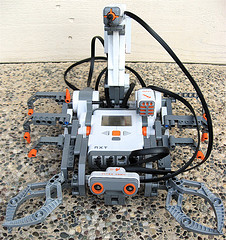
Robot scorpionThat’s the question SlashDot posed as they relinked to a research study at Washington University’s the University of Washington Computer Science & Engineering department entitled “A Spotlight on Security and Privacy Risks with Future Household Robots: Attacks and Lessons”, which reports on the potential for currently available household robots being hacked and exploited by malicious (or simply pranksome) third parties. [image by jurvetson]

Q. What robots did you study?

The RoboSapien V2, the Rovio, and the Spykee. Our versions were purchased in or before October 2008.

Q. Are you saying that I shouldn’t purchase one of these robots?

No. We are saying that there are security vulnerabilities relating to the specific versions of the robots that we studied. Any purchase decision will necessarily be made based on many factors, only one of which might be the vulnerabilities we identified. You may conclude that despite the vulnerabilities, one of these robots is right for you. In addition, we studied only three specific versions of the RoboSapien V2, the Rovio, and the Spykee. We have no reasons to believe that comparable robots from these or other manufacturers are more or less secure than the ones we studied.

Obviously the idea of your RoboSapien running amok in your absence is an admittedly minor worry – you’re unlikely to suffer more than chipped skirting boards or table legs. But looking just a little further ahead, the Washington crew are making a lot of sense; household bots are likely to become more prevalent pretty quickly, in direct proportion with their ability to do genuinely useful (or destructive) stuff. Security is rarely a high concern in consumer electronics, and the relentless ubiquity of spam is clear proof that you can’t realistically expect the average user to take adequate precautions either… so what seems like a bit of a gag now will probably be headline stories within a decade.

And it’s not just the household where the robot population is increasing – the damned things are cropping up everywhere, in all sorts of shapes and sizes and with all sorts of capabilities. Take, for example, the swarm of robotic bees that Harvard researchers are developing:

Harvard researchers recently got a $10 million grant to create a colony of flying robotic bees, or RoboBees to among other things, spur innovation in ultra-low-power computing and electronic “smart” sensors; and refine coordination algorithms to manage multiple, independent machines.

So, how dangerous could a hacked robot really be? Well, do I have any volunteers to enter that swarm of angry and compromised robotic bees?

Didn’t think so. 😉

Send Uncle Warren money for a death ray… or maybe this other guy

TubeSatSo, d’you remember us mentioning the TubeSat company back in summer? Y’know, the outfit from whom you can buy a one-shot tubular satellite from for only US$8,000 – the people at H+ Magazine gave them a good grilling last month, too.

Well, Warren Ellis certainly noticed, and he’s now in this month’s issue of Wired UK, begging for money with which to launch his own death ray.

So if you fancy arming the High Curmudgeon of comics with Terrible Implements of Space-borne Pain and Death, you know what to do – though I dare say he’d just as rather you bought some of his books. If, however, you’d rather fund a slightly more peaceful TubeSat deployment, you might be interested in taking a look at Drake Pool’s “Space Now” Kickstarter project.

Drake emailed earlier this week to say that he spotted the TubeSat story here at Futurismic a few months back, and it inspired him to get a project together. Not surprisingly, he can’t just rustle up eight grand out of nowhere, so he’s doing a crowdsourced microfunding drive whereby you can buy small chunks of the available payload space. And he doesn’t really mind what you do with it, though he suggests using the capability to broadcast a signal to a particular geographical section of the planet:

… in polar orbit the satellite will cover a vast amount of the earth’s surface. This means you will be able to broadcast your message to a geographically relevant region of the planet. With the power of mathematics, we can determine where the satellite will be at a given time. Think of the possibilities!

  • Say hello to your friend in Sweden!
  • Play 80s speed metal for people in Australia!
  • Send your PGP key to Spies in China!

I’m sure there is hundreds of things you can do with this. I can’t wait to see.

I’m sure playing 80s speed metal at people who aren’t expecting it qualifies as a “cruel and unusual punishment”in some countries… but hey, that’s your lookout. Drake suggests you could also send very small objects up on the satellite, so if there’s somethign lurking around the house (or even your body) that you feel deserves to go out in the ultimate blaze of glory and burn up on re-entry into the Earth’s atmosphere, dig it out and get clicking.

Whether you decide to invest or not, kudos to Drake for going that one step further than the rest of us who just thought “wow, what could you do with one of those?” and forgot about it. That’s the entreprenurial spirit, right there. 🙂

Happiness is an amorphous beige robotic caterpillar

Funktionide by Stefan UlrichPart of the contract for the flat I rent states that I’m not allowed to keep pets, and there are plenty of other folk in the same situation. Plus pets are expensive – food, vet bills and so on – and demanding of your time. How might one get all the psychological benefits of pet ownership – the sense of affection and companionship, the amelioration of loneliness – without running into those obstacles?

German designer Stefan Ulrich has a solution in the form of Funktionide, a conceptual piece based around electroactive polymers acting as artificial muscles to embody a large amorphous shape-shifting object which will create the illusion of living company. [via PosthumanBlues]

The more design blogs I follow, the more I suspect I understand the motives behind conceptual projects like this… meaning that I suspect Ulrich has fully intended the Funktionide to be more than a little creepy and melancholic. Observe:

The notion of robotic pets – whether truly mimetic or otherwise – is at least as old as science fiction itself, of course. The main snagging point I have with Ulrich’s ideas is that I’m not sure loneliness will be one of the biggest problems in the near future, at least not for most people. It seems certain that our future is a predominantly urban one, which to me implies shared living spaces for the majority of people – it’s cheaper and more efficient, after all. Ulrich’s vision of this poor lonely chap in his spacious and stark white apartment doesn’t entirely match up with my own ideas about the singleton lifestyles of the next few decades…. what do you reckon?