 Last November, Public Radio International’s Here and Now broadcast a news story about the U.S. Army’s 1,000-square-mile National Training Center at Fort Irwin, in California’s Mohave Desert — an urban warfare simulator now being used to train soldiers bound for the real Iraq. Now a documentary film about the site, Full Battle Rattle, follows an Army battalion and role-playing insurgents “as they attempt to quell an insurgency and prevent Medina Wasl, a mock Iraqi village, from slipping into civil war.” Fake body parts, robot mannequins, costumed American and Iraqi actors, and Killed In Action cards are all part of the mix.
Category Archives: Blog
Editorial: in the interests of transparency
Running Futurismic is a big responsibility – not because anyone makes it that way for me, but because I chose to take it on and make it the kind of science fiction site I wish there were more of. This applies very much to content, but extends to certain ethical considerations as well.
I’m a great believer in transparency as a guiding principle; I’m not obliged to explain myself or my editorial policies, but there are times I feel it’s the right thing to do – and recent events on better-known sites have demonstrated that it’s best to be upfront about anything that might be considered controversial by our readers.
Futurismic‘s Fiction sidebar entries are there to show support for other web publishers, large and small. In the absence of a huge (or even small) pot of money to donate to them, I support them by linking to them – it’s the baksheesh of the internet.
I don’t judge the sites on the quality of their fiction or their presentation; that’s a choice for you the reader to make for yourself. That they’re down here in the trenches putting blood, sweat, free time and eyestrain into publishing writers and giving readers fresh sf content is enough for me. That fits with my ethics for people who deserve what little support I can provide.
But I won’t support a site whose guiding ethics and attitudes I find myself repulsed by. Hence I’ve removed a certain site from the sidebar, and will be expunging all other links to it from Futurismic‘s content. If you want to know why, this will explain it.
Mind over matter – the future of remote control
 Controlling mechanical and electronic devices with nothing but the power of your own thoughts is a science fiction trope almost as old as the genre itself, and like many other tropes it’s edging towards plausibility at quite a speed. [image by mize2oo5]
Futurismic has mentioned brain–computer interfaces a few times before, and the essential framework of the technology is fairly well established. However, the high costs involved mean that beyond research and rehabilitation there aren’t many truly practical applications right now.
But that’s not stopping the researchers thinking big, as in this Popular Mechanics article:
“… the research is showing that the brain can act independently of the body. One day, you could be sitting in an office and controlling a device from across the room—or in another building. And it’s not just flicking a switch. It could be a nanotool that’s moving through a tiny environment, and you can control it and see what it’s seeing.”
So, great news for the prospect of telecommuting – almost all manufacturing jobs could be done from the comfort of your armchair, for example. The flipside being, of course, that it would make offshore outsourcing an even more viable option than it is now. [story via SlashDot]
The Colors of Antiquity
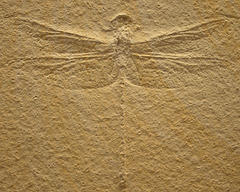 Can you imagine what the extinct birds of millions of years ago looked like? How big were they? Do they look like the birds of today? What colors were they? The first two questions are easily answerable by fossil records, but the third one is a bit more difficult, unless you have a time machine handy. But US researchers believe they’ve come a bit closer to solving the problem:
Writing in the journal Biology Letters, US researchers reveal how ancient feathers found in Brazil displayed “striking” bands of black and white. Previously, fossil experts could only guess at the range of hues exhibited by ancient birds and some dinosaurs.
To find an answer they had to look at behavioural and genetic clues:
There are particular cells that cluster into the dark areas of modern birds called melanosomes. Somehow the melanosomes are retained and replaced during the preservation process and hence you preserve a very life like representation of the colour banding in the fossils.
And also:
The Yale team believe they could identify brown, red, buff and even iridescent colours. The technique may be applied to other creatures to reveal the colour of fur or even eyes, the team believes.
This news reminds me of an SF story called The Color of A Brontosaurus, which speculates somewhat on the same subject matter.
The future of social networking
Where is social networking going exactly? Will Facebook still exist in a recognisable form in 100 years? (I’d say certainly not). Some people are of the opinion that “social networking” is a con designed to persuade people to part with marketable information:
Perhaps [people will] realise that web 2.0 is not there to “connect you with the people around you” and not about some pseudo-academic “social graph”. That’s the bait. The switch is the big data centre pumping adverts based on your age, where you live, who you’re friends with, what you like doing for fun, your politics and your grandmother’s shoe size.
This leads to many interesting debates about who owns the data held on social networking websites, and how much the whole shebang is worth.
 The problem with exponential growth and constant change is that you can’t tell if something is a flash in the pan or a long term trend.
It seems likely that people will continue to use communication networks to socialise, but that they will become less tied to a particular social networking website, given the systems produced by companies like Plaxo, which (if their guff is to be believed ) allows you to integrate stuff belonging to you and your friend’s from other social networks into one area.
[stories from Technology Review and The Register][image from luce legay on flickr]