Category Archives: Blog

Researchers develop new nanowire computer memory 1,000 times faster than Flash

tube_small.jpg

While researchers at IBM’s Zurich Research Lab have devised a way to print particles as small as 60 nanometers in diameter using conventional lithography techniques, scientists from the University of Pennsylvania have used self-assembly, a process by which chemical reactants crystallize at lower temperatures mediated by nanoscale metal catalysts, to spontaneously form nanowires that were 30-50 nanometers in diameter and 10 micrometers in length.

The University of Pennsylvania scientists used germanium antimony telluride, which is a phase-changing material that switches between amorphous and crystalline structures. These phase-changes can be used to store data. The scientists were able to demonstrate a memory device that showed extremely low power consumption for data encoding (0.7mW per bit) while writing, erasing and retrieving data 1,000 times faster than conventional Flash memory. Tests also indicated the device would not lose data even after approximately 100,000 years of use. This all has the potential to realize a terabit-level nonvolatile memory device.

Dirty water in, clean water out

Lifesaver water purification bottle The Lifesaver is a water bottle–but not just any water bottle. Through "an advanced ultra-filtration membrane that incorporates a high specification carbon block" it can convert dirty water to clean in a matter of seconds–you put in the water, pump it through the filter a few times, then drink. The cartridge is supposed to be able to filter out waterborne pathogens and eliminate bad tastes and odors, too. The replaceable cartridge has a filtering capacity of 4,000 to 6,000 litres, so it’s not short-lived: 700 litres is a year’s supply of water for one person. The military is interested, naturally, but an even more important application would be to supply clean drinking water after disasters such as the Boxing Day tsunami in 2004 or Hurricane Katrina: instead of distributing bottled water, you could distribute bottles that clean the water that’s at hand. And even in the absence of disasters, access to clean water is a worldwide problem.

Hmmm. My daughter’s water bottle is starting to smell funny. Maybe I should be getting her one of these…

Or maybe the Lifestraw is the way to go. It’s a plastic pipe filter 25 centimetres long and 29 millimetres in diameter that costs just a few dollars and can purify up to 700 litres of water.

A word of advice, though: when giving a Lifestraw to a suffering disaster victim, find a different way to instruct him in its use than telling him to "suck it up."

(Via Gizmag.)

(Photo from Gizmag.)

[tags]water,disaster relief,technology[/tags]

Often ill? Maybe you’re not seeing the light.

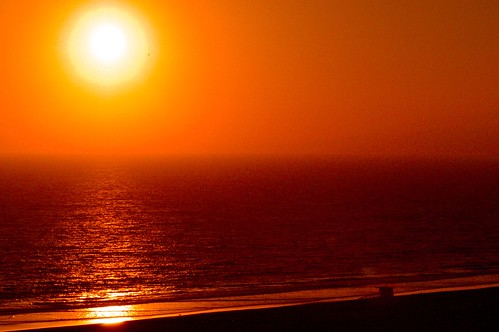
Sunlight - man's best friend?

{Photo taken by StewartJames on Flickr Creative Commons}

A very interesting article in the Independent yesterday talked about a new study on the effects of vitamin D on health. The study by the Institute of Oncology in Milan and Lyon’s International Agency for Research on Cancer was the biggest ever to be done on the nutrient and found that it had a much bigger impact of health than previously thought.

90% of the vitamin D we receive is not from food but from absorbing sunlight on open skin. A solid dose of sunlight a few times a week was found to reduce mortality by 7%. Even taking pills filled with the vitamin can reduce the risk of cancer, MS and heart disease by as much as a half. Even Autism and Diabetes have links to Vitamin D deficiency. So perhaps the best thing you can do to save your life is to take that walk in the park on a sunny day.

Interestingly, the amount of sunlight needed is quite strong so winters in the UK, for example, are barely strong enough to give a good dose – the cause of countless flu seasons and the infamous Seasonal Affective Disorder (SAD) . Aside from supplements, light therapy with very bright lights is thought to help.

[via the independent]

Slideshow shows a world without us

A World Without USOne of my favorite settings for science fiction is after the fall of Man. You know the one, where cities are deserted, weeds growing up through the streets, etc. Occasionally there are humans eking out a living, but they are no longer dominant. Yeah, that kind. Well, a book that came out recently, The World Without Us, imagines what would happen environmentally if humans just vanished from the face of the earth. I prefer humans to still be around in my stories, but this concept is fascinating.

If you scroll down on the website’s main page, you’ll find an artist’s rendition of New York between 2 days and 15,000 years after the disappearance of humanity. According to the book’s author, the subways would flood after only three days, after twenty years streets would collapse and rivers would form in the space left over.

Meanwhile, I’m waiting for the post-nuclear holocaust genre to pick back up.

[image from mondolithic.com]