 Ken MacLeod points to a visually arresting web-essay called Star Wars: A New Heap, or, How I Stopped Worrying and Learned to Love the Death Star that highlights connections between architecture, design, movie SF and art:
Lucas envisioned a World of Tomorrow dominated by black, white, and gray; hard-edged, massive, and inorganic forms, covered with a salty acne of apparatus.
The film’s visual program was a departure from the saucers and occasional capsules writ large that sci-fi audiences had grown accustomed to, but its colorless symmetrical ships should have been recognizable to at least a small portion of its audience—those familiar with contemporary art.
…
Lucas hired so many members of Kubrick’s team that their subset of the Star Wars crew was dubbed “The Class of 2001.” But he borrowed selectively. Kubrick’s 2001 environments were cohesive and balanced, informed by architectural theory and late-’60s aesthetics; they upheld the distinction between the astronaut modernists and the alien minimalists.
By contrast, Lucas willfully mashed together minimalism, modernism, and NASA design. Two visual rhetorics are at war on-screen: The first is that of an industrial superpower; the second is that of a rogue fringe of misfits and mismatches.

 What do you get when you combine thin sheets of gold leaf and a protein found in spinach? You get
  It’s almost as if – despite our advancing technologies – all the health risks we considered dead and buried are coming back again. You’ve probably already heard about
 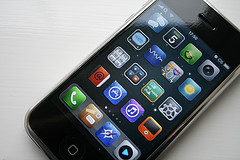 Hey, you – yeah, you with the iPhone. Wanna do something more interesting than pretend to check your mail while you’re on the bus? Genre publishers Pan Macmillan obviously think you do, and have taken the remarkably forward-looking choice of