
Graphene ultracapacitors

hexagonsMore developments in the field of ultracapacitors, this time using graphene (like a single layer of the graphite molecule, apparently), from researchers at the University of Texas:

“Through such a device, electrical charge can be rapidly stored on the graphene sheets, and released from them as well for the delivery of electrical current and, thus, electrical power,” says Rod Ruoff, a mechanical engineering professor and a physical chemist. “There are reasons to think that the ability to store electrical charge can be about double that of current commercially used materials. We are working to see if that prediction will be borne out in the laboratory.”

My understanding is that a key part of solving the two problems of anthropogenic climate change and the depletion of primary energy resources involves finding new and more efficient ways of storing energy.

Ultracapacitors are on option, synthetic petrol is another, or hydrogen fuel cells.

It will be interesting to see which technology (if any of these) becomes dominant as a means of storing energy.

[story from Physorg][image by procsilas on flickr]

An epidemic of fear – or, why terrorism and witchcraft are surprisingly similar

panic buttonLiving in a constant state of fear is not good for your health on an individual level. But scale up to the level of entire towns, states or countries, and the problem can be exacerbated by the psychology of mob behaviour. [image by krystenn]
According to documents from the Department of Homeland Security, not only is it possible for fear of terrorism to create a contagious psychosomatic epidemic, but it’s also already happened a couple of times – in the US and elsewhere.

Now, that may not be surprising in and of itself. But take a look at some of the comment reactions on this BoingBoing post about a riot in the Congo that was triggered by accusations of witchcraft; quite a few people find it ridiculous that anyone could be scared of witchcraft at all, let alone riot because of it.

And in our world, that’s probably true… but what we fear is a function of the culture we live in. The people of the Congo can blame their witchdoctors and priests for their irrational fears; I suspect our Western paranoia comes from an entirely different sort of story-teller.

More political science: Misinformation keeps on working

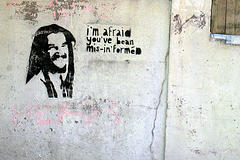
misinformedA body of studies promises to explain a lot. In politics, people are willing to believe misinformation that reinforces their beliefs. And correcting misinformation sometimes seems to reinforce it.  Examples exist from both major U.S. parties, so let’s pick on the Democrats for a change:

[Yale poli-scientist John] Bullock found a similar effect when it came to misinformation about abuses at the U.S. detention facility at Guantanamo Bay, Cuba. Volunteers were shown a Newsweek report that suggested a Koran had been flushed down a toilet, followed by a retraction by the magazine. Where 56 percent of Democrats had disapproved of detainee treatment before they were misinformed about the Koran incident, 78 percent disapproved afterward. Upon hearing the refutation, Democratic disapproval dropped back only to 68 percent — showing that misinformation continued to affect the attitudes of Democrats even after they knew the information was false.

[story tip: dday; image: Glutnix]

United States of Mind: Is geography personality?

agree

A new study says personality traits vary by region in the U.S (pdf). Here’s the map for niceness. Minnesota’s score does not surprise me (assuming there’s anything to this at all, of course). The study also maps openness, extraversion, neuroticism, and conscientiousness (and it’s surprising to see my adopted state of Arizona scoring so high there). Color maps next time, please, professors. Actual marketing people need these.

[Tip: Andrew Sullivan; image: Rentfrow et al.]

That’s no moon…

an_unidentified_objectHubble-using astro-boffins have seen something they don’t recognise in the boundless worlds of space:

The object also appeared out of nowhere. It just wasn’t there before. In fact, they don’t even know where it is exactly located because it didn’t behave like anything they know. Apparently, it can’t be closer than 130 light-years but it can be as far as 11 billion light-years away. It’s not in any known galaxy either. And they have ruled out a supernova too. It’s something that they have never encountered before. In other words: they don’t have a single clue about where or what the heck this thing is.

That’s a pretty big margin of error! Also check out the paper itself (via Sky and Telescope).

I was surprised to discover, whilst reading Bill Bryson‘s brilliant A Short History of Nearly Everything how difficult it is to ascertain astronomical distances precisely, and how much brain work and observation goes into it.

Anyway I’d love to find out what this is (an OCP perhaps?). Such excitement!

[from Gizmodo][image is credited to Kayle Barbary and others]

Presenting the fact and fiction of tomorrow since 2001