Transgender pregnancy

Here’s another bioethics question that’s probably no less contentious than the deaf baby issue. Thomas Beattie is legally married to a woman called Nancy. Nothing unusual there; what’s unusual is that Thomas is transgender – he’s now legally counted as a man, but was previously female. So far, so good.

Now the tricky bit – Thomas is pregnant.

“Sterilization is not a requirement for sex reassignment, so I decided to have chest reconstruction and testosterone therapy but kept my reproductive rights. Wanting to have a biological child is neither a male nor female desire, but a human desire.”

In this instance, I find my own attitudes very clear cut – I have no problems with this at all. But I imagine the anti-gay-marriage crowd will be pretty upset about it, which brings us to a question familiar to transhumanist thinkers and readers of feminist science fiction alike – is “gender” a function of genetics, of psychology or of society? [via BoingBoing]
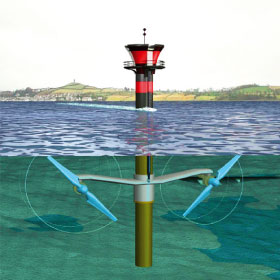

The Independent reports on the rise of British Sea Power

SeaGen has been running in Plymouth since 2003 and is looking to expandAs well as a popular indie band, British Sea Power is rapidly becoming more accepted as a valid alternative to nuclear and fossil fuel energy. Whereas the nuclear proponents in the UK civil service have previously neglected the sector (as London Mayor Ken Livingstone explains to Radiohead’s Thom Yorke in this week’s Observer Magazine), a number of companies in the UK have made great advances in harnessing the power of the oceans despite the lack of enthusiasm at government level.

The water around the British Isles makes it a key resource and as the Independent explains, could account for huge percentages of the electricity demand of the country. With a feasibility study into the Severn Barrage underway and products like SeaGen and Pelamis coming into use, it seems like the tide might be turning in more ways than one. Nuclear energy will undoubtedly be a factor in the UK’s future energy use but with such a huge resource sloshing around our coastlines it would to take advantage of this clean and renewable power source.

[picture by SeaGen]

Friday Free Fiction for 21st March

This will be fairly brief, I’m afraid, as I’m currently soaking up the atmosphere at Eastercon, and working on this post is eating into precious bar conversation time … 😉

***

From Manybooks.net:


***

Everyone has been linking to "Wikihistory" by Desmond Warzel, but that’s all the more reason to go and read it.

***

"Dexterity" is the third episode of Shadow Unit, this time by Sarah Monette.

***

John Joseph Adams has dropped M Rickert‘s "Bread and Bombs" on the Wastelands Anthology website.

***

James Bloomer has a story at Every Day Fiction this week – "The Paths You Would Walk"

***

Finally, there’s a few scattered examples of Friday Flash, but most of us are off-duty at Eastercon this week I’m afraid. Still, you get:

***

That’s your lot for this week, folks -enjoy the holiday weekend!

Combining computing servers with alternative energy

Could servers only be used when the wind blows nearbyThe Guardian has this interesting snippet of an article that makes sense to me on so many levels. Professor Andy Hopper of the University of Cambridge has been looking at the power usage of computers and made an astute suggestion: locate large processing servers near sources of alternative energy like solar or wind farms. When the power is flowing through the turbine or photovoltaic, computers all around the world can tap into the processors of the server farm. When there’s no wind or sun in one location, the network can call on the processors of somewhere there is.

This kind of synergy is fascinating and I think it’ll be a major feature in our future working lives. Flash drives getting bigger, faster and cheaper all the time and programs like Portable Firefox run straight off a portable drive. I’m writing this post on my portable usb, using only the processor and screen of the laptop I’m borrowing time on. Sooner or later all our computers will be a usb-style stick with all our programs, data and settings stored on it. Plug it into a nearby screen (or project your own), whack out your laser keyboard and dial into any heavy processing power from an external server. Who needs a big computer tower in your room when you can fit it in your pocket?

[story via the Guardian, image by Brent Danley]

Boulder, Colorado – smart grid city

electric ultility pylon What the hell is a “smart grid city”? [via Worldchanging]

Well, maybe you could call it “Infrastructure2.0”, but whatever you call it, it’s a new (and hopefully more sustainable) way of looking at the issues of providing utilities to urban areas. According to Xcel Energy:

“The next-generation electricity grid will allow our company to better meet growing demands, address environmental challenges, maximize available resources and optimize the entire energy system. Ultimately, a “smarter” grid helps us serve our customers by creating more options for managing personal energy use, habits and costs.”

All hot air and sales jargon, you might be thinking. Well, Xcel seem to be walking the walk as well talking the talk – they’re going to make Boulder, Colorado into their first Smart Grid City, with the first phase predicted for completion this August. [image by tanakawho]

I’m pretty pleased to see the energy industry acting on these sorts of ideas instead of just paying them lip service, and I hope something similar starts appearing over here in the UK. Perhaps where Xcel leads, others will follow and surpass.

Presenting the fact and fiction of tomorrow since 2001