Tag Archives: currency

Iceland’s economy is dependent on imaginary space pirates

EVE Online screenshotCourtesy of Jamais Cascio, here’s just another reminder of the fact that we live in a very strange world that gets stranger by the day. Point in case: the wrecked economy of Iceland is less real that that of the online space RPG EVE Online:

The in-game currency of EVE Online is the ISK. That’s right, the Icelandic króna. And where most multiplayer games have attempted to ban the translation of in-game assets to and from real-world money, EVE Online has not only permitted it but actively embraced it – so much so that daily speculation on world/game financial leverage is conducted openly on the official game web boards. As a result, the EVE Online ISK has remained fairly stable against virtually all the real currencies of the world for a few years now, fluctuating but not spiking, not crashing. There are people out there making an income, a real-life income, just handling the trades on the “floor”.

All of which is to say: Iceland has collapsed so thoroughly that at this point, it’s only economically viable export may very well be an internet spaceship game, and that internet spaceship game’s króna is for all intents and purposes a more real and valid and valuable currency than the actual country’s actual money.

Strange stuff is afoot in the Global Village, no? [image by Psycho Al]

Rushkoff on the economy: “let it die”

restaurant pricing - the credit crunch modelUnsurprisingly, everyone everywhere is talking about the economy. The usual twist on the topic is to ask “how can we fix it?”, but Douglas Rushkoff would like to suggest that the global financial collapse is a blessing in disguise and that we should just let it die, as it gives us a chance to reassess the assumptions that our monetary systems were built upon:

… it’s even more important for us to come to grips with the fact that the system in peril is not a natural one, or even one that we should be attempting to revive and restore. The thing that is dying—the corporatized model of commerce—has not, nor has it ever been, supportive of the real economy. It wasn’t meant to be. And before we start lamenting its demise or, worse, spending good money after bad to resuscitate it, we had better understand what it was for, how it nearly sucked us all dry, and why we should put it out of our misery.

His point is that, at every level, the system was designed to benefit those who set it up at the long-term expense of everyone else – it’s almost miraculous it’s lasted as long as it has:

An economy based on an interest-bearing centralized currency must grow to survive, and this means extracting more, producing more and consuming more. Interest-bearing currency favors the redistribution of wealth from the periphery (the people) to the center (the corporations and their owners). Just sitting on money—capital—is the most assured way of increasing wealth. By the very mechanics of the system, the rich get richer on an absolute and relative basis.

The biggest wealth generator of all was banking itself. By lending money at interest to people and businesses who had no other way to conduct transactions or make investments, banks put themselves at the center of the extraction equation. The longer the economy survived, the more money would have to be borrowed, and the more interest earned by the bank.

Just in case you think Rushkoff’s a sneaky pinko or something, it’s worth considering that he’s an advocate of local economies and currencies, and opposed to any form of centralised control; even if you don’t agree with what he has to say, he raises some talking points that we’d all do well to at least consider. As he points out, we may not get another opportunity… and you know what they say about life handing you lemons. [image by Cory Doctorow]

But what do you think? Should we build a new world where value is produced by actual effort, or can the financial system be fixed to ensure we don’t all strive for the profits of a few?

More bartering business

barter at a car boot saleIf you think your local economy’s in a mess, just be thankful you’re not living in Russia, where it appears that big corporations are turning to barter trade in a desperate attempt to keep business moving:

So far, economists doubt that barter will grow to the level it reached in the 1990s. Earlier in the transition to a market economy, industrialists still had little monetary stake in their businesses but were dependent on the prestige that went with executive positions, said Andrei Yakovlev of the Higher School of Economics here. They had little incentive to cut costs, and barter deals kept them going for five years, he said.

Now, business owners and managers “are really trying to reduce costs and reduce inefficiency,” Mr. Yakovlev said. Interest in barter, he said, is more likely to come from regional governments, which have the most to lose from high unemployment.

Local government moving towards barter is a little scary… but then a bit of decentralisation might not be a terrible thing if it means that, in the long run, the system becomes more resilient to global clusterfucks like the subprime collapse.

Meanwhile, there are other comparatively recent examples of communities surviving without the assistance of banks – the Irish bank strike of the early seventies, for example. And the sheer amount of coverage being given to alternative currencies and financial systems in places where economics is not traditionally the foremost subject of interest speaks volumes for the overnight erosion of trust in banking as we know it. [image by shawnchin]

What will we build in its place as we move into John Robb’s global guerilla century?

Recession-proof industries: gold-farming

World of Warcraft gold vaultWhile meatspace endures lay-offs and plummeting valuations, it seems that there’s still plenty of life left in the virtual currencies business – an MMO gold-farming site has just been snapped up for US$10 million. [image by fernashes]
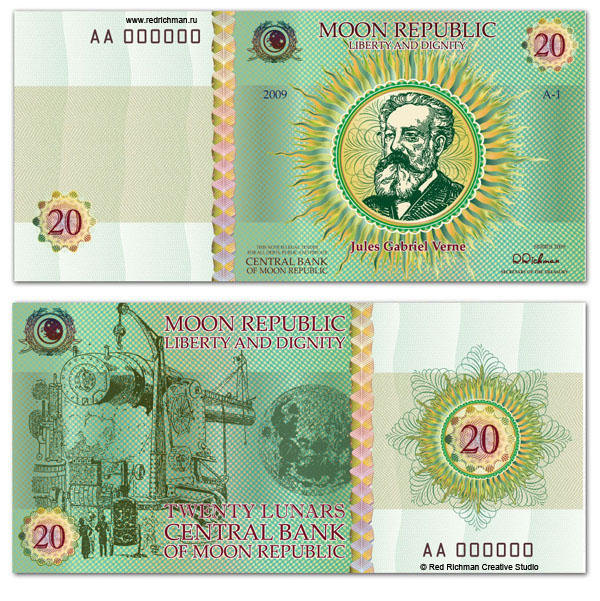
Gold-farming is an interesting business phenomenon for many reasons, not least of which is the fact that it deals in completely intangible goods. But it’s also out on the edge of legality when you consider the exploitative methods used to accrue the gold and items that are traded, and for most MMOs it’s against the rules to trade in in-world items beyond the game’s confines.

But it’s even more interesting to see the gold-farming market riding high while the real-world markets are tumbling, because it implies the two systems are connected but separate. Perhaps in the near-future people will be able to ride out the rough times by shifting their work into the virtual domains?

If we have any economists in the audience, I’d really welcome your input on this story; the interaction between real and virtual economies is as fascinating as it is baffling to me.