 As Cory Doctorow’s new novel Makers is being serialised over at Tor.com, reality seems to be doing its best to catch up with the ideas he’s based it upon.
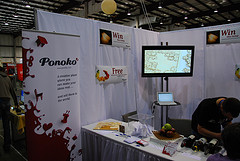
Fabbaloo points us to the 100kGarages.com project, a collaboration between citizen-fabbing startup Ponoko and the CNC router company ShopBot that aims to distribute the actual printing-out of people’s designs to a network of small “garages” – small local shops with the necessary hardware to handle the designs as developed by customers at Ponoko. [image by CabFabLab]
These new technologies make practical and possible doing more of our production and manufacturing in small distributed facilities, as small as our garages, and close to where the product is needed. Most importantly our new methods for collaboration and sharing means that we don’t have to do it all by ourselves … that designers with creative ideas but without the capability to see their designs become real can work with fabricators that might not have the design skills that they need but do have the equipment and the skills and orientation that’s needed to turn ideas into reality … that those who just want to get stuff made or get their ideas realized can work with the Makers/designers who can help them create the plans and the local fabricators who fulfill them.
[…]
To get this started ShopBot Tools, Makers of popular tools for digital fabrication and Ponoko, who are reinventing how goods are designed, made and distributed, are teaming-up to create a network of workshops and designers, with resources and infrastructure to help facilitate “rolling up our sleeves and getting to work.” Using grass roots enterprise and ingenuity this community can help get us back in action, whether it’s to modernize school buildings and infrastructure, develop energy-saving alternatives, or simply produce great new products for our homes and businesses.
There are thousands of ShopBot digital-fabrication (CNC) tools in garages and small shops across the country, ready to locally fabricate the components needed to address our energy and environmental challenges and to locally produce items needed to enhance daily living, work, and business. Ponoko’s web methodologies offer people who want to get things made an environment that integrates designers and inventors with ShopBot fabricators. Multiple paths for getting from idea to object, part, component, or product are possible in a dynamic network like this, where ideas can be realized in immediate distributed production and where production activities can provide feedback to improve designs.
100kGarages admit that, yes, it’s a smidgen technoutopian, and it’s also an experiment – but the notion of seeding a grassroots manufacturing infrastructure seems to be not just timely but eminently plausible. Might plans like this will provide the much-needed sea-change necessary to rescue the US economy and set it on a path to long-term stability?
 Well, printing your way out of your handcuffs, anyway –
  Despite the desperately fixed-grinned hand-waving from Downing Street and Washington, signs of economic improvement seem pretty scarce on the ground.