Tag Archives: fuel

First Algae to biofuel plant begins production tomorrow

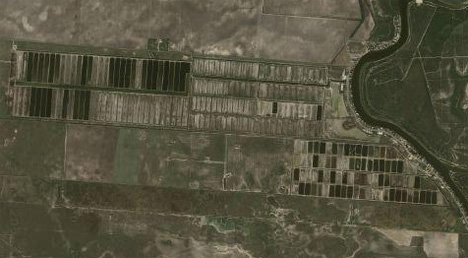
the new 1080 acre algae biofuel farm in Texas Although PetroSun have picked the worst possible day for beginning production, their algae to biofuel processor plant is ready to begin working tomorrow, April 1st. 1080 acres of the site in Rio Hondo Texas will be devoted the process, with an additional 20 acres making experimental jet fuel . I’d question their choice of launching on April Fool’s Day but if this is a real development it’s potentially very exciting.

“Our business model has been focused on proving the commercial feasibility of the firms’ algae-to-biofuels technology during the past eighteen months.” said PetroSun CEO Gordon LeBlanc, Jr “Whether we have arrived at this point in time by a superior technological approach, sheer luck or a redneck can-do attitude, the fact remains that microalgae can outperform the current feedstocks utilized for conversion to biodiesel and ethanol, yet do not impact the consumable food markets or fresh water resources.”

Algae conversion to biofuel is much more efficient than other techniques. It provides as much as 30 times more energy per acre than corn or soy . In addition, it doesn’t impact on the growing of human fuel – food stocks in grains are low and shortages threatening because of farmland switching from food to biofuel production. Algae promises a good compromise to stop a Downward Spiral.

[story and picture via TreeHugger ]

Skysail – a retrospective

MS_Beluga_SkySails_gesetzter_Kite Sails on boats?  Using wind to move ships?  My God, what will they think of next!?

Our own Tomas Martin brought up this novel concept back in January.  Now that the Beluga has completed the first leg of its voyage and the costs have been calculated, it turns out that the savings estimates of 20%/day (roughly $1500, or 3 euros and a handful of beans on the exchange market) were spot on.  To put it in perspective, the normal fuel budget is around $7500/day.  That’s a big chunk of change, and a boon to an industry that has been found to be even more damaging in terms of carbon emissions.

(via Dailytech, image from Skysails website)

Making carbon-neutral fuel from air and water

CloudColors Los Alamos National Laboratory in the U.S. says it has developed a practical method for producing fuel and organic chemicals using only air and water as raw materials. (Via PhysOrg.)

Green Freedom,” as they’re calling the proposal, is a process for extracting carbon dioxide from the atmosphere and making it available for fuel production through a new form of electrochemical separation. The new process can be integrated with existing technology to produce fuels and organic chemicals.

Of course, the process itself takes energy. Los Alamos’s proposal envisions using nuclear power, but notes that hydroelectric, wind, or solar power could also be used to ensure the process remains carbon-neutral. As a result, they say:

The primary environmental impact of the production facility is limited to the footprint of the plant. It uses non-hazardous materials for its feed and operation and has a small waste stream volume. In addition, unlike large-scale biofuel concepts, the Green Freedom system does not add pressure to agricultural capacity or use large tracts of land or farming resources for production.

F. Jeffrey Martin of the Laboratory’s Decisions Applications Division, principal investigator on the project, will be presenting talk on the subject at the Alternative Energy NOW conference in Lake Buena Vista, Florida, on February 20.

The full nine-page concept paper is available online here in PDF format.

It’s almost like a recycling scheme for hydrocarbons: first you burn them, then you suck the carbon dioxide out of the atmosphere, recreate the hydrocarbons, and burn them again. Very intriguing and potentially transformational idea, if it pans out.

(Image: Wikimedia Commons.)

[tags]energy, alternative energy, fuel, nuclear power[/tags]

Skysails – Using wind to increase the power to ships

Sails like this can cut fuel use dramatically, as well as looking very coolThe Oil Drum has a fascinating article on the new developments by the German company SkySails. Their system flies a kite the size of a football field above a normal cargo vessel or tanker. The kites fly around 1000 metres up, where winds are higher and can help pull the ship along, cutting fuel needs and increasing speed. A German cargo firm, Beluga, will be making the first voyage using a SkySail this month.

“It marks the beginning of a revolution in the way that ships are powered,” said Stephan Wrage, the inventor of the SkySails idea. “We calculate that the sails can reduce fuel consumption by between 30 and 50 per cent, depending on the wind conditions. “The system could be applied to about 60,000 vessels out of the 100,000 or so listed in the Lloyd’s register. Bulk carriers, tankers — they could all benefit from the flying sails.”

The kite is computer controlled to get the best of the wind available and is attached to a rail running around the edge of the ship’s hull. The first test will use a 160 square metre sail and aim to save around 15% of available fuel. In later products the company aims to scale up to sails as big as 5000 square metres able to boost the speed of the biggest cargo vessel. With the kite sail pulling, the ship is able to spend less on the increasingly costly bunker fuel needed for engines. A US company, KiteSail, also produces a similar technology aimed more at the leisure market.

[via The Oil Drum]

Efficient hydrogen producing – new method found

Bacteria and added electricity produce large amounts of hydrogenResearchers at Penn State University have produced hydrogen gas at efficiencies not found before. Tweaking an existing method that previously produced poor rates and yields, the scientists found they could produce nearly 300% the energy used to kickstart the reaction.

Electron-generating microbes produce an electric current that is run through a fuel cell containing biological matter. By adding an additional jolt of electricity at the cathode, the bacteria breaks down the organic matter into hydrogen, without releasing much in the way of greenhouse gases. Whilst this is an early result needing mass study and production, it’s a very promising discovery towards clean fuel.

[via Daily Kos, picture via Wired]