Tag Archives: literature

The Many Roads – and Solitary Path – to Believable Science Fiction

Back in black like an Australian hard rock band long past its sell-by date, it’s Blasphemous Geometries.

Blasphemous Geometries by Jonathan McCalmont

This month, Jonathan McCalmont addresses the issue of believability in science fiction – is the truth of a text based in its scientific accuracy, or somewhere else?

Continue reading The Many Roads – and Solitary Path – to Believable Science Fiction

Nostalgia does science fiction a disservice

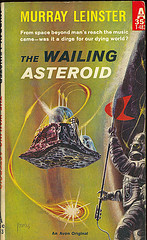
Old book jacket art for The Wailing Asteroid by Murray LeinsterNovelist Ian Sales makes an interesting point – a lot of the stories and novels held up as classics of the science fiction genre are actually very bad adverts for the modern form:

I’ve complained before about the undeserving admiration given to many science fiction novels and short stories of earlier decades. Such reverence frequently results in fans recommending these works to people wanting to try the genre. And that’s not a good thing. Readers new to the genre are not served well by recommendations to read Isaac Asimov, EE ‘Doc’ Smith, Robert Heinlein, or the like. Such fiction is no longer relevant, is often written with sensibilities offensive to modern readers, usually has painfully bad prose, and is mostly hard to find because it’s out of print. A better recommendation would be a current author – such as Richard Morgan, Alastair Reynolds, Iain M Banks, Ken MacLeod, Stephen Baxter, and so on.

I think Sales has a good point there. I came to science fiction through the authors publishing in the eighties, and as such I’ve found that a lot of the classics are, while interesting from a historical perspective, pretty unfulfilling reads. And hell knows being made to read some of Dickens’ more tedious works at school gave me a knee-jerk reaction to literary classics, too. [Murray Leinster cover scanned by J Levar]

Which authors would you recommend to a reader wanting to dip their toes into the genre, and why?

All mediums are equal – an end to science fiction tribalism

Another month, another inadequate pay-cheque. More empty days and suffocating nights alleviated only by cheap hooch, regrettable takeaways and the occasional all-too-brief orgasm. This is your life… and this is the return of Blasphemous Geometries.

Blasphemous Geometries by Jonathan McCalmont

The critical language of science fiction is balkanised according to the media form which the work being discussed belongs. Jonathan McCalmont suggests it is the critic’s place to encourage a merging of genre’s disparate media tribes. Continue reading All mediums are equal – an end to science fiction tribalism

Is “young adult” science fiction a force for good or evil?

Unattended children will be towed at owner's expenseThe ladies of io9 kicked off a neatly polarised debate over the weekend with two opposing articles about YA or “young adult” science fiction. Charlie Jane Anders says that YA is science fiction’s salvation:

“While the “real” science fiction publishers are chasing a shrinking — and graying — readership, tweens and teens are discovering SF for themselves, thanks to books from a diverse range of writers. Best of all, YA science fiction isn’t aimed at a subculture, but at everybody of a particular age.”

Meanwhile Annalee Newitz begs us to stop writing young adult sf:

“… I object to the idea that young people need their own special, segregated genre of books, as if their minds are so dramatically different from adult minds that they require their own category of fantasy. Once a person has reached adolescence, relegating their reading material to its own gated subgenre seems at best condescending and at worst censorious.”

I’ll happily admit to falling into the latter camp. It’s not even a science fiction specific issue for me; no teenager enjoys being patronised with material specially designed for their age demographic, because all a teenager wants is to be treated like an adult. Plus I’ve worked in a public library, and I can tell you that a lot more adults borrow supposedly YA titles than kids in their early teens. [image by pingnews.com]

So, “Young Adult” books – a shot-in-the-arm for genre fiction, or a flash-in-the-pan from the marketing people?