Tag Archives: marketing

Where are the sexy computer games?

Keeping to the gaming theme, here’s Aleks Krotoski at The Guardian asking a very valid question: where are all the sex-based computer games?

It’s not for want of trying. Brathwaite says that when she landed a job as producer on Playboy: The Mansion, in 2005, she found there were countless games developers building titles around love, intimacy and, well, hanky-panky, but they were lost in an ocean of family values propriety, wandering souls buried under regulations and smothered by distributor blacklists, treated as “specialists” whose products only saw the light in extremely independent competitions. And so, with only the odd interruption of a virtual carnal nature, game controversies are dominated by violence. Depravity just isn’t on the regulator’s radar.

And can you imagine what would happen if it were? Just look at the furore over the scenes uncovered in the code of GTA: San Andreas. For heaven’s sake, they were two consenting (digital) adults in an 18-rated game: why did it end up such an issue that the then senator Hillary Rodham Clinton tried to get it banned? Such top-down puritanism forces creative conformity in games for fear that explicitly including sex scenes would lead to a loss of filthy lucre – when on earth has that been the case?

It does seem odd, but then computer games are a comparatively young medium by comparison to film or literature – perhaps the form just isn’t mature enough to carry it off? If that’s the case, though, developments like the interactive software/hardware combinations that run Lionhead’s virtual boy Milo suggest that the technical capability to make a sex-based game that’s going to inspire more than adolescent sniggering may finally be here. How long it will take someone to think of a genuinely engaging set of game mechanics to go with it is anyone’s guess… but I doubt it’ll be too long, despite the puritanical hand-wringing of career demagogues.

Publishing 101

The would-be writers among you might find the following two items of interest, dealing as they do with the less glamorous aspects of fiction publishing. First up, John Scalzi explains why writers in their thirties are still described as being “new”, even though they’re kind of old by comparison to musicians and actors at similar career points:

1. Writing an entire novel is something most people have to work up to. Because you know what? Writing sixty to one hundred thousand words of fiction is not something most people cannonball through, even if they assure you, with the appropriate amount of false modesty, that they’re really better at long-form fiction. Maybe they are, but they still had a long walk to get there.  I’m better at long-form and it took me until I was 28 before I could do it. Meanwhile I’d been writing short for years up to that point, in the form of reviews and columns and humor pieces and (yes) occasional attempts at short fiction that I mostly abandoned after a page or two. Lots of people in their teens and early 20s start novels; rather fewer finish them.

Elsewhere, Andrew Wheeler takes a more business-orientated look at things as he runs through the essentials of book marketing, starting with something called “channel mix”:

It’s deeply wonky, I know, but at the core of the business of selling books is knowing where and to whom you’re going to sell. A “channel” is a way to sell books, and there are more of them than you think.

It’s easy to get blindered in the book world, and to assume that the big chain stores are the only way books get to readers. It’s more true for fiction than for non-fiction, but there are still more options than you think.

[…]

If you’re an author, your publisher will have a marketer thinking about these channels (or the subset of them that publisher has an effective salesforce to reach), and — if you’re lucky — your editor will also think about this as well. But that doesn’t mean you should ignore it; the author is always the best expert on her book, so you can help by suggesting possibilities.

(Authors often have unrealistic hopes, which you should keep in mind. It’s not always the author’s fault — some authors are monomaniacs who think their book on cheesemaking in Scandinavia will be a major Oprah pick, but most are just optimistic people who think that the Society for Shadetree Management would really, really like a new middle-grade novel about Becky Balsam, Forest Ranger if they only took a look at it. So be careful about pushing your suggestions too forcefully. Make suggestions, but also listen closely to what the people at your publisher tell you.)

Young Adult fiction: are we confusing marketing with markets?

teenage readersJoanne McNeil of Tomorrow Museum has a post hailing teenagers as being the most enthusiastic readers of all, contrary to media handwringing over declining youth literacy. Her central point is very valid: that teenagers who get into books discover a channel through which they can learn a lot about the world (and the people in it) without having to refer to the usual authority figures. [image by jonfeinstein]

Young people, who learned T9 before long division, have no problem curling up with a good book. Sales of young adult lit remain high even in this economy. Why is it other than teenagers are the most passionate readers?

There are several reasons why so many teenagers are passionate readers. A book is a pathway inside another person’s head. When you are young, you have few deep relationships, maybe no real emotional connections with others at all. You connect in the text. At that age, it is a revelation to see an author has the same dreams and insecurities as you do. Plus, there is a confidence and conviction to a fiction narrative’s voice. You are eager for someone to look up to, but certainly not your parents, not your teachers. A novel is an opportunity to really listen to another human being.

The solitude, the sense of emotional connection, and the guidance of a novel are all appealing to teenagers who might otherwise busy themselves exclusively with videogames and the Internet. And it shows. For the most part, young adult sales continue to rise even while book publishing is experiencing a significant decline.

That certainly aligns with my teenaged experiences of reading, the utterly immersive thrill of which I’m increasingly unable to recapture (though it has been replaced with a different set of appreciations as time has passed).

But the other reason I’ve brought this up is that assumption in the last line of the quote from McNeil. Again:

… young adult sales continue to rise even while book publishing is experiencing a significant decline.

This is a mantra we heard over and over again during the massive YA genre fiction circle-jerk last year, and it’s always backed with the unvoiced assumption that only Young Adults read YA. I’ve worked in a library, and I can assure you that’s an observable falsehood; most genuinely popular YA is successful precisely because so many adult readers with an expendable income enjoy the same titles.

As much as I would love to believe otherwise, I don’t see the rising popularity of YA fiction as an indicator of increased interest in books specifically among the teen demographics (though neither do I think that things are as bad as the doom-sayers would have us believe); what it does indicate is that certain sorts of stories have a wider appeal than others.

How much of this is to do with ‘adult’ genre literature just not flicking the switches for those adult readers? I’m pretty sure that’s a large part of the explosive success of  the urban fantasy subgenre, in that it repackaged classic and familiar horror and fantasy tropes in a way that placed fun and entertainment above more ‘literary’ values. Maybe Jetse really is right; maybe in our hardnosed love for the genres we’re actually keeping them from becoming more accessible, and hence more popular?

But I digress. To be absolutely clear: I have no beef with YA fiction, or with those who choose to write it, or those who choose to read it. What I do have an issue with is the assumption that by marketing certain books as being for young adults we can treat their success as indicators of health in young adult reading specifically. The pedestal-mounting of YA as the saviour of modern fiction is dangerously misguided.

Big Food: What to do about hypereating

lolHere’s an optimistic vision of the future, from the last page of The End of Overeating by former US Food & Drug Administration commissioner David A. Kessler, MD (available here and elsewhere; reviewed here; author interview by Stephen Colbert here.)

A change in perspective cannot be imposed with mandates, but must evolve as a social consensus. The goal is not to vilify all food and those who serve it, but to change our thinking about big food, those huge portions of layered and loaded food with little nutritional value. We need to look differently at the people and the places that serve it. When their power to manipulate our behavior becomes fully transparent, cues will lose their capacity to entice. Instead of expecting food to be served at every social and business occasion, we’ll realize that many offers of food outside mealtimes do not serve anyone’s interest.

In the future, new social norms and values will emerge, and food choices, offered in smaller portion sizes, will seem ‘right’ to us. That will be what we come to expect, and that will be what we want.

So, yes, as research for my optimstic sf story, I broke down, bought, and read this book, which is short, readable, and provocative.

Kessler’s thesis is that since the 80s, millions of Americans have been on a binge of conditioned hypereating, brought about by a food industry that knows how to get people to keep chowing down even when they’ve eaten more than enough. They do it with marketing, focus grouping, advertising, and even such childishly simple methods as making food easier to chew and swallow.

Kessler cites enough neuroscience data from human and animal experiments to put together a working hypothesis of marketing-driven food addiction. Among other things, the industry excels at creating tastes, textures, situations, and associations that rewire the brain to want more and more of certain kinds of foods. For example,

…[A]n animal that eats a combination of sucrose, chocolate, and alcohol releases the greatest levels of dopamine [a brain chemical associated with “attentional bias.”].

Not surprisingly, these foods have layers of sugar, salt, and fats — often in repeating geological layers. It’s akin to the tobacco industry’s striving to make cigarettes even more addictive. The food merchants seem to accomplish their goals more by trial and error than through pure research, but the result is plain for all to see: A serious obesity problem with, at the very least, a larger health care bill attached.

People need to take responsibility, and Kessler lays out some steps that will probably spawn a lot of self-help books (some of us can use the help). He simply asks that people watch how they feel when exposed to food or come-ons to the same, and alter their behavior accordingly. And maybe do what the French, he says, do, or at least used to do: Take your time at the table, and don’t eat between meals. Old-fashioned, and easier said than done.

He has policy suggestions, too. Some of them ought to be adopted for the sheer entertainment value of the outrage and resistance they’re likely to provoke.

  • Restaurants should list calorie counts, “by mandate, if they’re not willing to do so voluntarily.
  • Food package labels should contain percentages of added sugars, refined carbs, and fats.
  • Public education should focus a jaundiced eye on “big food.”
  • And my personal favorite: Marketing should be monitored and exposed.

Our greatest gift to future generations … would be to find a way to prevent the cue-urge-reward-habit cycle from ever taking hold.

There’s optimism for you. And there’s got to be some way to turn this into a story.

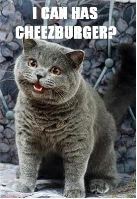
[I Can Haz Cheezburger?, due to sheer lack of willpower]

Religion as brand identity… and vice versa

cross and jet planesOK, this is a fairly short three minutes of video but it’s not available in an embeddable format, so please take a moment to watch a chap called Martin Lindstrom talking about his somewhat controversial research, in which he brainscans consumers while showing them images of religious iconography in between logos of the biggest  and most auspicious lifestyle brands.

Now, the comparison of brand loyalty and religion is far from being a new idea (didn’t Ballard write some stories around something like that?), but I’ve only ever encountered it as a literary metaphor; to see that the advertising industry is researching it in detail isn’t surprising so much as it is a little alarming. [image by laverrue]

The marketing business focusses on what actually works; if something doesn’t get a good ROI, it gets passed over in favour of something that does. Meanwhile, over the course of centuries, the major religions have evolved an astonishing ability to extract loyalty, unswerving devotion and financial contributions from their adherents… which must make them a fairly appealing business model to emulate, no?

Brand loyalty and conspicuous consumption are old news – you can see it on any street in any city in the world, with people wrapped in logo-blazoned clothing (be it genuine or fake). So is the notion that word-of-mouth is the best form of marketing there is. The “street team“, however, is comparatively new, as are social networks… but they can (and probably will) converge with the preceding phenomena very quickly indeed once the right brain-triggers have been unearthed.

Are we ready for brand evangelism? If you find the doorstop importunings of your local church an intrusion, how will you cope with people dropping by to ask “whether you’ve thought about Harley-Davidson today?” [via No Fear Of the Future]