 Space is a dangerous place. All that vacuum that looks like nothing actually contains huge amounts of solar radiation. In an orbit around Earth or a short trip to the Moon, this is not usually a life-threatening problem – although the Apollo 16 astronauts just missed a solar storm that could have killed them. But in the eight months or so it would take an expedition to get to Mars, a few solar wind storms could easily kill any humans on board. The shield is a common solution in science fiction – from the near-magic forcefield of Star Trek/Wars to the realistic mirrored disk seen on the craft in last year’s Sunshine.
Scientists at Oxford University are aiming to create a similar shield. By creating a magnetic field similar to that of the Earth’s, which protects us from radiation, the scientists found they could successfully deflect intense beams of charged particles. The technology has been proven to work and now needs to be energy-efficient enough to be run by a spacecraft with limited resources – such a development could well provide technology useful in increasing the efficiency of more mundane technologies as well.
[via the Guardian, screenshot from ‘Sunshine’ via Moving Pictures ]
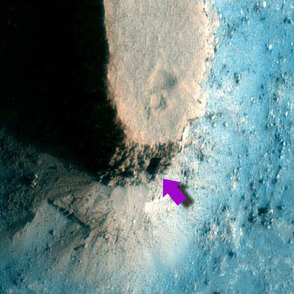

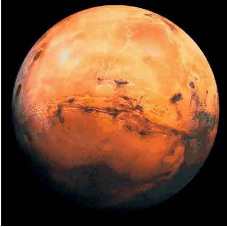 Anyone who has been following the recent missions to Mars are familiar with the ongoing speculation about if and how much water might exist on the Red Planet. This is an extremely important question, because the presence of easily accessible water would mean that future manned missions to Mars could use that water to produce fuel once they arrive – rather than having to bring it with them.