Tag Archives: music

Translating genetic information into music to diagnose disease

gene music Computers are very useful for analyzing large quantities of data, but presenting that data to humans in a useful form is an ongoing challenge. (A challenge that predates computers, actually: that’s why graphs were invented.)

Here’s an intriguing new way to examine data: turn it into music. Gil Alterovitz, a research fellow at Harvard Medical School, is developing a computer program that translates protein and gene expression into music: harmony represents good health, and discord indicates disease:

The first step in the gene-to-sound conversion was to pare down multiple measurements to a few fundamental signals, each of which could be represented by a different note. Together, the notes would form a harmonic chord in normal, healthy states and become increasingly out of tune as key physiological signs go awry, signaling disease.

He found, for example, that “when set to music, colon cancer sounds kind of eerie.” You can listen to some samples online. (Via KurzweilAI.net)

Alterovitz hopes the system could be tuned to identify other diseases, and might have applications outside medicine: it could be used to simplify information for air-traffic controllers or in other situations where large data sets have to be analyzed.

Not only that, a DJ in the Boston area is apparently interested in playing Alterovitz’s “music” in local bars.

Perhaps he could call it “Forever in Blue Genes.”

(Ouch, a Neil Diamond reference. I’m showing my age, aren’t I?)

(Image by Gil Alterovitz.)

[tags]genetics,medicine,music,computers[/tags]

May Day giveaways – welcome to the new artist’s business model

Cory Doctorow - Little BrotherAnother pair of sturdy nails were hammered into the coffin of old media business models yesterday.

First of all, Cory Doctorow released his new YA novel Little Brother

“… as a free, Creative Commons BY-NC-SA licensed download (in many formats).

It’s my first young adult novel, a book about hacker kids who use technology to claw the Bill of Rights back from the DHS. Neil Gaiman said of it, “I’d recommend Little Brother over pretty much any book I’ve read this year, and I’d want to get it into the hands of as many smart 13 year olds, male and female, as I can.”

There’s a bunch of cool stuff to accompany the downloads, including a remix gallery and a simple system for donating copies to libraries and schools.”

And on the same day, almost as if they’d conspired together*, Trent Reznor dropped The Slip – an entirely new Nine Inch Nails album – on an unsuspecting world.

Nine Inch Nails - The SlipNo build-up, no fanfare; just every flavour of audio format you could ask for (well, OK – no OGG), and a Creative Commons licence just like Doctorow’s book:

“… we encourage you to remix it, share it with your friends, post it on your blog, play it on your podcast, give it to strangers, etc.”

So that strange noise you may have heard yesterday was the sound of a thousand overpaid record executives wailing in horror; the sound of old business models crumbling under the weight of change.

This is the point where someone asks how it’s possible to make a living for the average artist without Doctorow or Reznor’s niche-superstar status. And I’ll be totally honest – I don’t know yet, though I have some ideas.

But I’ll tell you what I am sure of; I’m going to learn a lot more by watching what Doctorow and Reznor are doing than I’d learn by listening to the old guard complain that they’re not playing fair. I suspect you will, too, whatever you may think of their art.

[ * Doctorow protests innocence on this one; Reznor was unavailable for comment. 😉 ]

Microsoft creates an algorithmic accompanist

Neon sign of musical notes coming from singer Me, I sings a bit, and it ain’t always easy to find an accompanist when I need one. ‘Sides that, them piano players cost money. (And no, I got no explanation for why I’ve suddenly started bloggin’ in the voice of a hillbilly, ‘cept to point out I did go to school in Arkansas…)

Anyhoo…er, anyway, some new music technology invented by the folks at Microsoft could obviate the need for an accompanist, at least in some instances. Called MySong (follow that link to see a video of it in action and hear some samples) it can take a sung vocal melody and generate appropriate chords to accompany it, offering a singer a variety of accompaniments to choose from, depending on how he or she varies the “happy factor” and “jazz factor.” (Via NewScientistTech.)

Here’s how it works:

Since people rarely sing at precise frequencies, MySong compares a sung melody to the 12 standard musical notes. It then feeds an approximate sequence of notes to the system’s chord probability computation algorithm. This algorithm has been trained, through analysis of 300 rock, pop, country and jazz songs, to recognise fragments of melody and chords that work well together, as well as chords that compliment each another.

MySong isn’t on the market yet, but it’s already got me concerned, because apparently the computing power required is so slight that it will run on a cellphone–which means we may soon have to listen, not only to people talking too loud into their cellphones, but singing too loud into their cellphones.

Shudder.

(Image: Wikimedia Commons.)

[tags]music, singing, Microsoft, technology[/tags]

$750k in three days – not bad for music also distributed on Pirate Bay

pic_home For the past few months, people have been talking about the give-it-away-and-they-will-buy-it model for content distribution.  Now, NiN’s Trent Reznor has released his new Ghosts I-IV albums at a variety of price points, from the first album free to $300 for the super-duper deluxe version – and he sold all 2,500 of the latter.

While it’s not exactly the same as Radiohead’s deal – there were price points of $0, $5, $10, $75, and $300, each of which got you different things – it demonstrates innovative thinking on how to get music out there and be noticed, yet still make money.  The notable thing about NiN and Radiohead are both famous groups already.  It’s hard to know if this sort of model would work for unknown bands.

Incidentally, for another album-funding method, check out Scottish band Amplifico, who got the funding for their first studio-produced album by asking fans for donations.  As an apology for releasing the album late, they made a 3-track album available for free download from their website.

(image from NiN website)

Recordings found of physicist who predicted Multiverse (and fathered indie legend)

You may know about Eels, but did you know the singer’s father was a famous physicist?Hugh Everett was a quantum physicist. In 1957, as a 24 year old graduate student at Princeton, Everett produced a theory that there was a multiverse made up of many universes. In Quantum Physics a particle can be in two places at once, until it is observed (the famous Schrodinger’s Cat problem). Everett supposed that instead of the other option disappearing, the universe splits into two.

Nowadays the idea is fairly well accepted, with multiple universes popping up in science fiction like ‘Sliders’ and Ian McDonald’s excellent latest novel, ‘Brasyl’. Back when Everett first came up with it, the theory was widely ignored for two decades.

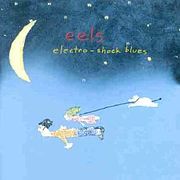
Recently, new tapes have been found of Everett talking about his theory in 1977. BBC found the tapes whilst making a documentary with Everett’s son, who also happens to be rather famous – Mark Everett is ‘E’, lead singer of eclectic indie band Eels. The documentary follows ‘E’ trying to understand better his father’s work. It premieres on BBC4 tonight.

[via the Guardian, image of Eels album cover via Wikipedia]