Tag Archives: open-source

Open Source SF

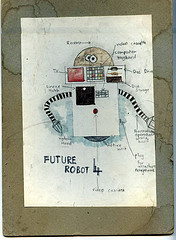
Open Source RobotOver at SF Signal, several writers and editors were asked the following question:

Which medium is driving [SF] … books or Film/TV?

There were interesting responses all around I thought, but the most thought proving answer, IMHO, came from io9 editor Charlie Jane Anders, who said:

“The future of science fiction is probably online, in a blend of written material, video and other media. The best science fiction of the future will be open source and collaborative, blurring the distinction between “creators” and “fans” to an increasing degree… there will be obvious advantages in opening things up to collaboration. One major difference between [SF] and most other genres is worldbuilding. And the more people you have involved in your worldbuilding, the bigger and more realistic your world can be. So the most compelling science fictional worlds online will be ones that are, at least to some extent, open-source…”

I can’t point to any examples of open source SF in online print and video venues directly yet, but consider what video games like Neverwinter Nights, Starcraft, et al. are/were doing for RP-style games with level builders or what Second Life is doing for massive online communities, and we may see what Ms. Anders is getting at. [image by Salim]

Verizon to carry Linux-powered phones

Cellphone KeypadVia m1k3y of grinding.be I hear the rumour that US mobile telco Verizon will begin offering cellphone handsets based on Linux operating systems alongside the usual proprietary offerings next year.

Though it may not be immediately apparent, that’s good news for more than just the OS-OS wonks. Why? Because it opens up the cellphone software market to those unable or unwilling to buy an API licence for a proprietary system, and allows people to build on a reliable platform. [image by khedara]

It’s not a perfect situation, of course – individual carriers and handset makers will be able to control the operating system’s capabilities. But hey, if the iPhone got hacked that quick, a Linux-based handset is going to crack like an eggshell

Facet – open source swarming smart-phone software

Cellphone This one must have passed me by at the time, but Warren Ellis’s team of future-culture hounds at grinding.be have brought it to my attention. A New Scientist article from October 2007 talks about Facet, an open source software project that networks mobile phone cameras over Bluetooth:

“To test the software, the researchers attached four phones running Facet to the ceiling of a corridor in their department. The phones were angled so that the camera of each could see a different part of the corridor and so that they could all see peopling walking past.

Whenever a phone detects an object entering or exiting its field of view, it sends a message via Bluetooth to alert the phones on either side. These phones, in turn, pass the message on to other nearby handsets so that eventually the entire network receives the message.

One handset on the network also reports this information to a computer over a normal GPRS cellphone connection.

Each phone determines the distance to its nearest neighbour. The phones currently use the average speed people walk to guess the distances between themselves, based on how long people take to move from one phone’s view to another’s.”

That would put fairly top-range surveillance capabilities into the hands of street-level operations. Maybe the only logical response to nation-states with endemic surveillance of citizens is for the citizens to start watching the watchers? [Image by Asim Bijarani]

[tags]phone, technology, surveillance, open source[/tags]

Bug Labs creates “open source hardware”

bug_logo.jpgBug Labs is a start-up company in New York that is creating what they call “open source hardware.” The company is creating a Lego-like hardware platform that tinkerers and engineers can use to create their own digital devices. The idea is to take advantage of “long-tail economics” that will allow the creation of very specific, niche hardware devices for limited markets. The platform can also be used for rapid prototyping.

It starts with a BUGBase, which is a general-purpose Linux computer about the size of a PlayStation Portable, encased in white plastic. This has four connectors that plug right into the motherboard. The company will also make a variety of modules that can plug into the computer—like an LCD screen, a digital camera, a GPS unit, a motion sensor, a keyboard, an EVDO modem, and a 3G GSM modem. (There are also places to add USB, Ethernet, WiFi, and serial ports). Bug Labs is planning on making 80 modules over time, and hopes outside companies and developers will create their own.