Tag Archives: research

Cory Doctorow on writing and the web

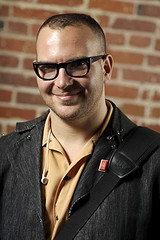
doctorowThe inevitable New Year’s Resolution wear-off has begun: I resolved to write more and spend less time procrastinating by (amongst other things) surfing the web.

As ever things haven’t quite worked out like that but whilst procrastinating on Lifehacker I saw this article from Cory Doctorow, science fiction writer and Internet panjandrum, on how to avoid getting distracted by teh webz whilst writing:

Researching isn’t writing and vice-versa. When you come to a factual matter that you could google in a matter of seconds, don’t. Don’t give in and look up the length of the Brooklyn Bridge, the population of Rhode Island, or the distance to the Sun. That way lies distraction — an endless click-trance that will turn your 20 minutes of composing into a half-day’s idyll through the web. Instead, do what journalists do: type “TK” where your fact should go, as in “The Brooklyn bridge, all TK feet of it, sailed into the air like a kite.”

It’s all good stuff.

Now if only I could make good on my resolution to end all blog posts with a snappy and/or incisive comment…
[at Locus via Lifehacker][image from eecue on flickr]

How much science does a science fiction writer need?

Not just scientific knowledge, but technological, economical, social, geopolitical… you need the lot to be able to write believable near-future science fiction. Or so says the latest missive from Jason Stoddard discussing the burden of the modern science fiction writer:

If you want to write believable near-future fiction, you can’t choose a single point of advancement. You need to have a good understanding of advances in many different fields, and you need to be able to imagine how these can come together, for good or for bad. And to be really believable, you’ll need to know more than you ever wanted to know about how the world works, economically and socially, as well as where the trends are heading.

Otherwise, your fiction will soon read like that Golden Age lit, filled with spaceships manned by human calculators and spinning reels of tape.

He may have a point. But then again, he may have missed the point, or focussed on one that matters more to some than others. Jeremy Tolbert responds to Jason’s closing statement above:

If you’re intimidated by the accelerating advance of the future, don’t let that stop you from writing SF. You don’t have to write it that way. Personally, I take great enjoyment in throwing reality out the window when I write my SF. SF has only ever been about believability to a small subset of readers.  Believability in the context of tech, anyway. It, like all literature, does revolve around the believability of human action and emotion, however. Keep that in mind and you’ll write great fiction, and very few people will care about that other stuff.

I’m not an experienced enough writer to know which angle I prefer, but as a reader I’m quite fond of both – and while we keep the focus near-future here at Futurismic, I don’t think we’re anywhere close to the line of science fiction that’s so hard it’s rigid.

Which do you prefer?

Do free ebooks actually affect the sales of paper books?

We’ve had a good few years of activists like Cory Doctorow advocating the free digital book as a loss leader against the physical product, and in the last twelve months or so we’ve seen a distinct rise in the number of authors and publishers getting on board with the idea. The question is – is Doctorow right? Does giving it away make people more willing to pay?

Simon “Bloggasm” Owens has evidently been wondering the same thing, so he thought he’d chase up some of the authors who’ve recently had free versions of their novels released via Tor‘s mailing list. Tobias Buckell and John Scalzi both reported noticeable upticks in sales following their freebies, though fantasy author Daniel Abraham saw no change at all – neither up nor down.

Scalzi points out that it’s risky to make the results into science:

“… I don’t think that ‘scientifically’ is the standard required here; I think ‘heuristically’ is probably better. If you consistently see a rise in sales of an author’s work after the release of a free e-book, then heuristically you have a good idea it’s beneficial.

But the telling thing is this:

Every Tor author [Owens] spoke to for this article said they hoped the publisher would continue offering the ebooks even after the new site debut. When [he] asked them whether they would be willing to offer another book of theirs to the giveaway list there wasn’t a moment’s hesitation with their answers.”

So, we can’t be sure that giving away ebooks is a good thing, but we can say that few who’ve tried it think it’s a bad thing.

What can your ink-jet do?

253958853_dea8d75cb0_m And here I thought Xerox was for copying body parts at the office Xmas party.  Turns out, printing technology is very flexible and researchers are trying to adapt it to various applications such as water purification machines and printing solar panels.

There’s also a bit of history on PARC (Palo Alto Research Center):

PARC is one of the older–and more productive–industrial incubators. Xerox founded it in 1970, and 30 companies have been spun out of it. Inventions from the lab include the mouse, Ethernet, the Alto (the archetype of the PC), the laser printer, and, ignominiously, the computer worm. It was also one of the first industrial organizations to employ anthropologists and ethnographers. Xerox wanted to know how people actually interacted with copiers (besides hitting them and swearing at them).

I didn’t know private industry did this, perhaps these centers operate in the background and we just don’t hear about them very often.

(via DailyTech) (image via Zixii)

Jet-lagged hamsters, U.S. military among Ig Nobel winners

Pink-eyed white hamster It’s Ig Nobel time again, as the Annals of Improbable Research honors research achievements "that make people laugh – then think." This year’s winners include the U.S. military for its plans to make a "gay bomb," the use of Viagra to help hamsters recover from jet lag, and a medical study of the risks of sword swallowing. (Via New Scientist.)

The awards are handed out by real Nobel laureates, and the popular ceremony (this year’s theme: Chickens!) also featured a humorous "Moments of Science" skit and a contest to win a date with a Nobel laureate ("He’s shapely, he’s sassy and he’s smarter than you.")

Alas, no one from the U.S. military showed up to receive its Ig Nobel. (Photo from Wikimedia Commons.)

[tags]Ig Nobels, research, humor[/tags]