While we’re on the subject of astronomy, and just in case you get asked by a curious child and don’t want to get caught on the hop, you may wish to learn why space is dark. [Image by D P Hershman]
A detailed study of a supernova could tell scientists an awful lot of useful things … but there are obvious reasons why, even if we were able to travel the distances involved, we’d not want to just blast on over to check one out up close and personal. So, we do the next best thing – we recreate a some of the phenomena of a supernova under laboratory conditions.
 It’s (relatively) common knowledge that black holes consume pretty much anything and everything … and apparently that includes each other, as
 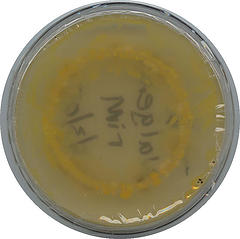 It sounds like a crazy idea – but then that’s what they said about penicillin.
  We’ve heard about the street finding its own use for things, but here’s an example of the opposite occurring: