Tag Archives: space

Did the aliens all run out of gas?

is there no one out there?

{image from the Hubble Heritage Project}

It’s amazing just how interlinking life can be when you think about it. As well as the fact that when oil, gas and coal run out we’ll have no choice but to stop adding carbon dioxide to the atmosphere, this great article links peak oil and global warming to another large-scale problem – The Fermi Paradox.

It’s an interesting article to ponder, particularly in relation to mankind’s future. Is the reason we can’t see any evidence of alien life out there because they all ran out of resources before they could get off their own planet?

[Edit – another good article on the subject here – thanks to Tom James and Sentient Developments for that link! The original article seems to be having server trouble but this alternative is just as interesting.]

Martian Water Saga, Part [x+1]: it’s back on again! Maybe.

mars_icy Long term readers of Futurismic will know well my frustration with the constant see-sawing of scientists over the "is Mars wet?" issue, and I’m going to spare relative newcomers the weight of my angst.

Instead, I’ll just point to a story that reports on analysis done at MIT which suggests the southern polar ice cap of Mars may actually be water and not ‘dry ice’ … and to another, dated just a few days ago, which says images from the Mars Reconnaissance Orbiter seem to indicate that certain topographical features of the Red Planet may not have been carved by water as previously suspected … although the results "don’t confirm or deny" the theory. [Image credited to NASA/MOLA Science Team]

Look, can we not arrange for some sort of moratorium on this to-and-fro guesswork until such a time as we actually have some substantial scene-of-the-crime evidence to go on, as opposed to very clever people making educated guesses based on photographs taken from orbit?

[tags]space, Mars, water, speculation[/tags]

Scientist brings laser engines into realm of possibility

Destiny Gundam light propulsionImagine a spacecraft that could travel faster than 100km/sec. Something like that might get us to Mars in about a week. Well, as happens so often, technology seen in Japanese anime is stepping out of the pages into real life. Dr. Young Bae of the Bae Institute demonstrated his engine back in 2006, and this week he presented his concepts at the American Institute of Aeronautics and Astronautics (AIAA) Space 2007 Conference.
All this may seem rather far-fetched and crazy, but Dr. Bae is publishing his discovery in the AIAA’s peer-reviewed journal (scheduled out later this year), so it must have some basis of truth behind it. I’d caution skepticism all around, and I’ll believe it when I see it. Too often, somebody forgets to carry the one or they realize that the technology causes babies to be born with an extra appendage. On the other hand, this could be really cool, and I’m sure it will have applications elsewhere, too. Oh yeah, did I mention this contraption was built with off-the-shelf parts?

(via DailyTech)
{image from sunrise anime

160,000 year journey of man

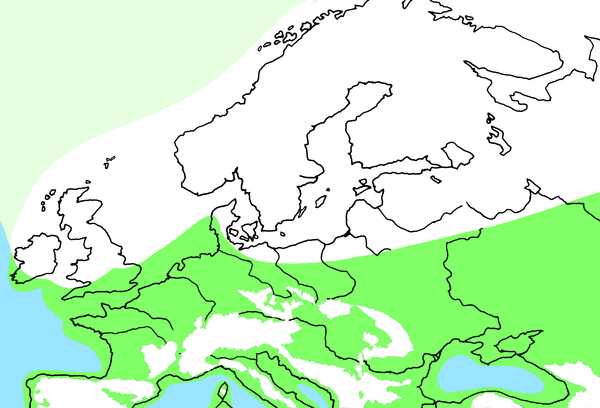
ice in europeA lot can happen in 160,000 years. Back then a handful of human beings scraped out a life in Africa and at various hard times during the centuries catastrophes have pushed the total world population down to barely 10,000 people. This excellent animation by the Bradshaw Foundation shows how the human race expanded and contracted as climate changed, eventually spreading to all the continents after the last ice age. Watching the ice and glaciers advance and retreat and volcanoes erupt and change and the impact this had on human lives is a stark warning to anyone denying climate change. It’s amazing how much the Earth can effect our lives.

And here’s a reminder of just how small even mankind’s efforts are amidst the vastness of the universe. This wonderfully kitsch 1977 video zooms out at a power of ten from the earth out into space. Alternatively, why not go the other way, as in this zooming in animation.

[via Dark Roasted Blend][image courtesy of gipuzkoakultura.net]

Black holes eat black holes

Time-lapse photo of star trails above treesIt’s (relatively) common knowledge that black holes consume pretty much anything and everything … and apparently that includes each other, as astronomers speculate that the black hole at the center of our own galaxy may have gobbled up a smaller sibling over 100 million years ago.

While we’re on the subject of astronomy, and just in case you get asked by a curious child and don’t want to get caught on the hop, you may wish to learn why space is dark. [Image by D P Hershman]