 O NOES!!!1 Teh webz be steelin ur brain-bukkitz! This doom-mongering about the internet and its insidious power to erode literacy just never seems to go out of fashion with opinion columns, but I’m surprised to find this one on The Guardian‘s technology blog, courtesy of one Naomi Alderman. Here’s a few choice snippets (because, y’know, I doubt you can be bothered to read the whole thing):
… reading on the internet isn’t the same as reading a book. Recent studies have indicated that online reading tends to break down in the face of “texts that require steady focus and linear attention”. University teacher friends have told me that some of their freshers have started to write in a similar fashion to the way we apparently read online. All the right keywords are in the right paragraphs, but the sentences don’t follow on coherently from each other. Their essays are meant to be skimmed, not read.
[snip]
My family is fortunate to have preserved some of the hundreds of letters my grandmother exchanged with her brothers, Alan and Henry, while they were fighting in the second world war. They didn’t write these letters to improve their skills in comprehension and composition; they did it because it was the only way to stay in touch. If they’d had mobile phones and been able to call each other every day, I’m sure they’d have done so.
Blah blah blah. TL; DR, complete with a reference to WW2 to shame us in the light of the sacrifices of our elders, who had the dignity to sit in muddy trenches writing letters while they waited to be shot to burger meat. But for the classic “everything was better in the old days” capstone quote:
But while I hate to side with the neophobes I can’t help feeling a little concerned; as the loss of the ancient Greek oral culture shows, ways of thinking and using our brains can disappear for good.
YA RLY; new ways of thinking are always bad news, aren’t they? Hey, if it hadn’t been for those damned Greeks and their progressive philosophies, we’d still be sat in little stone houses thinking that lightning storms were the gods playing war… how far we’ve fallen since then! [image by tm lv]
 We’ve had
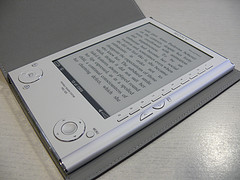 Been considering splashing out on an ebook reader? If so, you’ll be wanting the opinions of someone who isn’t just shilling for the company. While the Kindle seems to get the bulk of the blog coverage, there’s another big-brand competitor out there – and