 Exciting results from the world of biology, with implications for human medicine: researchers looking at the limb regeneration process in salamanders have discovered that it works in a different way to what they thought previously. [image by jurvetson]
Rather than having their cellular clocks fully reset and reverting to an embryonic state, cells in the salamanders’ stumps became slightly less mature versions of the cells they’d been before. The findings could inspire research into human tissue regeneration.
“The cells don’t have to step as far back as we thought they had to, in order to regenerate a complicated thing like a limb,” said study co-author Elly Tanaka, a Max Planck Institute cell biologist. “There’s a higher chance that human or mammalian cells can be induced into doing the same thing.”
[…]
They found that salamander regeneration begins when a clump of cells called a blastema forms at the tip of a lost limb. From the blastema come skin, muscle, bone, blood vessels and neurons, ultimately growing into a limb virtually identical to the old one.
Researchers, many of whom hoped their findings could someday be used to heal people, hypothesized that as cells joined blastemas, they “de-differentiated” and became pluripotent — able to become any type of tissue. Embryonic stem cells are also pluripotent, as are cells that have been genetically reprogrammed through a process called induced pluripotency.
Such cells have raised hopes of replacing lost or diseased tissue. They’re also difficult to control and prone to turning cancerous. These problems may well be the inevitable growing pains of early-stage research, but could also represent more fundamental limits in cellular plasticity.
If Tanaka’s right that blastema cells don’t become pluripotent, then the findings raise another possibility — not just for salamanders, but for people. Rather than pushing cellular limits, perhaps researchers could work within nature’s parameters.
Another step towards transhuman immortality, perhaps? It’s fun seeing such science fictional subjects in ‘regular’ news venues, if only to watch journalists asking the sort of questions science fiction has always hinged on – like Khaled Diab at The Guardian, for example, trying to imagine what the world would be like if Aubrey De Grey is right about the immortality singularity:
Should people’s lives be extended indefinitely? If not, should society or the individual choose when to pull the plug? Should a 250-year-old physical teen be treated as an adult and served alcohol or not? Would society take long-term threats, such as the environment, more seriously because people will actually live to see the consequences? Does living so long rob future generations of their right to life? Would you like to live in a society without death?
I figure that, if it happens, we’ll work out a way to cope during the journey – much like Jamais Cascio suggests we’ll cope fine with intelligence augmentation, because it’s an iterative process rather than a momentary leap of change.
Of course, De Grey has already secured himself one form of immortality – the only form of it in which I’d be interested, anyway. I’m sympathetic to the transhumanist project, but the thought of living forever just doesn’t appeal to me. I’ve always theorised that without the ticking clock of mortality we’d have very little to motivate us to create anything new or unique; you struggle to produce a legacy to fill the void of your leaving, if you will. Of course, my attitudes may change as I get older… but even so, if offered the choice right now I’d settle for a standard lifespan minus the gradual decline into senescence and frailty at the end. Death doesn’t scare me, but dying slowly sure does.
Should people’s lives be extended indefinitely? If not, should society or the individual choose when to pull the plug? Should a 250-year-old physical teen be treated as an adult and served alcohol or not? Would society take long-term threats, such as the environment, more seriously because people will actually live to see the consequences? Does living so long rob future generations of their right to life? Would you like to live in a society without death?


 Earlier this year I mentioned
 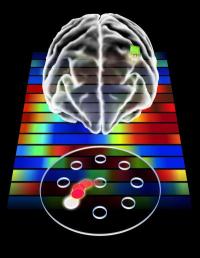 More progress has been made in the field of artificial telekinesis by researchers at University of California, who have shown


