Tag Archives: transport

Looking on the bright side – ten reasons to like higher gas prices

Second Life cyber-blimpI don’t know first-hand, as I don’t drive, but it doesn’t take superhuman empathy to imagine how hard the spiralling cost of diesel and petroleum is hitting a lot of people right now.

Time Magazine obviously came to the same conclusion, and decided to make an attempt at cheering everyone up by listing 10 things you can like about $4 gas. These range from the prospect of globalized jobs returning to their original locations to the more prosaic and obvious like less pollution and fewer traffic deaths.

If those aren’t enough for you, perhaps a piece at the New York Times will sell you on the idea. I mean, come on – who here doesn’t think an air-ship renaissance would be extremely awesome? [via BoingBoing; image by Torley Linden]

Have Nano, Will Travel

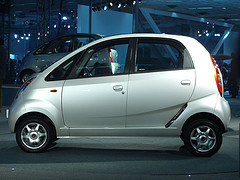
The Tata NanoIn the future we we’ll all be driving small cars. That’s the hope of Indian automaker Tata’s newest car, The Nano. But for now, they’ve got to be able to market, distribute,turn a profit and get it out to consumers before they can really call it “The People’s Car.”

People in India get around in practically every way: by bicycles, mopeds, motorbikes, scooters, bullock carts, cars and buses. This all sounds more or less ordinary, till you consider this: there are less people who get by on cars than there are people who get by on any other means transport. In fact, cruising down any street in India, you might see an entire family (ie. two children, wife and husband) on a single motorbike. Highly unsafe, right? This is what is driving the campaign behind the Nano. To create an ultra low cost, fuel efficient four wheeler for the millions of Indian families getting by the other way. [image by blackrat]

By now, I’m guessing you’ve seen the Nano or heard about it from one media channel or another. But what factors will help the Nano model succeed? Or fail? And will it be marketable outside of India? My prediction is the following factors will greatly determine the answers to the questions I’ve posed.

High inflation in India is eroding the purchasing power of the disposable income of India’s population. This should increase their sensitivity to changes in fuel prices. The fuel efficient label on the Nano could help it sell as an alternative to less efficient, more expensive vehicles. Then again, people may just decide to get along by other means, if fuel prices increase too fast or too much.

The other factor that may seriously limit the Nano’s appeal to the population has to do with parking space. India’s cities have high population densities, and in most of these packed cities parking space for four wheelers is seriously limited or nonexistent. A typical middle class Indian living in one of the big metropolises won’t have the luxury of a two car garage that is common in the West. In these terms it seems much more sensible to take a bus, catch a cab, or squeeze through narrow streets on a motorcycle.

However, if the Nano does sell well, we may see competition from other car manufacturers enter the fray and the age of the ultra-low-cost fuel efficient car coming to the world. What do other Futurismic readers think about this trend? Will we in fact see more low cost cars being produced? Will they take off in the West like Tata hopes they will in India?

Rainbows and Unicorn Farts…

…are about as likely to solve the two little problems of peak oil and global warming as hydrogen fuel cell technology.

hydrogenSorry to flog a dead horse here but it’s always worth repeating something, especially if you’ve found someone who can express the idea more articulately than you can.

Joseph Romm of the Center (sic) for American Progress (centrist American think tank) writes eloquently on the reasons why hydrogen fuel-cell powered automobiles are a dead-end and that there are better alternatives:

More than 95 percent of U.S. hydrogen is made from natural gas, so running a car on hydrogen doesn’t reduce net carbon dioxide emissions compared with a hybrid like the Prius running on gasoline. Okay, you say, can’t hydrogen be made from carbon-free sources of power, like wind energy or nuclear? Sure, but so can electricity for electric cars. And this gets to the heart of why hydrogen cars would be the last car you would ever want to buy: they are wildly inefficient compared with electric cars.

I’ve never been entirely clear why investors, boffins, and the popular press like hydrogen fuel cells so much. And why the insist on using the buzzword the hydrogen economy, implying that this is capable of replacing our current oil-based transport setup. Is it just because the cars themselves don’t emit any carbon dioxide during operation? I don’t know, but I suspect some people, including automakers Honda are in for a nasty shock.

[story via Technology Review][image by mirrorgirl]

Skysail – a retrospective

MS_Beluga_SkySails_gesetzter_Kite Sails on boats?  Using wind to move ships?  My God, what will they think of next!?

Our own Tomas Martin brought up this novel concept back in January.  Now that the Beluga has completed the first leg of its voyage and the costs have been calculated, it turns out that the savings estimates of 20%/day (roughly $1500, or 3 euros and a handful of beans on the exchange market) were spot on.  To put it in perspective, the normal fuel budget is around $7500/day.  That’s a big chunk of change, and a boon to an industry that has been found to be even more damaging in terms of carbon emissions.

(via Dailytech, image from Skysails website)

Charles Stross on transport surveillance

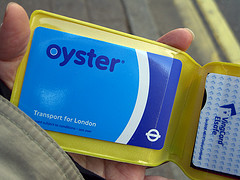
Will your next trip on the tube be tracked by the spooks?The ever-illuminating Charles Stross talks about plans for MI5 to have access to the databases for Oyster, the wireless card that regular users of the London Underground swipe instead of paper tickets. He discusses the possible ramifications of intelligence agencies being able to track your movements across the capital.

The news stories about Oyster pose good questions about the future of RFID: with cracks in the encryption beginning to be found, what are the risks of having everything wirelessly connected? Is the added convenience going to expose us to a new breed of hackers? Expect this to appear in the next series of Spooks, for sure.

[via Charles Stross, image by Mirka23]