Aside from nuclear power, one of the most enticing possibilities for solving problems of energy security, peak gas, and global warming is carbon sequestration.
 By burning cheap and widely available coal but storing the resultant carbon dioxide rather than venting it into the atmosphere means you (theoretically) have a cheap and low-carbon energy source.
The main issue is finding a place to stick all that carbon dioxide. Dave Goldberg of the Lamont-Doherty Earth Observatory claims there is a vast area off the east west coast of Oregon under the Juan de Fuga Fuca tectonic plate which addresses many of the safety issues of carbon sequestration:
“We have insurance upon insurance upon insurance,” he said.
First, the center of the proposed location is about 100 miles off the coast, obviously far away from human settlement. Second, the impermeable sediment cap on the permeable basalt reservoir is hundreds of feet thick, creating an effective seal for the compressed CO2. Third, when CO2 mixes with water inside the basalt, over time it turns into a variety of carbonates, which are, essentially, chalk. Fourth, if there were an unforeseen leak, in deep water, CO2 forms into icy hydrates in the water, preventing it from floating up to the surface.
As to the UK: what about using the recently emptied North Sea oil wells as a carbon sink?
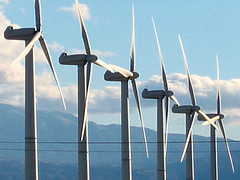
It is becoming clear that if we are to create a genuinely zero-carbon (or even low-carbon) economy we are going to have to embrace nuclear power and carbon sequestration, as suggested in Plan D of David David J. C. Mackay’s excellent (but unfinished) free ebook Substainable Energy – Without the Hot Air. The evidence is mounting that wind power, solar thermal, and photovoltaics don’t work well enough.
[story from Wired][image from Scott Ableman on flickr]


