Often ill? Maybe you’re not seeing the light.

Sunlight - man's best friend?

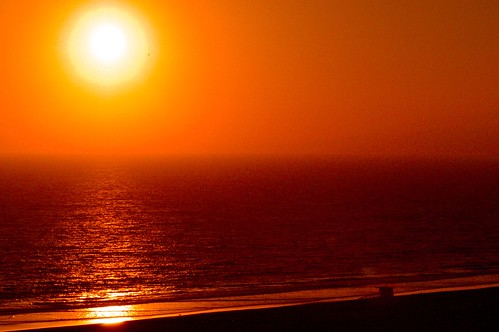
{Photo taken by StewartJames on Flickr Creative Commons}

A very interesting article in the Independent yesterday talked about a new study on the effects of vitamin D on health. The study by the Institute of Oncology in Milan and Lyon’s International Agency for Research on Cancer was the biggest ever to be done on the nutrient and found that it had a much bigger impact of health than previously thought.

90% of the vitamin D we receive is not from food but from absorbing sunlight on open skin. A solid dose of sunlight a few times a week was found to reduce mortality by 7%. Even taking pills filled with the vitamin can reduce the risk of cancer, MS and heart disease by as much as a half. Even Autism and Diabetes have links to Vitamin D deficiency. So perhaps the best thing you can do to save your life is to take that walk in the park on a sunny day.

Interestingly, the amount of sunlight needed is quite strong so winters in the UK, for example, are barely strong enough to give a good dose – the cause of countless flu seasons and the infamous Seasonal Affective Disorder (SAD) . Aside from supplements, light therapy with very bright lights is thought to help.

[via the independent]

Slideshow shows a world without us

A World Without USOne of my favorite settings for science fiction is after the fall of Man. You know the one, where cities are deserted, weeds growing up through the streets, etc. Occasionally there are humans eking out a living, but they are no longer dominant. Yeah, that kind. Well, a book that came out recently, The World Without Us, imagines what would happen environmentally if humans just vanished from the face of the earth. I prefer humans to still be around in my stories, but this concept is fascinating.

If you scroll down on the website’s main page, you’ll find an artist’s rendition of New York between 2 days and 15,000 years after the disappearance of humanity. According to the book’s author, the subways would flood after only three days, after twenty years streets would collapse and rivers would form in the space left over.

Meanwhile, I’m waiting for the post-nuclear holocaust genre to pick back up.

[image from mondolithic.com]

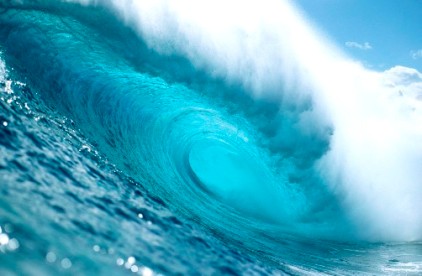
UK government approves first large scale wave farm

wave.jpg

Today the UK government gave planning approval for the world’s first large scale wave farm off the coast of Cornwall in South West England. The project, dubbed Wave Hub, is a world first and will include an onshore substation connected to electrical equipment on the seabed about 16 kilometres (10 miles) offshore via a sub-sea cable. Wave Hub could generate enough electricity for 7,500 homes, directly saving 300,000 tonnes of carbon dioxide over 25 years. Because Wave Hub is also a research facility, it could create 1,800 jobs and put £560 million into UK economy over the same 25 year period.

[via Gizmodo]

Mechanical mole robots to the rescue!

The Urban Search And Rescue (USAR) robot design settled on by the Manchester Robotics group after extensive research into the problems of negotiating debris fields

Inspired by the European mole, Robin Scott and Robert Richardson of the University of Manchester hope to develop a digging robot that could "swim" through debris to rescue people trapped under rubble after a disaster. Here’s a video of their new digging mechanism undergoing tests with a range of materials, and here’s an animation that shows how the mechanism works. A search-and-rescue robot based on the design could be ready in as little as two years.

That’s probably longer than you want to wait if you’re trapped under rubble right now, but if you’re planning on being trapped in the future, it’s good to know improved options are on the way.

Other researchers are experimenting with rescue robots that roll, walk or slither.

And then there’s the human-eating firefighter rescue robot. You have to admit, a mechanical mole sounds downright friendly next to that one.

(Via NewScientistTech.)

(Image from Newsline 36, Engineering and Physical Sciences Research Council)

[tags]robots, search and rescue, engineering [/tags]