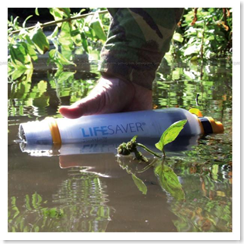
 The Lifesaver is a water bottle–but not just any water bottle. Through "an advanced ultra-filtration membrane that incorporates a high specification carbon block" it can convert dirty water to clean in a matter of seconds–you put in the water, pump it through the filter a few times, then drink. The cartridge is supposed to be able to filter out waterborne pathogens and eliminate bad tastes and odors, too. The replaceable cartridge has a filtering capacity of 4,000 to 6,000 litres, so it’s not short-lived: 700 litres is a year’s supply of water for one person. The military is interested, naturally, but an even more important application would be to supply clean drinking water after disasters such as the Boxing Day tsunami in 2004 or Hurricane Katrina: instead of distributing bottled water, you could distribute bottles that clean the water that’s at hand. And even in the absence of disasters, access to clean water is a worldwide problem.
Hmmm. My daughter’s water bottle is starting to smell funny. Maybe I should be getting her one of these…
Or maybe the Lifestraw is the way to go. It’s a plastic pipe filter 25 centimetres long and 29 millimetres in diameter that costs just a few dollars and can purify up to 700 litres of water.
A word of advice, though: when giving a Lifestraw to a suffering disaster victim, find a different way to instruct him in its use than telling him to "suck it up."
(Via Gizmag.)
(Photo from Gizmag.)
[tags]water,disaster relief,technology[/tags]
 In my initial post, did I not
 The Lifesaver