The sentient Love Machine: Second Life creator planning metaverse Singularity?

Regular readers may remember me mentioning LoveMachine Inc., the new project of Second Life creator Philip Rosedale, back in November of last year. At that point, all the signs pointed toward LoveMachine being a start-up that intended to develop a reputational currency system for virtual worlds… and for all we know, it probably still is.

But thanks to SL uber-journalist Wagner James Au, we hear that Rosedale and company have added another project to the company roster. Its title? “The Brain: Can 10,000 computers become a person?”

Rosedale has long been interested in artificial intelligence, and the metaverse would seem like the ideal platform for that sort of research. Rosedale is playing his cards close to his chest at this point (and the cynic in me suspects that there’s an element of publicity-seeking involved, which I’ve gone and indulged by posting about it), but given LoveMachine’s open-frame “pick a task and join the team” approach to recruitment and the number of floating tech geniuses in San Francisco, I’d guess he’s no less likely to make progress than anyone else in the same field… provided that’s where the company’s focus stays put, of course.

And there’s no guarantee of that, either. LoveMachine’s remit is somewhat peripatetic, as is its culture, with Rosedale and chums setting up shop for the day anywhere they can find comfy seats and free wireless internet. Even if the dreams of metaverse AI come to nothing, LoveMachine may end as a blueprint for a new sort of company that, as Au points out, sounds like something out of William Gibson’s early novels: a loose, ad-hoc collective of tech geeks and console cowboys, working wherever they can find a flat surface and some bandwidth, building new things in imaginary spaces.

Tales from the slush

Mmmm, tasty slush...Short fiction writers would be well advised to follow the Apex Book Company blog, as I think I’ve mentioned before; they have lots of guest posts from writers, editors and other niches in the fiction food-chain, containing plenty of sound advice. Like this post from submissions editor Maggie Jamison, for example, which offers a little hope and solace for those of you who fear the anonymity of the slush pile:

Believe it or not, a submissions editor can remember your name, particularly if you wrote something she liked, even if she passed on it. If you pay attention to rejection comments (if she gives any), and keep working to hone your understanding of her market, chances are your next attempt will be closer to what she wants.

And here’s the funny thing (though maybe it’s just me): we want you to succeed. Of all the other submissions editors I’ve spoken to, the vast majority would much rather send an acceptance letter than the typical form rejection. Heck, even a personal “This was so, so, SO close!” rejection is more fun than the form. I think most magazines want to be the one that nabs the first few publications of a great up-and-comer, and I’ve always enjoyed the vicarious excitement when a manuscript from my slush pile is accepted and bought.

I know that’s the attitude Futurismic‘s very own hard-workin’ Chris East takes to the slush pile… if we didn’t want to publish good stories, we wouldn’t offer $200 per story and throw submissions open to all and sundry! [image by misscrabette]

Maggie makes some sound points about rewrites and re-submissions, too:

Unless I’ve specifically asked you to tweak the story and send it back, DO NOT resubmit the same story. The only other way it might be acceptable is if you rewrite the story so completely that I can’t tell I’ve read it before. But then, it wouldn’t be the same story, would it?

As a submissions editor, I do try (when I have time) to give suggestions for what might make a rejected story just a little bit better. I do this so the author knows and can utilize this information to avoid the same issue in her next story submission, not so the author can tweak her story and send it right back to me. If I want to see a rewrite or a reworking, I will be very, very clear.

Of course, all this advice follows on from the basic rule of making sure you read the submission guidelines carefully for the venue you’re sending your story to. As Chris has pointed out here before, a great many of the stories we reject aren’t bad per se, they’re just not the sort of stories we publish. Researching your market is a great way to lessen the chance of the dreaded “thanks, but no thanks” response. 🙂

We are all sheep: Avatar, Bayonetta and the hypnosis of low-brow culture

Blasphemous Geometries by Jonathan McCalmont

###

I say this without having actually seen it, but James Cameron’s Avatar (2009) is an interesting film. This is because its success has had the same effect upon film critics and cultural commentators as pissing on an electric fence… people are sore, jittery and annoyed at pretty much everyone, themselves included. Continue reading We are all sheep: Avatar, Bayonetta and the hypnosis of low-brow culture

Who’ll be next on the Moon now NASA’s doing other stuff?

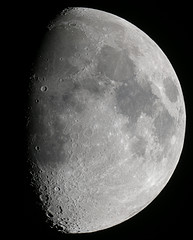
The MoonWell, the new NASA budget from Obama and chums has certainly got people talking… mostly about the fact that the dream of returning astronauts to the Moon is off the table for the foreseeable future [image by ComputerHotline]. Wired has snippets from the budget summary:

“NASA’s Constellation program — based largely on existing technologies — was begun to realize a vision of returning astronauts back to the Moon by 2020. However, the program was over budget, behind schedule, and lacking in innovation due to a failure to invest in critical new technologies,” the budget summary concluded. “Using a broad range of criteria, an independent review panel determined that even if fully funded, NASA’s program to repeat many of the achievements of the Apollo era, 50 years later, was the least attractive approach to space exploration as compared to potential alternatives.”

However, it’s not a massive close-down operation: NASA’s budget has actually been increased, but earmarked for more practical and pragmatic science research, “sustainable exploration”… and keeping some older projects on the books:

Part of that commitment will involve a reprieve for the International Space Station. Instead of being deorbited in the middle of this decade, the ISS will be treated like a national laboratory, and used to pursue research on materials and long-term human habitation in space through at least 2020, with additional construction, including new infrastructure, planned beyond the end of the shuttle program. The budget also includes money for an extension of the shuttle through 2011, which will allow for the inevitable launch delays in its remaining five missions.

io9‘s Annalee Newitz points out that the prospects of the new budget are actually good for pro-exploration types, because it’s a realistic budget that eschews symbolic white-elephant achievements and glory-recapturing in favour of doing affordable things that will teach us lots of useful new stuff. She worries, however, about the fates of those whose expertise will be surplus to requirements now the Constellation project has been shelved:

One of the issues that concerns me the most is what will happen to all the talented NASA employees who have been working on Constellation and related projects. If NASA’s plan is to outsource the development of space vehicles that can carry human cargo, then thousands of jobs will evaporate. Florida alone anticipates losing 7,000 jobs when the Space Shuttle program ends next year. Earlier today Obama told reporters, “We expect to support as many if not more jobs with the 2011 budget,” but those will not be the same jobs. My hope is that some of this budget money that’s been allocated for private sector companies can also be used to place NASA engineers into private sector aerospace jobs. We need to encourage knowledge transfer from NASA to private industry. That way, aerospace companies won’t have to start from square one as they push humans into orbit.

Paging Ben Bova… Sam Gunn‘s time has come, perhaps. After all, there’s nothing to stop private enterprise achieving a Heinleinian dream and setting up a kind of frontier town based on Helium-3 mining and fast-and-loose land claims… well, nothing apart from the same practical difficulties and vast expense that have kept NASA away for the last four decades or so, anyway. But those difficulties don’t seem to be deterring the people behind the Open Luna Foundation [via MetaFilter], which…

… aims to return mankind to the moon through private enterprise. Initial goals focus on a stepped program of robotic missions coupled with extensive public relations and outreach. Following these purely robotic missions, a short series of manned missions will construct a small, approximately 6 person settlement based on a location scouted by the robotic missions. This settlement will be open for anyone’s use (private individuals to government agencies), provided they respect our ethical conduct and heritage policies.

You’ve got to admire the chutzpah, if nothing else… but I think I’ll hold off investing any money in that operation for a little while yet. But it begs the question: if NASA’s putting the Moon on a back burner, who’s going to make it there next? Private enterprise libertarians like Open Luna? China, India, Brazil? Anyone?

Nuclear bomb blast videos redux!

Tobias Buckell’s brief 2007 post of a video snippet showing a Russian weapons test described as the world’s biggest ever nuclear blast has long been the most popular post on this site for search engine traffic. And rather than kvetch about people not coming here for more high-brow entertainment (!), I’m gonna make like a Roman emperor and give out more bread and circuses… pageviews is pageviews, AMIRITE? 😉

So thanks to Wired for rounding up a bunch of video clips from assorted atomic weapons tests; there’s eight over there, if you include the rather harrowing one about the Hiroshima after-effects (which you should surely watch, if only to balance any OMGZ-awesome-big-explosionz!! vibe you get from the others). These two are my personal favourites, though – this one because the mushroom cloud formation is rather beautiful (albeit in a horrifying way):

And this one because it takes you right inside the physical brutality of the blast (not to mention reminding me of a movie about the atomic test programs that I watched as a teenager, the name and basic plot of which is long gone, but the imagery of which haunts me to this day – a Futurismic big-helper gold star to anyone who can point me in the right direction):

Aren’t you glad the prospect of nuclear war is a thing of the past? Oh, wait…