All posts by Tomas Martin

Writer and particle physics student from Bristol, England. My story 'A Shogun's Welcome' featured in Aberrant Dreams #7 and 'The Shogun and The Scientist' will be published in the anthology 'The Awakening' in January 2008. I review at SFCrowsnest and wrote the fictional blog miawithoutoil for the world without oil project.

Thermoelectrics – conduct electricity well but heat badly

Today thermoelectrics let you keep your car seat at the right temperature. In the future they might make everything more efficient.Usually, heat and electric conductivity go hand in hand. Now, thanks to the emerging nanostructure technology movement, scientists think they can separate these two.

“Thermoelectric devices are based on the fact that when certain materials are heated, they generate a significant electrical voltage. Conversely, when a voltage is applied to them, they become hotter on one side, and colder on the other. The process works with a variety of materials, and especially well with semiconductors — the materials from which computer chips are made.”

Previously thermoelectric devices were far too inefficient to be of use. But by adding nanoscale structures a few billionths of a metre across, the heat conductivity of a material can be disrupted whilst the electricity passes through fine, ramping the efficiency up massively. Imagine a computer chip that doesn’t get heated as it works, or a solar cell that uses heat as well as light to generate electricity. Thermo electrics are already starting to get efficient enough to cool your car seathow soon before they start to be used in the growing low energy pc market?

[via ScienceDaily, image from Amazon.com ]

Telescope finds a void in the universe

The central darker region of the middle of this picture indicates something very strange is occuring…Following on from yesterday’s post about Hugh Everett and the ‘Many Worlds Interpretation’ of Quantum Physics, I came across this interesting article via Chris Mckitterick’s blog. NASA’s Wilkinson Microwave Anisotropy Probe(WMAP) has been studying the microwave emissions of the universe back towards the big bang. The Cosmic Microwave Background, or CMB, is more or less constant across the sky, a gradually cooling remnant of the beginning of our universe.

Earlier this year a vast region of space was detected where the CMB was a lower temperature. Further study showed that the area had very few stars or galaxies and was a much bigger empty space than predicted by any models. Some scientists think the hole is caused by a massive patch of dark energy. Others think that this region may be evidence of another universe, especially if a similar patch is found in the southern hemisphere of the sky.

[via Chris Mckitterick, image from Science Daily]

Recordings found of physicist who predicted Multiverse (and fathered indie legend)

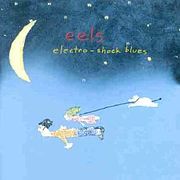
You may know about Eels, but did you know the singer’s father was a famous physicist?Hugh Everett was a quantum physicist. In 1957, as a 24 year old graduate student at Princeton, Everett produced a theory that there was a multiverse made up of many universes. In Quantum Physics a particle can be in two places at once, until it is observed (the famous Schrodinger’s Cat problem). Everett supposed that instead of the other option disappearing, the universe splits into two.

Nowadays the idea is fairly well accepted, with multiple universes popping up in science fiction like ‘Sliders’ and Ian McDonald’s excellent latest novel, ‘Brasyl’. Back when Everett first came up with it, the theory was widely ignored for two decades.

Recently, new tapes have been found of Everett talking about his theory in 1977. BBC found the tapes whilst making a documentary with Everett’s son, who also happens to be rather famous – Mark Everett is ‘E’, lead singer of eclectic indie band Eels. The documentary follows ‘E’ trying to understand better his father’s work. It premieres on BBC4 tonight.

[via the Guardian, image of Eels album cover via Wikipedia]

Scalable Renewables in Berkeley, California

Are clever governments going to encourage more of these in our homes?Microgeneration is the often mentioned as a great way to reduce energy use and dependence on fossil fuels. But looking at the prices of enough solar panels to provide 2-3kW of power is a little bit scary. A loan is possible – but the amount you’d pay back in interest would be frontloaded, whereas the savings in electricity would be paid back in a longer period, say 15-20 years. Wouldn’t it be good if you could offset the cost of the PV panels against future savings on your electricity?

The community of Berkeley is already beginning to offer such a scheme. They offer loans for Solar Electricity with repayments guaranteed to be less than the cost of electricity saved by the panels. Not only does this scheme make Berkeley more attractive to live in, it also encourages manufacturers, installers and testers of the technology to setup in the area. Hopefully this trend will continue in more governments and with more types of microgeneration.

[via Daily Kos, image by roddh]

The Future of short fiction

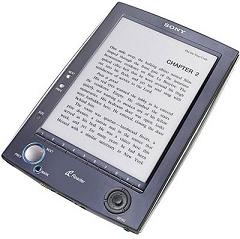
A killer ebook device is surely not far away - are we ready for it?Following her great post on the future of speculative fiction magazines and discussions with the editor of Clarkesworld, Erin Hoffman has created a wiki page to accumulate ideas about a new business model. This is a key time where if things are done right we can create an online medium that benefits writers, editors and readers, unlike the horrible DRM-filled Amazon Kindle model. Sooner or later a good method of reading ebooks is going to take off, whether it’s a Sony Reader, an Iphone or something new. Thinking about a new model now means speculative fiction will be in a position of power when that time comes.

I like the idea of tipjars on stories, or using a Radiohead-style pay what you like subscription model. Magazines available bimonthly for a $2 minimum with the option to give more, for example. Having discussions about stories with the author, tuckerisation and bonus stories are all ways of making the purchase more appealing but there are more options out there.

There will be a sweet spot of pricing that makes a short story or a magazine an impulse buy, much like a 99c mp3. Making the fiction freely available in multiple formats with no DRM is vital. A Last.fm style chart or a facebook ebook application where people could display and read their favourite stories might be a success – people love to show off to their peers what they’re into.

What would you want to see in an online fiction magazine? Join in the debate at the new wiki, or in the comments.

[via Erin Hoffman’s livejournal, picture via technobob]