This is one of those awesome videos that really makes the internet amazing. Clay Shirky, author of ‘Here Comes Everybody’, talks at the Web 2.0 Conference earlier this month in the video above. You can also read a text version on his website. It’s been going around most of the blogs for good reason – it’s a brilliant analysis of how until recently we’ve been denying the free time modern life gives us with television and how the internet is beginning to use that untapped free time and mental creativity.
All posts by Tomas Martin
Nebula Award winners announced
 Over the weekend, the Nebula Awards Ceremony took place in Austin Texas. Hosted by the Science Fiction Writer’s Association of America (SFWA), the following excellent works from last year won the top prizes:
Novel: The Yiddish Policemen’s Union – Chabon, Michael (HarperCollins, May07)
Novella: “Fountain of Age” – Kress, Nancy (Asimov’s, Jul07)
Novelette: “The Merchant and the Alchemist’s Gate” – Chiang, Ted (F&SF, Sep07)
Short Story: “Always” – Fowler, Karen Joy (Asimov’s, apr/may07)
Script: Pan’s Labyrinth – del Toro, Guillermo (Time/Warner, Jan07)
Andre Norton Award for Young Adult Science Fiction and Fantasy: Harry Potter and the Deathly Hallows – Rowling, J. K. (Scholastic Press, Jul07)
Damon Knight Grand Master for 2008: Michael Moorcock
Personally I’m delighted to see Chabon and del Toro get recognised for their work. The Yiddish Policeman’s Union is a tremendously rich alternative history detailing a Jewish settlement in Sitka Alaska coming to the end of its 50 year lease.
Every month the Earth beats up the Moon with its magnetotail
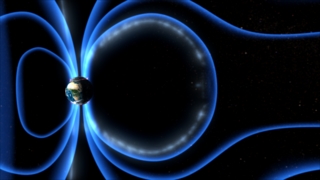 The Moon seems like a pretty static place. After all, there’s little atmosphere and apart from occasional meteorite impacts, nothing much happens. Or so we thought. NASA’s Lunar Reconnaissance Orbiter mission found that every month when the moon is full, the moon crosses through the Earth’s magnetotail, bathing our satellite in high energy charged particles that may create dust storms and electrical static.
Astronauts have never been on the Moon during this period. Landings have never taken place when the moon is full. But as Roland Piquepaille on ZDNet’s Emerging Tech blog discusses, if astronauts return to the moon to establish a base, they will have to face the challenges of the magnetotail, which could clog up vents and even give astronauts electric shocks!
[via Science Daily, image by NASA/Goddard Space Flight Center Conceptual Image Lab]
Cloning technique could bring species back from extinction
 It seems to be a week for biological-related stories here on Futurismic. Using skin cells from the nearly extinct Northern White Rhino, scientists can reprogram them back to an embryonic state, from which they can create sperm and eggs with the animal’s genes. An animal can then be created in vitro or through a surrogate mother from the Southern species of White Rhino. There are only 3 or 4 of the Northern variety left in the wild.
This poses an extremely interesting moral dilemma. Is it worse to clone an animal or to let its species go extinct? And if the animal was cloned, does that make it a legal member of the species?
[via the Independent, Northern White Rhino in San Diego Zoo picture by Eliya]
Potentially huge Brazilian oil deposits good news for fuel supply
 With oil prices again reaching historic highs today of more than $113 a barrel, there are unofficial reports that a massive oil reserve may have been found in the ocean off the coast of Brazil. The drilling company involved, Petrobras, has yet to announce confirmation but National Petroleum Agency President Haroldo Lima said the reserve could have as much as 33 billion barrels of oil, making it the largest find in decades.
Petrobras played down the reports, with the second well drilling into the deposit yet to break through the salt layer under which the oil could be expected. However with biofuel production threatening food shortages in Latin America and the rest of the world, a big oil find in Brazil would come at a much needed time for fuel security.
The world’s second largest producer of oil, Russia, had falling production in the first quarter of 2008, with industry officials ‘gloomy’ about the prospects of even staying at current production levels. Global production has plateaued in recent years, with growth in production in Angola and Russia balancing falling production elsewhere. More finds like the one in Brazil, as well as increased efficiency in using the oil produced will be needed if global production begins to decline.