 Producing biofuels from food crops is beginning to look like maybe not the greatest idea.
What does look like a good idea is producing biofuels from agricultural and forestry residue: straw from cereal crops, stover from corn, and left-over wood from lumber operations. After all, every tonne of grain is generally accompanied by another tonne of residue, which for now is generally baled, burned, or simply chopped and mixed back into the soil. (And some of it does need to remain on the land to prevent erosion and maintain soil nutrient levels, but vast amounts could be harvested.)
Research is underway and pilot plants being built to convert this “lignocellulosic” material into biofuels, and things are looking better for it all the time. For example, scientists from Michigan State University have created a genetically modified corn plant that contains three enzymes enabling the stem and leaves to be more easily converted into ethanol. One, from a microbe that lives in hot spring water, cuts cellulose into large pieces; a second, with a gene from a naturally occurring fungus, breaks the large cellulose pieces into sugar pairs, and the third, which is created by a gene taking from a cow’s stomach, breaks the sugar pairs into simple sugars easily convertable into ethanol. Current methods of converting the cellulose from agricultural residue are expensive because the enzymes have to be purchased and added during the process.
Better yet, University of Massachussetts researchers report they’ve made a breakthrough in the development of “green gasoline,” a liquid identical to standard gasoline created not from petroleum but from biomass sources like switchgrass, poplar trees, and straw and stover:
For their new approach, the UMass researchers rapidly heated cellulose in the presence of solid catalysts, materials that speed up reactions without sacrificing themselves in the process. They then rapidly cooled the products to create a liquid that contains many of the compounds found in gasoline.
The entire process was completed in under two minutes using relatively moderate amounts of heat. The compounds that formed in that single step, like naphthalene and toluene, make up one fourth of the suite of chemicals found in gasoline. The liquid can be further treated to form the remaining fuel components or can be used “as is” for a high octane gasoline blend.
“Green gasoline is an attractive alternative to bioethanol since it can be used in existing engines and does not incur the 30 percent gas mileage penalty of ethanol-based flex fuel,” said John Regalbuto, who directs the Catalysis and Biocatalysis Program at NSF and supported this research.
“In theory it requires much less energy to make than ethanol, giving it a smaller carbon footprint and making it cheaper to produce,” Regalbuto said. “Making it from cellulose sources such as switchgrass or poplar trees grown as energy crops, or forest or agricultural residues such as wood chips or corn stover, solves the lifecycle greenhouse gas problem that has recently surfaced with corn ethanol and soy biodiesel.”
You can read more about the latest efforts to produce “green” fuels from the parts of crops we don’t need to feed a hungry world in “Breaking the Chemical and Engineering Barriers to Lignocellulosic Biofuels: Next Generation Hydrocarbon Biorefineries,” a report sponsored by the National Science Foundation, the Department of Energy and the American Chemical Society.
And perhaps best of all, another set of researchers believes they’ve got a revolutionary process for producing hydrogen from biomass, which might eventually lead us all to the Nirvana of the hydrogen economy.
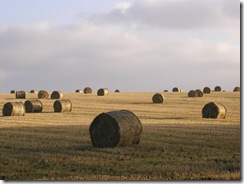
(Image: Shaun MItchem via Wikimedia Commons.)
[tags]biofuels, alternative fuels, ethanol, agriculture[/tags]
 Food prices are at historic highs, thanks to a number of factors including increased biofuel use. Rice prices are causing shortages and inflation problems in India, Bangladesh and the rest of Asia, with prices of many grains double what they were this time last year.
 Via the one and only
  A mix of two stories about completely different types of Black Holes today.