Personality hacking – what are we willing to enhance?

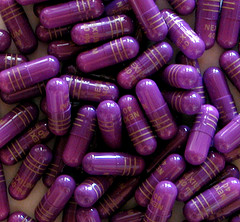
purple pillsOK, hypothetical question – let’s say you could pick any personality trait to be chemically enhanced. Which aspects of your personality would be in the top three? [image by Tom Saint]

According to a recent study, you’re most likely to be willing to tweak the parts of your psyche that you don’t consider fundamental to to your identity as a person – your ability to concentrate, for example, or maybe the number of hours of sleep you need each night. [via FuturePundit]

Human enhancement drugs are still very much in their infancy at the moment; to draw an analogy, many people were pretty leery of plastic surgery when it was first becoming more commonplace. So I suspect that we’ll see the ‘early-adopter’ pattern with more drastic enhancements, with artists, outcasts and other pioneers of the psyche venturing out beyond mere ‘cosmetic’ cognitive enhancement… after all, think how useful it would be to become autistic for a week.

Is short fiction devalued by being available for free?

Gordon Van Gelder – editor-in-chief of the Magazine of Fantasy and Science Fiction – has opened up a debate about genre fiction short stories and their online availability. Understandably, as a publisher of a physical ink-on-paper magazine, he’s wondering if the sheer quantity of free fiction online has devalued the form in general:

Here at F&SF, we’re open to experimentation and for the past year or so, we’ve been publishing one reprint a month on our Website. Last month, the free story was “The Political Officer” by Charles Coleman Finlay. A few days ago, someone posted on our message board that he wanted to read that story. I explained that it was no longer on our Website but he could buy a copy of that back issue from us or from Fictionwise.

As I did so, I realized that I was putting a reader in a position where he had to decide if he would pay for something he could have had for free just a few days earlier… which doesn’t strike me as a good position. I know that I don’t like being asked to make such a choice.

So I started to wonder: has short fiction been devalued by the fact that so many places offer it for free online nowadays?

This is a question that interests me too, for obvious reasons. I run Futurismic because I care about getting good writing in front of the eyeballs that enjoy it, and I compile the Friday Free Fiction posts for the same reason.

The answers to Van Gelder’s questions suggest that some people do indeed think short fiction is devalued by there being more of it available for free, but that strikes me as being counter to basic economic theory – surely the good stuff becomes more valuable when there’s lots of rubbish? [Caveat – I am, by no means, an expert in economics.]

Of course, one’s definition of a good story or book is a very personal thing, and doubtless has a lot of connection to the demographic the reader belongs to, so I dare say there’s no definitive answer.

But nonetheless, I’d like to ask Futurismic‘s readers the same question, though with a different angle to it: do you perceive the short fiction we publish as being inferior because you don’t have to pay to read it? And what effect has the availability of free short stories had on your buying habits?

A new book about Steve Ditko

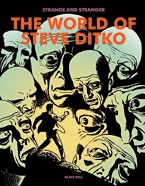
steveditkoThe New York Times has a review of Strange and Stranger: The World of Steve Ditko, a biography and critical study by Blake Bell (Fantagraphics). Stan Lee always knew how to promote himself, and the late Jack Kirby is getting the props he deserves. Ditko is less well known to the public, but of course every comics fan knows he was the original Spider-Man artist. (Tobey Maguire was such a great casting choice, capturing the antiheroic geekiness of the early Peter Parker.)

Ditko now seems now to be leading a strange, sad life, recounts Times reviewer Douglas Wolk:

He split with Lee and Marvel in 1966. By then, he’d fallen under the spell of Ayn Rand and Objectivism, and started producing an endless string of ham-fisted comics about how A is A and there is no gray area between good and evil and so on. “The Hawk and the Dove,” for instance, concerns two superhero brothers who … oh, you’ve already figured it out. Ditko could still devise brilliantly disturbing visuals — the Question, one of his many Objectivist mouthpieces, is a man in a jacket, tie and hat, with a blank expanse of flesh for a face — and his drawing style kept evolving, even as his stories tediously parroted “Atlas Shrugged” and “The Fountainhead” at the expense of character, plot and ultimately bearability.

He drew Transformer coloring books and Big Boy comic books, almost as if he followed John Galt on strike.

(Self-indulgent note: Rand is always good for starting an argument, in my experience…)

[Image: book cover from Fantagraphics]

Friday Free Fiction for 22nd August

Unless I’m very much mistaken, this is one of those rare occasions where the US and the UK get a long weekend at the same time – so let’s celebrate with some Friday free fiction, eh?

***

A trio from ManyBooks.net:

***

From Paul McAuley:

I’ve added a new short story, “A Brief Guide To Other Histories“, to my fiction archive. First published in Postscripts #15, it shares the same multiverse as [McAuley’s latest novel] Cowboy Angels.

***

The latest from Apex Online:

***

There’s some new stuff at Subterranean Online; I’m not entirely sure what’s newest, because either I’ve not been paying attention or their feed hasn’t been coming through to my reader properly of late. So, my apologies if I’ve posted any of these already, or missed any out:

***

From Jayme Lynn Blaschke, Memory #21:

Flavius recoiled from the creature, throwing up his arm between them. The thing stared at him briefly, nictating membranes sliding quickly across the eyes before its spindly arms abruptly produced a translucent, frosted dinner plate with crusted orange balls delicately arranged upon it. It deftly set the plate before Flavius as another arm deposited a tall flute of burgundy liquid on the table. It cocked its head without saying a word, then swiftly retreated straight up.

***

From Jay Lake:

The tarot issue of Behind the Wainscot has gone live. This includes my short-short “Heirophant Bridge“, along with a number of other short-shorts and flash pieces by a wide assortment of authors. Quick, interesting read.

***

The sixteenth (!) DVD extra from Shadow Unit is called “Mythology

***

Via SF Signal, we hear that Jeffrey Carver has released his novel Neptune Crossing as a free ebook in a variety of formats, which you can download from Starrigger.com; looks like there’s some stories as webpages there, too.

From the same tips list, a couple of titles at the curiously named Munseys:

***

And here’s a handful from the Friday Flashers:

***

That’s your lot – plenty to be going on with there, I think. In the meantime, keep your tip-offs and plugs coming through – this time only the deadline is 1800 GMT THURSDAY, because I’m out of town on Friday week and will need to pre-compile. Have a great weekend!
Presenting the fact and fiction of tomorrow since 2001