The straight dope – performance enhancement drugs and the Olympics

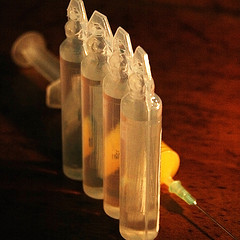
syringe and ampoulesThe Beijing Olympic games are seeing a record-breaking achievement of a different kind – a round-the-clock lab team performing a greater number of tests for performance enhancing drugs, and more different types of tests, than ever before. And even so, the International Olympic Committee expect up to forty athletes to test positive for illicit substances. [image by happysnappr]

So – as suggested in the New York Times but originally proposed by bioethicists and other scientistswhy don’t we just do away with the restrictions entirely?

“… what we have now is not a level playing field. The system punishes some innocent athletes and rewards others with the savvy and the connections not to get caught. The more that the authorities crack down on known forms of enhancement, the more incentive athletes have to experiment with new ones — and to get their advice from black-market dealers instead of doctors.

[snip]

If elite adult athletes were allowed to push the limits of human performance in return for glory, they might point the way for lesser mortals to coax more out of their bodies. If a 50-year-old sprinter could figure out how to run as fast as her 25-year-old self, that could be useful to aging weekend warriors — or any aging couch potato.”

As I’ve suggested many times before to anyone foolish enough to ask my opinion about sports, the thing to do is create a separate league for athletes who enhance themselves, run it in parallel, and sit back to watch the viewing ratings. The noble myth of the natural athlete would die off pretty quick in the hard glare of economics, I’m thinking.

But I suspect that – as with the case of Oscar “Bladerunner” Pistoriuseconomics is the one big force keeping things the way they are. After all, Nike and Adidas and their ilk like to be able to claim that their clothing or footwear is what separates first place from first loser, rather than chemical [x] or prosthesis [y]… and they’ve got a lot of money to throw around in the process.

But would they have enough to hold out against Big Pharma, if they were allowed to join the contest?

Metaverse musician lands meatspace recording contract

Following on rather serendipitously from Mac’s latest column, New World Notes is carrying the story of Tennessee bluesman Von Johin, who has just been snapped up for a recording contract by Reality Entertainment — an ironic name for a record label, when you consider that Johin has been signed on the basis of his performances in Second Life. [image borrowed from linked New World Notes article]

Von Johin, Second Life bluesman

Johin has had some degree of success in the live music business before now, but the Second Life format seems to appeal to him more:

For the most part, however, he no longer has any interest playing live in person. “This is more fun,” he says, referring to his virtual stage. “No gas costs, no travel, worldwide audience, exciting new people, no smoke, no drunks on the road, no hassles.”

So there’s your answer to the indie-bands-touring conundrum, perhaps. If the cost of fuel keeps rising, maybe the metaverse will be the only place you’ll get to see bands that come from a different country to you.

Navigating the Metaverse

Mac Tonnies - Loving the AlienIf you were wondering why Mac Tonnies’ latest Loving The Alien column is a little late, here’s the answer — it turns out he’s been lurking in Second Life. What might the fluid nature of identity in the metaverse mean for our posthuman successors? Continue reading Navigating the Metaverse

Green technology boom

There are a couple of articles in Wired and the FT today about the recent increase in investment in green technology; including solar power, carbon sequestration, wind turbines, energy efficiency technology, and water purifiers.

Highlighted in both is the how rapidly the amounts of money being invested are increasing, from Wired:

Investments in companies working on green technology in North America totaled almost $4 billion in 2007, according to the CleanTech Group. And 2008 is on track to yield five times what was invested in 2004.

They also compare the current increase in investment with the dotcom boom of the late nineties, noting the comparatively high cost of entry as well as the long term outlook of green technology industries, from The FT:

Earlier this year, Arvind Sodhani, president of Intel Capital, an important venture capital investor, warned of a speculative bubble in clean technology start-ups. It is an inevitable concern in the wake of the dotbomb and the less-than-impressive performance of many social networking websites. But echoing the words of solar power entrepreneur Mr Ford, Mr Traversone ripostes: “This is not a fad, this is a secular trend in investment.”

It would be wonderful if there was a second industrial revolution in clean, green technology. Thinkers like James Martin in his excellent book The Meaning of the 21st Century: A Vital Blueprint for Ensuring our Future talks about the idea of “eco-affluence” – the idea of developing an environmentally-friendly but extremely prosperous economy. I recommend Martin’s book as it discusses many speculative ideas but is grounded in reliable evidence.

[articles from Wired and The FT]

Postcards from Enceladus

We interrupt our normal broadcasting to bring you… some space pr0n.

If you’re getting a bit worn down by the trouble and strife here on Earth (and who could blame you?), maybe you’ll get some refreshing respite from five minutes gawping at the landscape of the Saturnine moon Enceladus as captured by the Cassini probe:

landscape of the moon Enceladus

The above image [courtesy NASA/JPL/Space Science Institute] was taken from less than a thousand miles above Enceladus’ surface. Just think – in the space of a month we’ve confirmed water on Mars and seen the surface of a distant moon that may also have the potential to harbour life.

OK, back to the grind. Think about it too long, and it gets hard to come back to Earth…

Presenting the fact and fiction of tomorrow since 2001