Recordings found of physicist who predicted Multiverse (and fathered indie legend)

You may know about Eels, but did you know the singer’s father was a famous physicist?Hugh Everett was a quantum physicist. In 1957, as a 24 year old graduate student at Princeton, Everett produced a theory that there was a multiverse made up of many universes. In Quantum Physics a particle can be in two places at once, until it is observed (the famous Schrodinger’s Cat problem). Everett supposed that instead of the other option disappearing, the universe splits into two.

Nowadays the idea is fairly well accepted, with multiple universes popping up in science fiction like ‘Sliders’ and Ian McDonald’s excellent latest novel, ‘Brasyl’. Back when Everett first came up with it, the theory was widely ignored for two decades.

Recently, new tapes have been found of Everett talking about his theory in 1977. BBC found the tapes whilst making a documentary with Everett’s son, who also happens to be rather famous – Mark Everett is ‘E’, lead singer of eclectic indie band Eels. The documentary follows ‘E’ trying to understand better his father’s work. It premieres on BBC4 tonight.

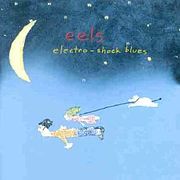
[via the Guardian, image of Eels album cover via Wikipedia]

Old-school bioweapons – sick sheep

Ram with curly horns Biological warfare would appear to be a much older idea than we thought. New translations of ancient Middle Eastern texts suggest the Hittites had hit upon the idea of weakening their enemies with diseases by sending them rams “cursed” with a bacterial infection called tularemia – over 3 millennia ago. Tularemia is still a potentially lethal agent today … whether or not a sheep would be a successful delivery system in our modern age is an unknown quantity, but I wouldn’t be surprised if there were parts of the world where it could still be very effective. [Image by Dave-F]

On a lighter note, I can’t help but be reminded of the Sheep Cannon from the hilarious and addictive Worms computer games.

[tags]warfare, biological, disease, history[/tags]

Scalable Renewables in Berkeley, California

Are clever governments going to encourage more of these in our homes?Microgeneration is the often mentioned as a great way to reduce energy use and dependence on fossil fuels. But looking at the prices of enough solar panels to provide 2-3kW of power is a little bit scary. A loan is possible – but the amount you’d pay back in interest would be frontloaded, whereas the savings in electricity would be paid back in a longer period, say 15-20 years. Wouldn’t it be good if you could offset the cost of the PV panels against future savings on your electricity?

The community of Berkeley is already beginning to offer such a scheme. They offer loans for Solar Electricity with repayments guaranteed to be less than the cost of electricity saved by the panels. Not only does this scheme make Berkeley more attractive to live in, it also encourages manufacturers, installers and testers of the technology to setup in the area. Hopefully this trend will continue in more governments and with more types of microgeneration.

[via Daily Kos, image by roddh]

Friday Free Fiction for 23rd November

A bit of a sparse week for free fiction this time … but there’s always the webzines listed in the sidebar if you’re running short. OK, here we go:

***

Classic free fiction at ManyBooks.net: The Creature from Beyond Infinity by Henry Kuttner (1940), The Worm Ouroboros by E.R. Eddison (1922), “A Wind is Rising” by Robert Sheckley (1957, writing as Finn O’Donnevan)[edited to remove link to copyright infringing material; see comments], plus “Viewpoint” (1960) and “Unwise Child” by Randall Garrett (1962).

At Project Gutenburg, pointed out by none other than Warren Ellis as a formative influence in his reading as a young man, Space Prison by Tom Godwin, the author of the bleak classic short “The Cold Equations”.

And at Arthur’s Classic Novels: The Time Axis by Henry Kuttner (1948) and Stowaway to Mars by John Wyndham (1936).

***

A heads-up from BoingBoing, which may not be news for those tech-obsessed (or financially fluid) enough to own an iPhone:

Josh [Klein] sez, “I wrote a sci-fi novel called “Roo’d” and released it under a Creative Commons Attribution-Noncommercial-Share Alike 3.0 License. Even cooler, it was chosen for release for the eBook reader for the iPhone – the first modern novel released for the platform, and the second available after Tarzan. W00t! As a first-time author I could never have gotten this kind of feedback any other way – now everyone who hacks their iPhone can try out my book, and I’ve received tons of fabulous feedback. Go Creative Commons!”

You should be able to get Roo’d here at Josh’s own site, but it appears to be down at the moment (doubtless thanks to the BoingBoing effect), so maybe try the Google Cache or wait a while.

***

The Friday Flash Fictioneers take the field somewhat reduced in numbers this week, but there’s always a few of the troops willing to man the trenches. Let’s see:

Gareth L Powell has been ill, so he’s using an excerpt of a story titled “Falling Apart” in lieu of a fresh offering.

Dan Pawley puts a twist in the tale with “The New Boss“.

Gareth D Jones is trying an experiment in viral memetic flash fiction with “Let Me Entertain You” – will we see it linked on MetaFilter and Digg before the weekend is out?

And lastly there’s “New kid blues” by yours truly, which probably shows the influence of the Philip K Dick anthology I reviewed recently.

***

That’s your lot! Don’t forget to drop me a line at my address as found on the Staff page if there’s something you think deserves a mention of Friday Free Fiction. In the meantime, have a good weekend!

[tags]free, fiction, stories, online[/tags]
Oops, our bad: by observing the universe, we may have doomed it

DarkMatterPie-590 One of the weirdest aspects of quantum theory is the role of the observer: particles exist only as probabilities until they are observed, at which point they become definite. (Schrödinger’s neither-alive-nor-dead cat is the most famous thought experiment along these lines.) (Via EurekAlert!)

Now New Scientist is reporting that a pair of physicists at Case Western Reserve University in Cleveland, Ohio, suggest that when, in 1998, astronomers observed the light from supernovae and from that deduced the existence of dark energy, we may have reset the clock of the university universe to the state it was in early in its history, when it was more likely to just as suddenly cease to exist as it suddenly sprang into existence in the first place. (Image: NASA via Wikimedia Commons.)

We’re still here, so the universe hasn’t winked out of existence just yet. But any second now…

[tags]cosmology, astronomy, physics, quantum theory[/tags]

Presenting the fact and fiction of tomorrow since 2001