Whoops! UK government forgets how to transfer data, mails CDs with 25m people’s private details

From the annals of incredibly stupid things to do comes this one from the UK.  Evidently someone (a junior official who’s probably been sacked by now) from the Revenue & Customs office thought it’d be a good idea to burn their database of people to a couple compact discs and send it off by unregistered post to the National Audit Office.  The CDs contain personal records, “including their dates of birth, addresses, bank accounts and national insurance numbers“.  The link also has video of the Chancellor speaking.

This points to a lot of concerns people have about their private data.  Similar things have happened in the US – my parents were sent a letter by their mortgage company a few years back saying that a box of data reels containing more than one million entries on loans had been ‘lost.’  My folks were given ONE free credit check and then told to closely monitor their accounts for the next seven years.

An update tells us that the R&C thought it would be too expensive to remove the personal details not needed by the NAO.

(image from mutednarayan)
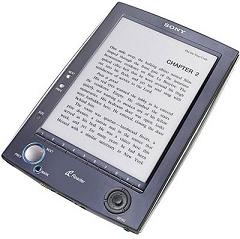
The Future of short fiction

A killer ebook device is surely not far away - are we ready for it?Following her great post on the future of speculative fiction magazines and discussions with the editor of Clarkesworld, Erin Hoffman has created a wiki page to accumulate ideas about a new business model. This is a key time where if things are done right we can create an online medium that benefits writers, editors and readers, unlike the horrible DRM-filled Amazon Kindle model. Sooner or later a good method of reading ebooks is going to take off, whether it’s a Sony Reader, an Iphone or something new. Thinking about a new model now means speculative fiction will be in a position of power when that time comes.

I like the idea of tipjars on stories, or using a Radiohead-style pay what you like subscription model. Magazines available bimonthly for a $2 minimum with the option to give more, for example. Having discussions about stories with the author, tuckerisation and bonus stories are all ways of making the purchase more appealing but there are more options out there.

There will be a sweet spot of pricing that makes a short story or a magazine an impulse buy, much like a 99c mp3. Making the fiction freely available in multiple formats with no DRM is vital. A Last.fm style chart or a facebook ebook application where people could display and read their favourite stories might be a success – people love to show off to their peers what they’re into.

What would you want to see in an online fiction magazine? Join in the debate at the new wiki, or in the comments.

[via Erin Hoffman’s livejournal, picture via technobob]

The writer as entrepreneur

Striking writers outside Disney studios The WGA writers’ strike rolls on, pitting the justifiable desire of creatives to be paid a fair deal for the fruits of their labour against the same sort of grasping tactics that are causing the music industry to eat itself like a cancer. [Image by NoHoDamon]

While I’m supportive of the writers’ position on this issue, I’m intrigued by the outsider opinions. Techdirt points us to an LA Times article discussing the rise of alternative financing models in the movie industry, and suggests that if the big studios stick to their guns they will actually hasten their own demise by creating an environment where smart and talented writers can bypass the traditional system and take their scripts straight to the market, funding their productions using a venture capital process similar to that used by technology startups.

Now, I’m not an economist or a script-writer (and nor do I play either of them on television), but I find the underlying logic of this idea appealing – it seems to be a business model that fits the internet age. But then TechDirt, as fascinating a read as it is, is very much biased toward the independent operator/startup philosophy (as demonstrated by its previous coverage of the WGA strike). Perhaps this idea places too much of a burden on the writer – whose job is, after all, to write. But then again, it’s an accepted truism that novelists must self-market if they hope to be successful, even with the support of a publisher.

I guess only time will tell. But from my personal point of view, a significant lessening of the corporate homogeneity of Hollywood could only be a good thing – it might result in a movie industry that produces more than one film every year that I can actually be bothered to go and see.

[tags]writers, Hollywood, strike, entrepreneurship, business[/tags]

A braw bricht moonlit nicht is a rare thing in the universe

Earth and Moon New observations from NASA’s Spitzer Space Telescope suggest that moons like Earth’s are rare across the universe, occurring in only five to 10 percent of planetary systems at most. (Via Science Daily.)

The observation is based on the belief that the moon was born when the infant Earth was clobbered by something the size of Mars (shades of Velikovsky, except he had collisions like that that happening in historical times). Astronomers don’t see the amount of dust around other stars they would expect to see if those types of collisions were common.

This could have an impact on the likelihood of land-based life on other planets, since life may have moved from the ocean to the land on Earth due to the tides the moon induces. And here’s another question: would we have dreamed of travelling to other worlds if we hadn’t had one hanging so conveniently close in the night sky? Without a moon, would other civilizations ever develop space travel? (Image: NASA.)

Here’s an even more alarming thought: without a moon, think how differently science fiction would have developed. It might not even have developed at all.

And worse yet, what would songwriters have done without a moon to rhyme June with?

Why, the mind boggles.

UPDATE: Here’s an article from Astrobiology Magazine examining what Earth would be like "If We Had No Moon."

[tags]moon,astronomy,NASA[/tags]

An oil production plateau could be with us by 2012

Those derricks may start to pump slower than we might likePeak Oil is a worrying topic but one that is complicated and based on many factors. Even if Hubbert’s predicted peak of oil isn’t close to happening and there are lots of barrels left in the earth, a plateau of oil production, which a lot of oil companies are saying looks likely around 2012, is likely to have a similarly heavy impact on economic growth and prosperity.

The oil taken so far has been mostly the easiest to extract. Whilst large swathes of oil lie locked away in places like the Venezuela Orinoco Belt and the Canadian Oil Sands, they are harder (and more expensive) to get. Added to the slowing of many major crude sources, these facts have led a lot of oil experts to predict the production of oil will slow and plateau, probably never reaching 100mbpd. With China and India increasing demand, we’ll be needing more than that in ten years time. What happens if the supply can’t keep up?

[via wired, image by jGregor]

Presenting the fact and fiction of tomorrow since 2001