Haptics – the technology of touch

human hand cyber hand Michael Anissimov takes a look at haptics – the name for interfaces based on the sense of touch. Largely ignored so far in favour of video and audio (which are much simpler and cheaper to implement), haptic technology is the logical next step in immersive virtual experiences; a haptic suit could simulate real tactile contact in a virtual world. [Image borrowed from Sensory Motor Performance Program]

As Michael points out, the sex industry will be one of the first to take up on this technology (as it did with video, and the internet itself), but once the price drops to within the reach of the average consumer, your home games console will support haptics, as well as most MMOs. Meanwhile, the development will probably be driven by potential military applications … but I doubt it’ll be long before we’re all getting our Lawnmower Man on.

What would you use haptics for? And where would you draw the line?

[tags]haptic, touch, technology, interface[/tags]

Efficient hydrogen producing – new method found

Bacteria and added electricity produce large amounts of hydrogenResearchers at Penn State University have produced hydrogen gas at efficiencies not found before. Tweaking an existing method that previously produced poor rates and yields, the scientists found they could produce nearly 300% the energy used to kickstart the reaction.

Electron-generating microbes produce an electric current that is run through a fuel cell containing biological matter. By adding an additional jolt of electricity at the cathode, the bacteria breaks down the organic matter into hydrogen, without releasing much in the way of greenhouse gases. Whilst this is an early result needing mass study and production, it’s a very promising discovery towards clean fuel.

[via Daily Kos, picture via Wired]

Greening cities from the top down

One thing about cities in Midwestern US – they can be ugly.  Skyscrapers look nice in a skyline, but they block sunlight and take forever to walk around their drab exteriors.  Not to mention in some places like Chicago, there aren’t nearby parks to eat lunch at easily because those spaces are taken up by monolithic city buildings.  That was my impression when I spent time downtown four years ago for a job interview.
Now, though, the drones have a more psychologically friendly place to have lunch – in the garden on top of their building.  Chicago’s now planted 2.3 million square feet of rooftop gardens.  Other notables are Washington, DC, New York City and Phoenix.  And it’s not just for people’s sanity.  These gardens mitigate the heat radiated by the roof in summer, and retain heat in winter.  In addition, they help control runoff from storms, decrease costs for heating and cooling, and provide a haven for wildlife.  The downside?  The initial cost which, even though it can be offset through lower utility expenses, raises the price tag, something that would make any developer flinch.  Fortunately, a new article in BioScience(subscription required) states that improvements in cost-benefit analyses might allay those concerns.

For those of you that are curious, the photos is of the under-construction California Academy of Sciences in San Francisco.  An illustration of the finished building and more info on it can be seen here.

(image via kqedquest)

Photosynthesis2.0 – leaves re-engineered

leaves Our posts about genetic engineering always accrue some interesting comments, so let’s see what Futurismic readers think of this: researchers at the University of Illinois have engineered a new form of plant that produces more leaves and fruit without any need for fertilizers, by tweaking the enzymes used in the photosynthesis reaction.

Don’t get too panicked, though – the plant only exists in a computer simulation so far. And that’s the interesting question, as far as I can see – will we be more trusting of re-engineered life-forms if they’ve been tested exhaustively in virtual form before being created in the real world? [Link via Our Technological Future] [Image by 4x4jeepchick]

[tags]biology, engineering, photosynthesis, simulation[/tags]

Coastal villages may be abandoned to the sea

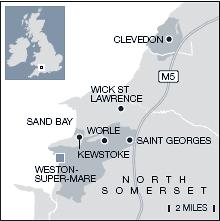
Many areas of the British coast will be evacuated rather than protectedThe Telegraph has an article today about the British coastline and flooding. A few days ago, a storm surge travelling down the North Sea nearly combined with high tides to overtop the flood defenses across much of the East coast of England. Another few inches could have caused widespread flooding similar to that experienced in 1953, when 300 people were killed. Today the UK government admitted rising sea levels mean a number of coastal communities will disappear within the next thirty years. Some low lying villages and farms in Norfolk, Suffolk and Somerset are too vulnerable and would be impossible to save without spending inordinate billions on sea defences. This is a discussion many governments will be having over the coming decade.

[via Daily Kos, image from the Telegraph]

Presenting the fact and fiction of tomorrow since 2001