Self-sufficient space station proposed

Artist's impression of a lunar habitat module Yet another classic science fiction trope that real-world science is reaching towards: a team of scientists have come up with a design for a space station named "Luna Gaia" that works on similar principles to a biosphere – a "closed-loop" ecology where almost all waste products are recycled by the system. [Image credited to NASA]

The ISS runs on a type of closed-loop system already, but the recycling processes are largely based on chemical reactions; the biosphere design would use plants and algae instead, as far as is practically possible, and should be theoretically capable of sustaining twelve astronauts for three years. The diet sounds a bit dull, though …

[tags]space station, biosphere, astronauts[/tags]

Space mirrors best way to deflect asteroids

Asteroid deflection with space mirrors The best way to deflect incoming asteroids? Forget nuclear blasts, "gravity tractors" or  Bruce Willis or Clint Eastwood in a souped-up space shuttle: according to a new study at the University of Glasgow, focusing sunlight onto an asteroid with space-based mirrors is the way to go.

Mind you, it would take 5000 space mirrors to fend off something of the size the killed off the dinosaurs–more than five kilometres across–but you wouldn’t need nearly as many for smaller ones. (Via New Scientist Space.)

Other options considered in the study: ramming a spacecraft into the asteroid at high speed, digging up pieces of it and shooting them off into space, attaching a thruster, or painting one side to cause trajectory-deflecting uneven heat radiation. (Illustration: M Vasile et al, University of Glasgow.)

[tags]spacecraft, asteroids, planetary defense[/tags]

Good news for solar power, but problems remain

From FuturePundit, we get a rough outline of the solar situation in the US.  Basically, solar power is growing more popular, but the percentage of homes using solar power is still tiny.  According to this article at the Wall Street Journal, various problems await homeowners looking to install solar panels.  In addition to months-long waits, one of the biggest problems is that the panels are installed incorrectly, making them very inefficient.

Overall, though, solar usage is growing and expanding into markets beyond conventional home power.  Golf carts, pool heaters, and solar water heaters are all becoming more popular.  Other good news includes a move from solar thermal cells, where the sun heats up liquid that is used to make electricity, to photovoltaic cells which convert sunlight directly into electricity.

As a young, single guy who hasn’t lived in a place more than three years since high school, buying a house and making it energy efficient won’t happen anytime soon.  I plan on keeping a close eye on developments, however.

(image via Beige Alert)

The bell tolls for second-hand bookstores

Random shelves in a second-hand bookstore According to an article in Entrepreneur magazine, second-hand books stores are one of a list of businesses that are on their last legs thanks to the all-pervasive interwebs. Amazon, eBay and abebooks have all played their part in the acceleration of this demise – it’s just so much easier to find specific titles online. [Via SFSignal]

Personally, I like to browse, sometimes with no intent of actually buying anything – and I find brick-and-mortar stores far more satisfying for that, as well as the public library. Maybe that luxury will not be available to me for much longer – but it’s fair to assume that the trade of books won’t cease, it’ll just move entirely online. [Image by dweekly]

[tags]internet, business, books, bookstores[/tags]

Southern Californian water cut by 30% next year

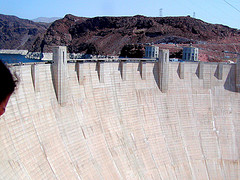
The Hoover Dam is a key part of the water ristribution of the southwest USThe South of California is a very precarious economy. California boasts between the fifth and tenth biggest economy in the world if viewed as a separate entity, with Los Angeles alone being an economy comparable to all of Russia. One of the main things that makes California so competitive is its agriculture, which makes it the fifth biggest provider of food in the world.

The farms, vineyards and homes of Southern California depend on a great complex construction of dams reaching out to the surrounding states. Drought in the Colorado River is causing huge problems downstream as more people move to the west coast. The supplier, Metripolitan Water District, predicts a dry spell cutting up to 30% of supply to farmers next year, the biggest set of drought conditions since 1991. California is a paradise but the climate and supply lines it is founded on are in a delicate balance that climate change may tip into unsustainability.

[photo by Steven Pagel]

Presenting the fact and fiction of tomorrow since 2001