Tag Archives: books

Win Wyndham’s five cozy catastrophes

The Midwich Cuckoos - John WyndhamGood news if you’re a fan of classic British sf novels – Penguin Books have just republished five of John Wyndham‘s “cozy catastrophe” books with fresh new artwork, and there’s a competition over at Forbidden Planet where you can get the chance to win them all by answering a ridiculously easy-to-Google question.

The only catch is that you have to sign up for a Forbidden Planet account (if you don’t already have one), but there’s worse outfits to get the occasional email from than a comics and genre fiction specialist, AMIRITE?

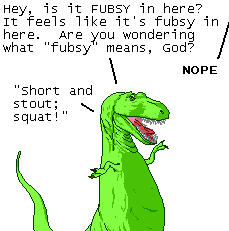
Dictionary to slaughter cool archaic words

TimesOnline (UK) is trying to save them:

It may appear agrestic to ask, but The Times is calling on its readers to come to the rescue of words that risk fading into caliginosity.

Dictionary compilers at Collins have decided that the word list for the forthcoming edition of its largest volume is embrangled with words so obscure that they are linguistic recrement. Such words, they say, must be exuviated abstergently to make room for modern additions that will act as a roborant for the book.

[Story tip and panel: Dinosaur Comics]

Pullman on the futility of censorship

Philip Pullman, celebrated author of His Dark Materials, talks sense on censorship:

The inevitable result of trying to ban something – book, film, play, pop song, whatever – is that far more people want to get hold of it than would ever have done if it were left alone. Why don’t the censors realise this?

Huzzah for human nature then.

He also makes some rather good comments on the nature and extent of religious authority:

Religion, uncontaminated by power, can be the source of a great deal of private solace, artistic inspiration, and moral wisdom. But when it gets its hands on the levers of political or social authority, it goes rotten very quickly indeed.

My basic objection to religion is not that it isn’t true; I like plenty of things that aren’t true. It’s that religion grants its adherents malign, intoxicating and morally corrosive sensations. Destroying intellectual freedom is always evil, but only religion makes doing evil feel quite so good.

I certainly don’t object to religious belief – but I do object to unaccountable power, which is the kind that many religious authorities possess.

[from The Guardian][image from Gullig on flickr]

A new hope? Another call for positive science fiction

As an antidote to the previous doom-flavoured post, here’s recent Clarion alumni Damien G Walter suggesting that it’s time science fiction started taking a more hopeful and positive look at the future:

But there are no end of reasons to have hope for tomorrow. Biotechnology and genetic research offer fantastic advances in medicine, yet their portrayal in science fiction is typified by the gloom of Margaret Atwood’s Oryx and Crake. The internet is already democratising many new areas of society, but our political future is still most commonly depicted as one flavour of Big Brother dystopia or another. Environmental or economic collapse might plunge us all headlong into the apocalypic future of Cormac McCarthy’s The Road, or we might respond to them with intelligence and ingenuity and take the opportunity to find better ways of living. To look at the infinite possibilities of the future and see only darkness is a failure of imagination.

Here, Walter echoes similar calls from Jason Stoddard and Jetse de Vries, and doubtless some others I’ve not noticed (or, just as likely, forgotten about); it definitely appears to be a theme with some of the young turks of science fiction writing. Are we witnessing the first stirrings of a new movement?

And what about the readers? OK, so the writers are bored of dystopic futures, but how many of us would like a little more optimism in our escapism?

It’s the way you walk…

walkingResearchers from Scotland and Belgium have identified a link between a woman’s stride and orgasmic ability:

The results showed that the appropriately trained sexologists were able to correctly infer vaginal orgasm through watching the way the women walked over 80 percent of the time. Further analysis revealed that the sum of stride length and vertebral rotation was greater for the vaginally orgasmic women. “This could reflect the free, unblocked energetic flow from the legs through the pelvis to the spine,” the authors note.

Another advance in the onward march of science…

In slightly more directly sfnal news scientists have discovered an upper limit to the mass of black holes:

…these gigantic black holes, which accumulate mass by sucking in matter from neighboring gas, dust and stars, seem unable to grow beyond this limit regardless of where – and when – they appear in the universe.

This may affect some of the long term predictions of the future of the universe, as expounded in Stephen Baxter‘s Deep Future, which is well worth a read.

[both stories from Physorg][image from pizzodisevo on flickr]