Tag Archives: books

The fragmentation of science fiction

Miscellaneous sf novelsio9 picked out an interesting quote the other day; here’s Jacob Wiseman of genre small press Tachyon Books talking to The Rumpus about the fragmentary market for science fiction publishing:

You’ve got all these smaller groups in the field that are no longer able to really talk to each other, so there’s less of a central conversation… You can’t just stick a rocketship on the cover of a book and expect it to sell. That’ll work for the Hard SF readership, but that’s not going to sell thousands of copies. In the 1960s there were only 150 or so books published each year, so it was really possible for a dedicated fan to read 50 to 100 of them. Now, Locus lists something like 2,500 books published in the genre annually. No one can read that much.

Futurismic is quite obviously ‘part of the problem’ here, if you care to see it as a problem (and if you concede that the ‘smaller groups can’t talk to each other’)… and I must confess that I don’t. Indeed, I’ve compared the fragmentation and expansion of sf to the proliferation of rock music subgenres many times before; it may not make things easy for publishers to make money (which is not a good thing) but it produces a panoply of diverse iterations from a basic cultural idea… which is great for the end user because it means that there’s more likely to be something that really flicks your switches (though it may be more difficult to discover than the latest big-name thriller).

If you read Futurismic, I presume you have an interest in what might be described as ‘non-classic’ sf – but do you think the proliferation of subgenres have weakened the core appeal of the genre, or have they just distributed it more widely through multiple cultural structures? [image by yours truly]

1 tree = 111 books: is reading an environmentally sound pastime?

book stacksOver at Tor.com, novelist M M Buckner does a bit of soul searching regarding her reading pastime; if one tree makes 111 books, is the environmental sacrifice justifiable?

How long does it take you to read 111 books? What if you count magazines, newspapers, catalogs, photocopies , billing statements, Valentine cards to loved ones? Every year, one tree absorbs 26 pounds of carbon dioxide and exhales enough oxygen to keep four people alive. The UN says, to make up for all the trees we’ve killed in the last decade alone, we’d need to plant a forest the size of Peru. Only, Peru is just not into that.

So is buying a book a form of murder? When I leaf through the latest science fiction thriller, am I suffocating some future possible infant in the crib? Does reading make me a baby killer?

Her response is that the ebook revolution that’s currently gathering pace is the antidote to any such worries, and it comes with a side serving of “literary egalitarianism” – in other words, it activates a kind of Long Tail economics where more obscure titles become better business propositions, which is something that one would hope even the most die-hard climate skeptic can get behind. [image by ginnerobot]

Of course, if you’re still worried about atoning for your book habit, you could always reduce your footprint in some other way, like eating less meat

2009 – the year the physical bookstore lays down and dies?

bookstore signWe already know there’s trouble in the world of publishing, and according to the New York Times there’s just as much grief in the domain of the bricks-and-mortar bookstores… and it’s all the fault of us dedicated readers who buy second-hand novels online or swap between circles of friends, not to mention students cutting costs by picking up pre-owned titles that would normally swell the backlist sales figures. Is publishing having its Napster moment? Is this the beginning of the end? [image by jayniebell]

Well, as with all things, it depends who you ask. Mike Masnick at Techdirt suggests that the death of bookstores doesn’t have to be the death of books:

Past studies have shown that an active second hand market helps to boost the sales of new goods, because it makes those goods more valuable to folks who recognize they’ll be able to resell them on the second hand market later. That may not be helpful to physical bookstore retailers, but those retailers have to learn to adjust with the times as well. Obviously, just selling books is going to make less and less sense, but we’ve seen retailers that have worked hard to turn their stores into destinations, where there were good reasons to go and buy stuff, rather than just being a physical version of what you could get online.

It’s an interesting response – though I’d point out that it’s exactly that type of “destination” branding that has killed off the UK library service so effectively. But then again, libraries aren’t businesses in the same way as bookstores.

Where do you buy your books?

Spend your gift money at Apex Book Company

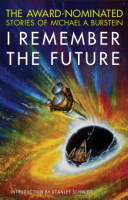
Michael Burstein - I Remember the FutureIf you’ve got some cash to hand after the seasonal blow-out, and if you fancy spending it on something worthwhile at the same time as helping out a small business that’s fallen on tough times, you could do a lot worse than pop on over to Apex Book Company (the people who put out the excellent Apex Online webzine) and buy a little something. Jason Sizemore explains:

Apex Publications needs an influx of revenue. Quick.

What this means is that if you’ve ever thought of buying an Apex book, now would be a damn good time to do so.

The most effective, easiest and most fun way to pump some blood into Apex is to buy a book directly from our store. You get damn fine literature (and free media shipping if your order is $25 or more (applies to US orders only)).

If you’re strapped of cash, then blog about our books or authors and try to coerce people into giving us a try.

I figure we need about $2500 in revenue over the next two weeks.

So go buy a book, or a back issue of Apex Digest, the excellent print mag that has now morphed into Apex Online. You get something nice to read, and to rest assured that another small press survives to publish more quality fiction – sounds like a win-win deal to me.

Synthetic opals bring post-Kindle e-books closer

A team of chemist-entrepreneurs says it has developed a photonic ink (“P-Ink,” unfortunately) that changes color with the addition of a few volts of electricity.

Electronic inks are already used in commercial products such as Amazon’s Kindle reader. Most current technologies use an electric field to manipulate drops of oil or pigment particles. The presence or absence of a voltage makes pixels on the display appear light or dark, and most displays are confined to monochrome. P-Ink, however, can display any colour without using pigments. Instead, it relies on the same effect that generates shimmering colours in the semi-precious stone, opal.

(If you’re having Roxy Music flashbacks now, me too.)

(Large friendly letters on the cover from BBC)