Tag Archives: internet

Battles in cyberspace: Anonymous vs Scientology

William Gibson, considered by many to be the father of cyperpunk, has written recent novels in the present time as we’re almost in a cyberpunk world alreadyWhen the first cyberpunk writers picked up their pens in the eighties and wrote about conflict acted out over computer networks, it seemed like a lifetime away. In recent years we’ve seen internet attacks on Estonia and on power infrastructure. Countless griefers, hackers and virus-creators have found a way to virtually attack others.

Now it seems there’s something akin to a war on in one corner of the internet. A number of individuals calling themselves ‘Anonymous’ have posted a series of videos on Youtube decrying the Church/Cult of Scientology and what they call its manipulation of its followers. In related moves, a number of high profile Scientology websites were attacked by hackers and taken down. The Anonymous group seems to be using many of the techniques used by Alternate Reality Games like World Without Oil or Perplex City to create a campaign against elements of the real world.

It’s very reminiscent of the blending between virtuality and reality seen in Charles Stross’ Halting State. You can find Anonymous’s original message to Scientology video here and their reply to the media interest here on Warren Ellis’ blog. A new video was released yesterday explaining some more of the group’s message, in particular making it clear they are not just a group of hackers. It also warns of protests against Scientology on the 10th February. Whoever is doing it and for what reason, it’s a fascinating example of just how different our world(s) are now compared to even a few years ago.

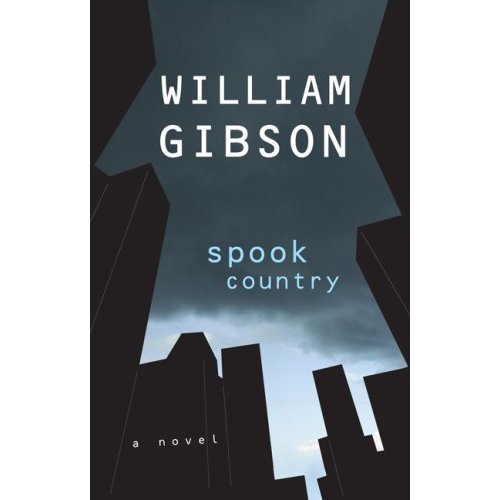
[via Elizabeth Bear, image via Wikipedia’s page on William Gibson’s Spook Country]

Climate change explained through probability and risk: It doesn’t matter if it exists, we should act anyway


Craven has created a series of fun, educating videos that should be watched by all.Science teacher Greg Craven posted a video entitled ‘The Scariest Video you’ll ever see’ on Youtube in June 2007. The ten minute video garnered over 7000 replies including many criticisms from global warming sceptics. Craven decided to rebut these criticisms. He spent four months of his spare time researching data on the debate, ticking off each criticism that had been made. He then released “How It All Ends”, another ten minute video but this time with an ‘expansion pack’ of videos going into each of his arguments in exhaustive detail.


Interestingly, much of the content of the six-hour, 44 part series is not devoted to proving whether global warming is happening or not, or whether man is causing it or not. He looks instead at the four main outcomes: global warming exists and we do something, it exists and we don’t do something, it doesn’t exist and we do nothing or it doesn’t exist and we do something. He concluded the costs of doing nothing far outweigh the cost of doing something, so it makes sense to take action even if we don’t know whether global warming is happening or not.

A site has also started up devoted to the videos, where the forum members critique and find responses to each new criticism as it comes through on Youtube. The efforts of these people to encourage reasoned debate is heartening. Many of the arguments against combating climate change revolve around the fact that science doesn’t agree 100% with the precise outcome. Well, science never will agree, not totally, especially with oil industry-paid advocates in the mix. But even without more and more evidence leaning towards the ‘we need to do something camp’, the logical thing to do is to take action, even if it turns out we didn’t need to. There’s also a great interview with Kim Stanley Robinson at BLDGBLOG about this.

Man investigated by feds for making nuclear reaction in bedroom

The FBI swooped into a house in Rockwall, Texas when it emerged a gamer and physicist enthusiast was trying to create a small nuclear reaction in his house using Uranium.

“People do it in universities all the time,” the man said. “It’s just not usual that somebody does it outside of a university. These things are in your tap water, you know, in the dirt. You could hold a Geiger counter up to a banana and get a count off of it.”

It just goes to show how the internet helps to spread information – the man learnt how to make the mini nuclear reactor using online resources and then the FBI learned he was doing it via his online blog posts about his house doubling in radioactivity.

EDIT: In a similar ‘normal guy gives governments a scare’ vein, it looks like the recent confrontation between US patrol boats and Iranian Revolutionary Guard in the Straits of Hormuz may in fact have been a hoax by a local radio ham who regularly pranks passing ships.

[via Gamespot News]

Who clicks on banner ads?

pedestrian and beauty ad That’s a question I’ve asked myself more than a few times, and I’ll bet you have too. Danah Boyd also wants to know who actually clicks on internet adverts:

“A few years back, I asked this question to someone who worked in the world of web ads and I received a snarky (and condescending) answer: middle America.”

As sweeping a stereotype as it may be, it’s backed up by research done by AOL’s marketing people:

“Who are these “heavy clickers”? They are predominantly female, indexing at a rate almost double the male population. They are older. They are predominantly Midwesterners, with some concentrations in Mid-Atlantic States and in New England. What kinds of content do they like to view when they are on the Web? Not surprisingly, they look at sweepstakes far more than any other kind of content. Yes, these are the same people that tend to open direct mail and love to talk to telemarketers.”

Which leaves Ms Boyd asking questions about the ethics of advertising:

“I am not an advertiser and I’m not invested in making better ads. Instead, by raising this topic, I’m curious whether or not web marketing is capitalizing on a niche group and, if so, what the societal implications of this might be? If my hypothesis were true, what would it mean if marketing is profiting primarily off of those who are economically and socially struggling? How do we feel about this philosophically, ethically, and professionally? Would we feel proud of living off of a business model that targets the poor?”

It’s an interesting question – but I’m left wondering whether it’s really any different from the non-web ad industry. Hasn’t advertising always been designed to bamboozle the easily-led? But to extend Ms Boyd’s thoughts further, as the web moves inevitably towards being funded entirely by advertising, will it become the victim of its own success? [Via SmartMobs] [Image by Michale]

[tags]internet, advertising, marketing, demographics[/tags]

A glimpse into a Wireless Future

Since 2002, the Wireless World Initiative (WWI) has been working on a number of user-centric wireless systems that integrate what is currently an extremely disjointed mess of networks and protocols.  The five systems – SPICE, MobiLife, WINNER, E2R and Ambient Networks aim to provide a seamless wireless system that connects up all of a user’s gadgets and software in an integrated configuration that doesn’t impact on the usability for the user.

Science Daily has a good article on what ‘Bob the builder’ and ‘Bob the businessman’ might use this new technology for.

“Outside their front doors, the two Bobs wish each other a good morning and head their separate ways. On the train, the businessman watches the financial news on his palm pilot, while the builder tunes in his phone to his favourite digital radio channel and relaxes in the morning traffic to some classical music.”

[via ScienceDaily]