
Tag Archives: marketing

Political science redux: Marketing, the Internet, and all that

Reading yet another article about how !!11!!ZOMG politicians are learning to use the interwebs!!11!!! suggests an observation, which I’ll try to make as politically neutral as possible:
If one particular candidate I’m thinking of wins the Presidency, one of the reasons is going to be how easy his Web site makes it to do volunteer work for him.  I’ve volunteered for several candidates over the years, but I have never seen anything this user-inviting.

Just an observation, but one that I think fits the mission of this site.

(Hint: His name ends in a vowel besides Y, which would be another first)

[Internet poster by Sebastian Prooth]

United States of Mind: Is geography personality?

agree

A new study says personality traits vary by region in the U.S (pdf). Here’s the map for niceness. Minnesota’s score does not surprise me (assuming there’s anything to this at all, of course). The study also maps openness, extraversion, neuroticism, and conscientiousness (and it’s surprising to see my adopted state of Arizona scoring so high there). Color maps next time, please, professors. Actual marketing people need these.

[Tip: Andrew Sullivan; image: Rentfrow et al.]

Scented laptops

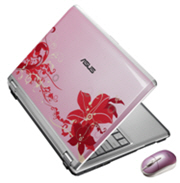
floralApparently for real, from PC maker Asus:

Floral Blossom is pink with a flowery smell; Musky Black sports graffiti art and emits an earthy musk; Morning Dew comes in pastel green and offers that refreshing early a.m. je ne sais quoi; and Aqua Ocean gives off an aquatic aroma and comes with sky and wave imagery on the cover.

MediaBistro, unimpressed:

I can’t wait to get on a plane in a middle seat in coach surrounded by this stuff.

[Floral by Asus]

ReWalk exoskeleton video – marketing the future as the present

ReWalk is an Israeli-developed exoskeleton suit that gives paraplegics the ability to stand, walk – and even drive. This story has been floating around for a few days (including some typically tasteless Robocop comparisons from UK tabloid news outlets), but m1k3y at grinding.be posted the video and it looked so science fictional – that perfect balance between “wow, check it out” and no-big-deal workaday reality – that I thought it deserved a re-run here:

See what I mean about workaday? The whole atmosphere of the video is low-tech, almost mundane. Perhaps they’re playing down the technological angle for fear of attaching stigma, but it’s about as un-Robocop in style as you could imagine. What will promotional videos for the first commercially available brain-machine interfaces look like?

Is “young adult” science fiction a force for good or evil?

Unattended children will be towed at owner's expenseThe ladies of io9 kicked off a neatly polarised debate over the weekend with two opposing articles about YA or “young adult” science fiction. Charlie Jane Anders says that YA is science fiction’s salvation:

“While the “real” science fiction publishers are chasing a shrinking — and graying — readership, tweens and teens are discovering SF for themselves, thanks to books from a diverse range of writers. Best of all, YA science fiction isn’t aimed at a subculture, but at everybody of a particular age.”

Meanwhile Annalee Newitz begs us to stop writing young adult sf:

“… I object to the idea that young people need their own special, segregated genre of books, as if their minds are so dramatically different from adult minds that they require their own category of fantasy. Once a person has reached adolescence, relegating their reading material to its own gated subgenre seems at best condescending and at worst censorious.”

I’ll happily admit to falling into the latter camp. It’s not even a science fiction specific issue for me; no teenager enjoys being patronised with material specially designed for their age demographic, because all a teenager wants is to be treated like an adult. Plus I’ve worked in a public library, and I can tell you that a lot more adults borrow supposedly YA titles than kids in their early teens. [image by pingnews.com]

So, “Young Adult” books – a shot-in-the-arm for genre fiction, or a flash-in-the-pan from the marketing people?