Tag Archives: media

Death threats over Large Hadron Collider

frankensteinIt’s not quite pitchfork-bearing mobs, but still.

Scientists working on the world’s biggest machine are being besieged by phone calls and emails from people who fear the world will end next Wednesday, when the gigantic atom smasher starts up….

Such is the angst that the American Nobel prize winning physicist Frank Wilczek of the Massachusetts Institute of Technology has even had death threats, said Prof Brian Cox of Manchester University, adding: “Anyone who thinks the LHC will destroy the world is a t—.”

Fermilab plans a pajama party to celebrate the start of the experiment.

[Photo: Fuzzy Gerdes]

All mediums are equal – an end to science fiction tribalism

Another month, another inadequate pay-cheque. More empty days and suffocating nights alleviated only by cheap hooch, regrettable takeaways and the occasional all-too-brief orgasm. This is your life… and this is the return of Blasphemous Geometries.

Blasphemous Geometries by Jonathan McCalmont

The critical language of science fiction is balkanised according to the media form which the work being discussed belongs. Jonathan McCalmont suggests it is the critic’s place to encourage a merging of genre’s disparate media tribes. Continue reading All mediums are equal – an end to science fiction tribalism

Are the Olympics a convenient smokescreen for the conflict in Georgia?

Georgian tank troopsWhen I first heard the news about Russia’s invasion of Georgia last Friday (not coincidentally via Twitter rather than the mainstream media), my immediate thought was “well, you timed that neatly, didn’t you?”

I then shrugged it off as paranoid cynicism on my part, but it appears I’m not alone in suspecting that Russia quite deliberately waited until the world was busy watching the Olympic Games before launching their strike on Georgia. [Via Sentient Developments]

And the more I think about it, the more likely it seems – after all, DDoS cyberwarfare is part of the military game-plan now, so why not use current events to enhance the fog of war a little bit?

Listening to this morning’s typically vapid radio news bulletins here in the UK (fifteen seconds on Georgia, two minutes on the Olympics, two minutes on soccer) it appears to be a pretty effective tactic, albeit one that exploits our natural tendency to ignore bad news unless we feel it affects us directly.

The only remotely pleasant side to this line of thought is the possibility that one day wars will be fought entirely through media channels, obviating the need for the death and displacement of thousands of innocent people. Yeah, so I’m a dreamer. Sue me. [image from Wikimedia Commons]

Queen Rania of Jordan opens communication with the West… via Youtube


It’s impressive how far new media has come and how important it is becoming in all parts of modern life. In addition to the myriad of blogs, news sites and internet radio stations contributing to the discussion of pretty much anything from politics to skateboarding, we have the emergence of the online video.

Video is beginning to catch politicians out when they ‘misspeak’ on a previous statement or action. Senator George Allen’s defeat in 2006 was widely credited to a young staffer catching him using a racial slur on video. But it’s not just accidental footage that’s making an impact. Barack Obama’s ‘A More Perfect Union’ speech has over 4 Million views in less than a month. Now Youtube can claim another powerful figure, with Jordan’s Queen Rania using the medium to ask people for their stereotypes and questions about the Middle East in an attempt to bridge the gap between Arab States and the West. This kind of meta conversation between those who even ten years ago would just not have happened. Interlinked worlds like those in David Louis Edelman’s ‘Infoquake’ are easier to imagine with online interactions like this one.

[via Neatorama, video via Youtube]

The Future of short fiction

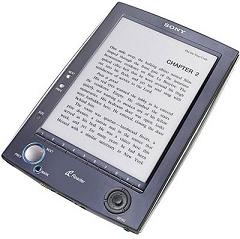
A killer ebook device is surely not far away - are we ready for it?Following her great post on the future of speculative fiction magazines and discussions with the editor of Clarkesworld, Erin Hoffman has created a wiki page to accumulate ideas about a new business model. This is a key time where if things are done right we can create an online medium that benefits writers, editors and readers, unlike the horrible DRM-filled Amazon Kindle model. Sooner or later a good method of reading ebooks is going to take off, whether it’s a Sony Reader, an Iphone or something new. Thinking about a new model now means speculative fiction will be in a position of power when that time comes.

I like the idea of tipjars on stories, or using a Radiohead-style pay what you like subscription model. Magazines available bimonthly for a $2 minimum with the option to give more, for example. Having discussions about stories with the author, tuckerisation and bonus stories are all ways of making the purchase more appealing but there are more options out there.

There will be a sweet spot of pricing that makes a short story or a magazine an impulse buy, much like a 99c mp3. Making the fiction freely available in multiple formats with no DRM is vital. A Last.fm style chart or a facebook ebook application where people could display and read their favourite stories might be a success – people love to show off to their peers what they’re into.

What would you want to see in an online fiction magazine? Join in the debate at the new wiki, or in the comments.

[via Erin Hoffman’s livejournal, picture via technobob]