Tag Archives: medicine

Doctor, my nays: Physicians strike back at online reviews

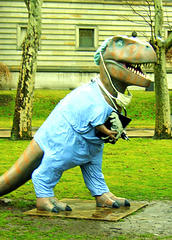
scrubsLike restaurants and hair stylists, doctors now have to face the public, in the form of reviews posted on the Internet. Some are trying to get patients to sign promises not to post negative comments — or any comments at all. It’s even spawned at least one new business: Medical Justice, in Greensboro, North Carolina, sells a standard waiver agreement.

Patients who sign agree not to post online comments about the doctor, “his expertise and/or treatment.”

It seems like swimming upstream in the Internet age, but let’s do some point/counterpoint:

Some sites “are little more than tabloid journalism without much interest in constructively improving practices,” and their sniping comments can unfairly ruin a doctor’s reputation, [Medical Justice founder Dr. Jeffrey] Segal said….

John Swapceinski, co-founder of RateMDs.com, said that in recent months, six doctors have asked him to remove negative online comments based on patients’ signed waivers. He has refused. “They’re basically forcing the patients to choose between health care and their First Amendment rights, and I really find that repulsive.”…

“Are there bad doctors out there? Absolutely, but this is not a good way to figure it out,” [Chicago gynecologist Lauren] Streicher said.

Ars techica comments:

Review sites will only continue to increase in popularity—though potential customers should always take what they read online with a grain of salt. Instead of fighting the trend, doctors need to embrace the new reality and maybe even use the reviews as an opportunity to improve themselves.

[Image: Scrubs, by ndanger]

Bionic eye breakthrough

eye_closeUS company Second Sight have developed a bionic eye system that allows a man who has been blind for 30 years to see flashes of light:

He says he can now follow white lines on the road, and even sort socks, using the bionic eye, known as Argus II. It uses a camera and video processor mounted on sunglasses to send captured images wirelessly to a tiny receiver on the outside of the eye.

The Argus II is designed to help sufferers of retinitis pigmentosa, a degenerative eye condition.

[article form the BBC][image from Mazintosh – Fotogranada on flickr]

Cure your cancer by contracting a virus

Seneca Valley oncolytic virus structureThe race to find a cure for cancer continues among a number of vectors, the better known of which are chemotherapy and gene therapy. But there are other methods being developed, including oncolytic viruses.
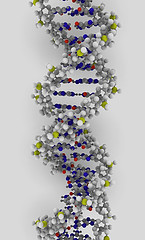
The Seneca Valley Virus is a naturally-occurring (and untweaked) virus which has been shown in clinical trials to be remarkably effective at treating some of the more nasty human cancer types while presenting no threat to the human body itself.

The biggest upside of oncolytic viral treatments is that they can be used on cancers for which there is no viable surgical procedure, though their ability to travel through the bloodstream and work on metastatic cases as well as local ones is good news too. [image from Wikimedia Commons]

Gattaca becomes reality – all babies to be DNA sequenced at birth by 2020?

digital rendering of DNAA genetics outfit named Illumina is preparing to launch an affordable genetic mapping service in the next couple of years. Its first few customers can expect to pay between US$10,000 and US$20,000 for a complete mapping of every gene in their DNA, but their chief executive has told The Times that by 2020 the equipment should be so affordable that all newborns will have their genomes sequenced at birth:

“The limitations are sociological; when and where people think it can be applied, the concerns people have about misinformation and the background ethics questions.

“I think those are actually going to be the limits that push it out to a ten-year timeframe,” he added.

Of course, he’s bound to be positive about the prospects; CEO of the company isn’t exactly a disinterested position. But I think that’s a pretty plausible timeframe, if only so far as the capability is concerned.

And there will be resistance to the idea, even if the Gattaca comparison is rather overstated. Given the UK government’s current obsession with storing the minutia of its citizen’s lives, I’d be worried about letting them have my entire genetic sequence – though not because of what they would use it for so much as that I couldn’t trust them not to leave it in a briefcase on a rush-hour train

Even that makes light of a potentially sticky ethical quagmire, though; we won’t get to see everything that’s hidden in Pandora’s box until we actually open the lid. Let’s just hope we’ve gotten over our little global obsession with copyright and intellectual property by the time the street-corner sequencer shacks open for business, eh? [story via FuturePundit; image by ynse]

Geneticists scolded for giving genes silly names

grouchoSome fruit-fly genes have names like these:

Groucho Marx: A fruit fly that produces an excess of facial bristles.

Cheap Date: A fruit fly that expresses high sensitivity to alcohol.

Ken and Barbie: Fruit flies that fail to develop external genitalia.

I’m Not Dead Yet: INDY for short, these are fruit flies who live longer than usual. [NPR explains where this came from, like you don’t know if you’re reading this blog]

Harmless enough, you’d think, but:

Since it’s increasingly likely some fruit fly genes will show up in humans, Dr. [Murray] Feingold [a Massachusetts clinician who treats people with genetic diseases] warns it will not be possible for doctors to hide a scientific name like “I’m Not Dead Yet.”…

And for a doctor, these names become embarrassing “when that gene becomes responsible for some kind of medical problem and I have to tell that patient, ‘Well, I’m sorry things don’t look so good because you have [the] I’m Not Dead Yet gene.'”

So it’s not just PC run amok, but a curious case study in the democratization of information. Your take?

[The immortal Julius Marx: Wikimedia Commons]