Researchers at the University of Washington are curious to see what effects RFID technology could have on social networking. To see what happens when the tags become ubiquitous, they installed two hundred antennae in and around a campus building and gave tags to twelve researchers. The results? Their every move is recorded by computer. [image by akaalias]
It’s good to see these sort of implications being considered in public … maybe we’ve started to learn from our mistakes and keep an eye on the road ahead?
“How did we get the freedom we already have, becoming the first civilization in history to (somewhat) defy ancient patterns? Yes, it’s imperfect, always under threat. We swim against hard currents of human nature. But reciprocal accountability is the innovation that lets us even try.
Schneier claims that The Transparent Society doesn’t address “the inherent value of privacy.” But several chapters do, and I conclude that privacy is an inherent human need, too important to leave in the hands of state elites, who are themselves following ornate information-control rules written by other elites — rules, by the way, that never work. (Robert Heinlein said “‘privacy laws’ only make the bugs smaller.”)”
From the annals of incredibly stupid things to do comes this one from the UK. Evidently someone (a junior official who’s probably been sacked by now) from the Revenue & Customs office thought it’d be a good idea to burn their database of people to a couple compact discs and send it off by unregistered post to the National Audit Office. The CDs contain personal records, “including their dates of birth, addresses, bank accounts and national insurance numbers“. The link also has video of the Chancellor speaking.
This points to a lot of concerns people have about their private data. Similar things have happened in the US – my parents were sent a letter by their mortgage company a few years back saying that a box of data reels containing more than one million entries on loans had been ‘lost.’ My folks were given ONE free credit check and then told to closely monitor their accounts for the next seven years.
An update tells us that the R&C thought it would be too expensive to remove the personal details not needed by the NAO.
New technologies have a tendency to develop unintended side effects, for both good or ill–just look at how automobiles changed society. Satellite imaging gave us better weather forecasts and more accurate military surveillance–and now, stronger sales leads for home contractors!
A company called Geosemble is using artificial intelligence combined with satellite imagery to direct companies toward local residents whose houses and grounds are in need of repair. The National Science Foundation in the U.S. has given them a Phase I grant to further develop the process.
Now if you’ll excuse me, I think I’ll go wrap my house in aluminum foil.
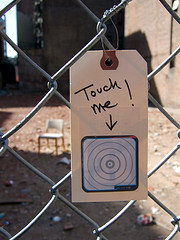 Researchers at the University of Washington are curious to see what effects RFID technology could have on social networking. To see what happens when the tags become ubiquitous, they installed two hundred antennae in and around a campus building and gave tags to twelve researchers. The results? Their every move is recorded by computer. [image by akaalias]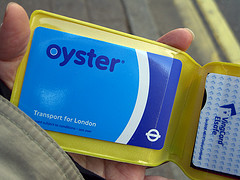

 From the annals of incredibly stupid things to do comes this one from the UK. Evidently someone (a junior official who’s probably been sacked by now) from the Revenue & Customs office thought it’d be a good idea to burn their database of people to a couple compact discs and send it off by unregistered post to the National Audit Office. The CDs contain personal records, “