Tag Archives: publishing

Amazon’s “Kindle Singles”: saviour of the genre short fiction scene?

Hard to say for sure, really, given that it hasn’t even launched yet, but Amazon’s plans for the “Kindle Singles” service – which in essence appears to be ebooks of the long short-story to novella length – certainly has the potential to put money in the pockets of genre fiction’s clade of short story writers. The shrinking circulations of the Dead-Tree Big Three aren’t looking like a long-term prospect for the short form’s survival, and hell knows that recent experiences right here have demonstrated that making the free-to-read webzine model sustainable is no picnic, either (though I hold hope for better-funded projects such as Lightspeed and Tor.com going the distance, alongside established non-profit outfits like Strange Horizons).

The real (and as yet unanswered) question is whether people would read (and pay for) short stories if they knew where to find them; the search-term browsability of a platform like Amazon certainly offers the potential to put short stories by known names in front of potential readers who might otherwise be ignorant of the form, and there’s plenty of good (albeit as yet entirely theoretical) arguments that short stories are better suited to the when-you-get-a-moment reading habits of the modern reader. I suspect the most important factor will be pricing, with a splash of gatekeepering and/or curating to filter for quality; if a writer hits the right price point and has a bit of luck with word-of-mouth, the potential is there to cut out the magazine middle-men and reach an untapped audience.

My concern (as a fussy reader and a critic) is that the market’s definition of quality will probably differ wildly from my own; the success of Dan Brown is a clear indication that this is inevitable. But if big digital sales of awful literature support an ecosystem that lets the little guys make a living, well, I think I’ll be able to live with it. Plus ça change, non?

Ebooks: with popularity comes piracy

Plenty of stories recently about the massive uptick in ebook sales (though many of them are playing a little fast and loose with the figures), but with an uptick of interest in an infinitely reproducible good comes a proportional uptick in people interested in getting it for free.

eBookNewser points to an Attributor study that seems to suggest the arrival of the jeebusPad – which has made some publishers very excited, perhaps by dint of being arguably the first piece of ereader-functional hardware with a bit of sexiness to it – has brought with it a 20% increase in search queries for pirated versions of ebooks.

Attributor began the project by investigating the relative importance of the cyberlocker sites (sites that store personal digital files) in the book space, including Rapidshare, Hotfile and Megaupload. Google Trends allowed Attributor to extract data and compare the relative importance of terms searched for pirated content.

The study showed that the popularity of Rapidshare as a host for pirated content has steadily declined since Attributor first raised awareness about the site in August 2009. However, other, smaller cyberlockers, have increased their position in the piracy market, with a 54 percent increase in overall demand for pirated material since August 2009.

Further, recent innovations and availability of new technologies has catalyzed e-book syndication opportunities. The chart below shows a spike in the demand for pirated e-books around May 2010, only one month after the release of the Apple iPad. More than 250 iPhone, iPad and iPod platform users searched for pirated copies throughout the study, pointing to the immediate need to raise awareness and education about syndication proliferation in the age of digital and mobile media.

ebook piracy stats from Attributor

[image ganked from Attributor article; contact for immediate take-down if required]

Now, I’m no stats boffin, but it looks to me that the green curve there is actually just continuing much as it was before the iPad’s arrival; the downtick around its launch date could be down to any number of factors, but I remain to be convinced (or have more thoroughly explained to me, perhaps) how the increase since then is out of character with the curve as it was before.

(Try holding a ruler up against the screen; the downtick from June 2009 to June 2010 looks to me more like a momentary anomaly than a trend that supplanted a previous trend only to be supplanted again.)

A generous helping of cynicism salt is required to season Attributor’s interpretations, of course, because they’re in the business of selling ‘solutions’ to the piracy problem (good luck with finding one that can’t be circumvented by a handful of bored teenagers with a crate of Mountain Dew, folks); their implicit demonisation of “content lockers” will be a familiar meme to those who follow the digital end of UK politics, also (content lockers enable piracy, therefore they should be banned or policed; no suggestion of banning cars for enabling people to be knocked over yet, though).

What’s fairly obvious and believable, though, is that demand for pirated ebooks is climbing steadily, and has been doing so consistently. And that spells trouble for anyone looking to make ebooks a part of their business model… indeed, I wouldn’t be surprised to see similar growth curves for interest in pirated music files from around the time when the first affordable mp3 players began to appear.

The publishing industry appears to have woken up and smelled the coffee much more quickly than the record labels did, but whether they can successfully cut the Gordian knot of abundance economics remains to be seen… and while it’ll doubtless mark me as a Doctorow 5th-columnist*, I feel pretty safe in saying that DRM and closed hardware isn’t the sword for the job.

[ * Content crypto-Marxist? Or, y’know, just a pragmatic realist? Depends on which angle you’re looking from, I guess. 😉 ]
Science journalism skewered

If you’ve not been linked to it already, you should definitely go and read this: “This is a news website article about a scientific paper“. It’s a real zinger; here’s the opening:

In this paragraph I will state the main claim that the research makes, making appropriate use of “scare quotes” to ensure that it’s clear that I have no opinion about this research whatsoever.

In this paragraph I will briefly (because no paragraph should be more than one line) state which existing scientific ideas this new research “challenges”.

If the research is about a potential cure, or a solution to a problem, this paragraph will describe how it will raise hopes for a group of sufferers or victims.

This paragraph elaborates on the claim, adding weasel-words like “the scientists say” to shift responsibility for establishing the likely truth or accuracy of the research findings on to absolutely anybody else but me, the journalist.

Ouch; it hurts because it’s true. The Grauniad is doing its best to rise above the clichés portrayed therein (as are a few other mainstream news venues), but there’s always one factor that tends to be overlooked in discussions of what makes for responsible good-quality science reporting… namely that the market for it is vanishingly small by comparison to sensationalist “OMG New Pill Cures Cancer, Expels Illegal Immigrants and Boosts House Prices!!!1” hucksterism.

The root cause of that, one assumes, is that a large percentage of the population is functionally illiterate in scientific terms. (Repeat after me: “correlation is not causation”…) Being realistic about it, in the current economic climate newspapers and websites will inevitably publish whatever pulls in traffic to eyeball the ads they run… and that’s the one major stumbling point for the no-paywall model of online publishing (a matter that is rather closer to my heart than I’d like right now, as shall be revealed later this week).

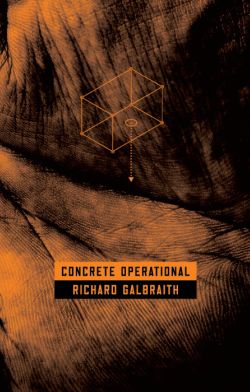
Concrete Operational – Novel writing, art, music and independent publishing

[ This is a guest post by Richard Galbraith. Richard got in touch to see if I’d like to review Concrete Operational here at Futurismic, and while I couldn’t promise a review for various reasons, I thought the project’s independence and mixed-media format might be of interest to regular readers, and offered him a turn at the podium. Feel free to ask questions in the comments! ]

Concrete Operational by Richard GalbraithConcrete Operational is my novel; it’s an independent release funded by the Arts Council England. That statement itself raises two quick questions: why indie, and how did you convince the English Arts Council to give you thousands of pounds to publish it? Well, this is where my journey into independent publishing, collaborative media, design, filmmaking, music production, art manufacturing and a host of other things came to being. Continue reading Concrete Operational – Novel writing, art, music and independent publishing

Advertising In Books

By most accounts, the publishing industry has been having a tough time of late, having to adapt to increased competition from the Internet and video games; falling sales; and the explosion of self-publishing and print-on-demand technologies. In addition, publishers are searching for ways to make e-books attractive and profitable, and like music publishers before them, they need to come up with new business models and new revenue opportunities.

One such opportunity is the inclusion of advertising in books, both print and electronic, and there are two ways this could happen:

  • Firstly, traditional ads could be included in the end pages of books, much as the old mail order ads for x-ray specs and sea monkeys used to be included in the backs of American comic books.
  • Secondly, and this is perhaps more interesting, interactive hyperlinks could be included within the actual text of the book itself.

If a character in the book drinks a particular brand of soft drink, a link could be included to a promotional landing page on that company’s website; or if the action takes place in New York or San Francisco, links could be included to hotels or tourist attractions in those cities.

Would this kind of advertising work, or would it put off more readers than it attracted, leading to further falls in sales? Could it revolutionise the publishing industry, or would it lead to less variety as advertisers pay only for space in books by big-name authors, leaving books by new writers struggling to attract finance?

Would you buy a book with advertising included in it, or does the very idea repulse you? Can you foresee advertising becoming ubiquitous in literature, or do you have alternative suggestions for the future of the publishing industry?

I’d like to hear your thoughts…

Gareth L Powell is the author of the novels The Recollection and Silversands, and the short story collection The Last Reef. He is also a regular contributor to Interzone and can be found online at www.garethlpowell.com