Tag Archives: robots

NEW FICTION: A PROGRAMMATIC APPROACH TO PERFECT HAPPINESS by Tim Pratt

I can’t tell you how proud I am to be introducing a story by Tim Pratt at Futurismic. Seriously; this isn’t a man short of professional venues for his wide-ranging fictional output, but he tells us he’s been keen to sell us a story for some time now, and “A Programmatic Approach to Perfect Happiness” rang Chris’s editorial bell in just the right way. It’s something a little different to our usual house style: a little Gonzo, a little retro, but all Tim Pratt. I hope you enjoy it!

A Programmatic Approach to Perfect Happiness

by Tim Pratt

My step-daughter Wynter, who is regrettably prejudiced against robots and those who love us, comes floating through the door in a metaphorical cloud of glitter instead of her customary figurative cloud of gloom. She enters the kitchen, rises up on the toes of her black spike-heeled boots, wraps her leather-braceleted arms around my neck, and places a kiss on my cheek, leaving behind a smear of black lipstick on my artificial skin and a whiff of white make-up in my artificial nose. “Hi Kirby,” she says, voice all bubbles and light, when normally she would never deign to utter my personal designation. “Is Moms around? Haven’t talked to her in a million.”

I know right away that Wynter has been infected.

I carefully lay my spatula aside. “Your mother is… indisposed.”

She rolls her eyes. “Whatever makes you two happy.” She flounces off toward her bedroom, the black-painted shadowy forbidden portion of our home that my wife April calls “the tumor.”

I go to our bedroom door, push it open gently, and say, “Darling, your post-coital brunch is ready, and I believe Wynter has been infected by the H7P4 strain.”

A groan emerges from the pile of blankets, straps, and oddly-angled cushions that constitutes our bed. “Oh, god. Which one is that again?”

“The one that makes you happy,” I say, and close the door on April’s sardonic laughter. Continue reading NEW FICTION: A PROGRAMMATIC APPROACH TO PERFECT HAPPINESS by Tim Pratt

Robots and demographics

apriattendaNews that Japanese company Toshiba are developing a houskeeping robot – ApriAttenda – designed specifically to care for the elderly:
Japan, with a high life expectancy and low birth rate, faces a shortage of caregivers for elderly people and has loosened its tight immigration rules to invite hundreds of nurses from the Philippines and Indonesia.

As aging of the population is a common problem for developed countries, Japan wants to become an advanced country in the area of addressing the aging society with the use of robots,” the official told AFP.

It also occurs to me that I’m due to shuffle into codgerhood around circa 2060. I wonder what fifty years of R&D on ApriAttenda, or this, could lead to…

[image and article from Physorg, Engadget, and this comment at Charlie’s Place]

DARPA to fund really tiny UAVs

navLike something out of an early Neal Stephenson novel: DARPA have agreed to fund a coin-sized one-bladed nanocopter[1], from the Defense Sciences Office design brief:

The Nano Air Vehicle (NAV) Program will develop and demonstrate an extremely small (less than 7.5 cm), ultra-lightweight (less than 10 grams) air vehicle system with the potential to perform indoor and outdoor military missions.

The program will explore novel, bio-inspired, conventional and unconventional configurations to provide the warfighter with unprecedented capability for urban mission operations.

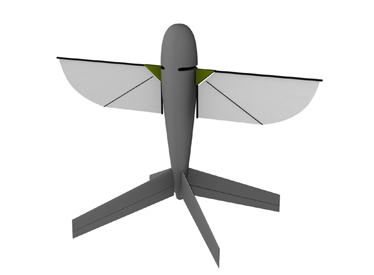
The nanocopter, called the Katana and designed by Lockheed Martin, is in addition to DARPA’s other micro-ornithopter robot concept (pictured here). Read here for more in depth background to the Katana’s progenitor, the Samurai.

[1] Although there doesn’t seem to be anything especially “nano” about it apart from being, y’know, really small.

[image and article from The Register]

BattlefieldMorality2.0

Terminator statueTo brighten your Monday morning, here’s some speculation on robot morality – though not one of the usual sources. Nick Carr bounces off a Times Online story about a report from the US Office of Naval Research which “strongly warns the US military against complacency or shortcuts as military robot designers engage in the ‘rush to market’ and the pace of advances in artificial intelligence is increased.”

Carr digs into the text of the report itself [pdf], which demonstrates a caution somewhat at odds with the usual media image of the military-industrial complex:

Related major research efforts also are being devoted to enabling robots to learn from experience, raising the question of whether we can predict with reasonable certainty what the robot will learn. The answer seems to be negative, since if we could predict that, we would simply program the robot in the first place, instead of requiring learning. Learning may enable the robot to respond to novel situations, given the impracticality and impossibility of predicting all eventualities on the designer’s part. Thus, unpredictability in the behavior of complex robots is a major source of worry, especially if robots are to operate in unstructured environments, rather than the carefully‐structured domain of a factory.

The report goes on to consider potential training methods, and suggests that some sort of ‘moral programming’ might be the only way to ensure that our artificial warriors don’t run amok when exposed to the unpredictable scenario of a real conflict. Perhaps Carr is a science fiction reader, because he’s thinking beyond the obvious answers:

Of course, this raises deeper issues, which the authors don’t address: Can ethics be cleanly disassociated from emotion? Would the programming of morality into robots eventually lead, through bottom-up learning, to the emergence of a capacity for emotion as well? And would, at that point, the robots have a capacity not just for moral action but for moral choice – with all the messiness that goes with it?

It’s a tricky question; essentially the military want to have their cake and eat it, replacing fallible meat-soldiers with reliable mechanical replacements that can do all the clever stuff without any of the attendant emotional trickiness that the ability to do clever stuff includes as part of the bargain. [image by Dinora Lujan]

I’d go further still, and ask whether that capacity for emotion and moral action actually obviates the entire point of using robots to fight wars – in other words, if robots are supposed to take the positions of humans in situations we consider too dangerous to expend real people on, how close does a robot’s emotions and morality have to be to their human equivalents before it becomes immoral to use them in the same way?

Life-size telepresence robots make their appearance

qa_1 A few years ago I seem to recall a spate of SF stories in Asimov‘s and elsewhere that dealt with the concept of telepresence: humans controlling robots at a distance, immersed in a virtual-reality world that made what happened to the robot feel much more real than merely sitting at a control panel manipulating a joystick.

Well, human-sized telepresence robots are beginning to make their appearance. California company Anybots debuted its Anybots QA telepresence robot at the Consumer Electronics Show in January (Via Gizmag):

The robot’s 802.11g wireless connectivity allows 20 FPS video at 640×480 resolution captured by the QA’s two 5MP color cameras and full duplex, high fidelity sound to be sent back to the user’s Mac or PC running the client software. A 7-inch color LCD screen in the QA’s chest can display the remote user to give long distance interactions that human touch while navigation comes courtesy of QA’s onboard 5.5 yard range LIDAR (Light Detection and Ranging), which functions like RADAR but uses light instead of radio waves.

Standing at 5 foot tall the QA can also bend to 2 foot high to interact more easily with people sitting. The robot’s rechargeable Li-ion battery gives 4-6 hours of operation and allows QA to reach speeds of up to 6 MPH on his two 12-inch diameter wheels.

The company is developing other robots that walk, jump and run on two legs. One of them reportedly has a fully articulated hand that will permit the operator to perform a wide range of tasks. The QA is expected to be available for purchase later this year at around $30,000 U.S.

Maybe someday we’ll all sit at home at a computer and send out robots to do our jobs and errands, and never leave the house.

Someone should make a movie about it…

Order your surrogate robot today!

(Image: Anybots.)

[tags]robots,telepresence,movies,gadgets[/tags]