Here in the UK the FON network is gradually reaching a point where people are aware of it. The company asks users to siphon off part of the wireless internet on their router and offer it up as a wireless node for other users. This can be done in the ‘Linus Torvald’ way of linux and be free or in the ‘Bill Gates’ way, giving the router owners a small cutback.
Back when the idea first came around there was little traction – the software wasn’t compatible with most routers and ISP. Meanwhile, most wireless nodes were incompatible with each other and you had to shell out a load of money to use each one. Now with ISPs like BT coming on board with the idea and many other wireless networks springing up all the time, it looks like much of the UK will have wireless access before too long. With content from the BBC becoming freely available over wireless nodes, it looks like complete connectivity throughout the country will be a reality sooner rather than later. Use this handy Londonist map to find free wireless points in London. By making the internet more freely available and decentralised we can use web 2.0 products that are less dependent on infrastructure, encouraging non-profit web solutions that benefit everyone.
For 150 years there have been plans to build a barrage across the Severn Estuary, close to where I live in Bristol, England. Yesterday the government revealed a new detailed study into the possibility of such a construction in the near future. The barrier would cross the Bristol Channel from near the Welsh capital of Cardiff across to Weston Super Mare, south of Bristol. The 16km-long barrage could provide as much as 40,000 jobs and provide a rail link between England and Wales.
This is an exciting development. The distance between Bristol and the corresponding coasts on the other side of the Atlantic Ocean causes a resonant frequency in the tides, causing one of the biggest tidal shifts in the world. If this plan were to go ahead it could provide 5% of all of the UK’s electricity demands. There are environmental concerns about wildlife but the formation of a cleanwater lake beyond the barrage may also create new habitats. Another option is a series of tidal pools such as the one being proposed as a test site near my hometown of Swansea.
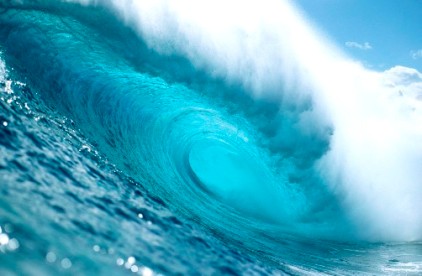
Today the UK government gave planning approval for the world’s first large scale wave farm off the coast of Cornwall in South West England. The project, dubbed Wave Hub, is a world first and will include an onshore substation connected to electrical equipment on the seabed about 16 kilometres (10 miles) offshore via a sub-sea cable. Wave Hub could generate enough electricity for 7,500 homes, directly saving 300,000 tonnes of carbon dioxide over 25 years. Because Wave Hub is also a research facility, it could create 1,800 jobs and put £560 million into UK economy over the same 25 year period.
I never realised that freedom was a finite resource; it would appear the failed efforts of our glorious leaders to export it to the Middle East have led to a major deficit at home. But hey, why worry? After all, if I’m doing nothing wrong, I have nothing to fear, right?
 Here in the UK the FON network is gradually reaching a point where people are aware of it. The company asks users to siphon off part of the wireless internet on their router and offer it up as a wireless node for other users. This can be done in the ‘Linus Torvald’ way of linux and be free or in the ‘Bill Gates’ way, giving the router owners a small cutback.
 Call me all the rude versions of “paranoid liberal” you want, but I’m getting very distressed at my homeland’s propensity for spying on its own citizens. The