
Tag Archives: UK

Shopping center tracking telephone ‘slug trails’

cell phone electronicsA bit of local news from my neck of the woods – the Gunwharf shopping centre (read as: ‘retail outlet experience’, or just ‘mall’) in Portsmouth is keeping a close eye on its customers by tracking their movements via their mobile phone signals. [image by A Magill]

A spokesperson explains that we shouldn’t be concerned: there’s no personal data captured, they’re just looking at what he charmingly refers to as ‘slug trails’:

“We can also see where people aren’t going or are not spending much time and can flag that up to businesses. We are trying to make the experience of shoppers better. If they are having a better experience they obviously spend more money and the shopping centre is happy.

The shopping centre may be happy, but the local population – now alerted to the matter – aren’t. Whether any of them will transcend their apathy enough to stop shopping there remains to be seen, however. In the meantime, I think I’ll set up a stall outside selling tin-foil phone sleeves …

Stem Cells show major breakthrough in treatment of Parkinson’s

Is this a cure or should we leave it alone?The UK parliament this week is considering a wide-reaching bill on stem-cell research. Under pressure from a number of religious groups, Prime Minister Gordon Brown has allowed MPs to have a ‘free vote’ on certain parts of the bill. There’s no doubt that stem cells are a tricky moral issue – are they to be considered alive, or just a group of cells like a skin transfusion?

Meanwhile, a study of stem cell use has shown that they can make a great deal of impact in reversing the effects and possibly curing Parkinson’s disease. Other degenerative diseases such as Alzheimers are also thought to be potentially cured by treatment with stem cells. The big advantage to this latest scientific discovery is that the mice in the study did not reject the stem cells, a major step forward in the useability of the treatment.

To be sure the issue is a very complex one. Is it better to not play around with cells taken from embryos, even those that would only be disposed of? Is it a can of worms best left alone or are the moral quandaries worth it for the difference that could be made to the many people with diseases stem cells are thought to help? It’s a difficult choice but one we’ll have to face in the coming decades. Scientists are making great advances in the field and sooner or later will produce cures for some diseases. We’ll have to choose whether it’s right to use them or not.

[picture via BBC]

The Independent reports on the rise of British Sea Power

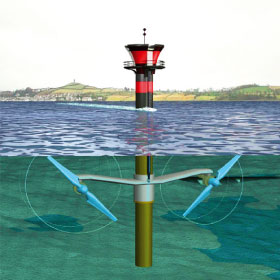
SeaGen has been running in Plymouth since 2003 and is looking to expandAs well as a popular indie band, British Sea Power is rapidly becoming more accepted as a valid alternative to nuclear and fossil fuel energy. Whereas the nuclear proponents in the UK civil service have previously neglected the sector (as London Mayor Ken Livingstone explains to Radiohead’s Thom Yorke in this week’s Observer Magazine), a number of companies in the UK have made great advances in harnessing the power of the oceans despite the lack of enthusiasm at government level.

The water around the British Isles makes it a key resource and as the Independent explains, could account for huge percentages of the electricity demand of the country. With a feasibility study into the Severn Barrage underway and products like SeaGen and Pelamis coming into use, it seems like the tide might be turning in more ways than one. Nuclear energy will undoubtedly be a factor in the UK’s future energy use but with such a huge resource sloshing around our coastlines it would to take advantage of this clean and renewable power source.

[picture by SeaGen]

Infrastructure for the twenty first century

San Francisco in 100 years time looks a little different…
The ever compelling Alex Steffen over at WorldChanging is talking about Infrastructure a lot lately. A lot of the US and much of the world is built on an infrastructure of highways, electric grids and waterways, which are struggling to keep up with population growth and increased costs, especially of fuels. Whilst new technologies like superfast trains and solar panels are good, they need investment in the infrastructure for it to work – as seen by Britain having to spend millions to replace track for the Eurostar because Margaret Thatcher chose the cheaper infrastructure in the eigthies, whilst the rest of Europe put in place track suitable for what became the TGV.

There’s a lot of interesting ideas out there, from Alexander Trevi’s use of carbon-harvesting nanocrystals and radiation reprocessing to produce a green ‘New Chernobyl’, to architects IwamotoScott‘s ‘Network Hydrology’ reimagining of a water and hydrogen-producing algae based 2100 San Francisco. There’s plans to artificially create a new river delta to protect the Louisiana coastline and Amsterdam might drain its canals to create a new underground subcity. Or what about BLDGBLOG’s idea to create housing projects in the same way people make zoos? By combining good design in new infrastructure with the inventions already out there we can start looking at a future way of living rather than just trying to extend the one we have beyond its lifetime. And is it coincidence that most of best ideas also look ridiculously cool?

[picture by IwamotoScott]

UK makes massive step towards wind power

Britain should see over 7000 offshore wind turbines by 2020The Secretary of State for Business, John Hutton is announcing a huge sea-change in the UK’s approach towards future power plants, with a massive 25Gw of offshore wind proposed to add to an existing 8GW of planned construction. This vast increase in wind power, in addition to the wave and tidal projects being tested in the Orkney islands, could power all of the UK’s homes by 2020.

It’s interesting to see this being portrayed not only as an environment issue but as a security issue, with Hutton saying:

“I do not want in 20 years’ time to find that whether the lights go on in the morning is down to some foreign government or someone else.”

With the North Sea oil and gas fields decreasing rapidly in production, the UK is losing its resource power. By investing in new renewable technology it can continue to be an important world power. Denmark invested in wind over the last decade and now has a £2billion industry. If only more nations would have this level of foresight.

[story and picture via European Tribune]

UPDATE: As requested in the comments, here is a more up to date (and more detailed) analysis of Danish wind power and their plans up to 2030.