Google Earth to Improve Resolution

earth.jpg
Photo Credit: NASA (via Wikimedia Commons)

DigitalGlobe, provider of imagery for Google Earth, will be launching a new satellite dubbed WorldView I next Tuesday, that will boost the accuracy of its satellite images to half-meter resolution. With that type of accuracy the satellite will now be able to pinpoint objects on the Earth at three to 7.5 meters, or 10 to 25 feet. Using known reference points on the ground, the accuracy could rise to about two meters. Additionally the satellite will be able to collect over 600,000 square kilometers of imagery each day, up from the current collection of that amount each week.

It seems that we are getting much closer to the CIC Earth application as envisioned by Neal Stephenson in Snow Crash, which was able to present real time satellite imagery.

[Via C|Net]

Future Surveillance Technology Can Tell How You Feel

 istock_000002545401xsmall.jpg

While the governments of the United States and Britain continue to deploy surveillance cameras at a startling pace, researchers in top universities and private laboratories are developing the next generation of surveillance technology.

The BBC recently published an article title “Big Brother is Watching Us All,” in which they highlight some of these new technologies:

Gait DNA, for example, is creating an individual code for the way I walk. [The] goal is to invent a system whereby a facial image can be matched to your gait, your height, your weight and other elements, so a computer will be able to identify instantly who you are.

And if being able to instantly identify an individual in a public crowd wasn’t enough, the same article reports on a tool under development that can look through walls and determine your emotional state:

Using radio waves, you point it a wall and it tells you if anyone is on the other side … and it turns out that the human body gives off such sensitive radio signals, that it can even pick up breathing and heart rates … “it will also show whether someone inside a house is looking to harm you, because if they are, their heart rate will be raised. And 10 years from now, the technology will be much smarter. We’ll scan a person with one of these things and tell what they’re actually thinking.” 

With this level of surveillance available within a decade, I can imagine whole industries springing up that will protect an individual’s privacy while in public and private spaces.  This begs two questions.  One, will governments allow such privacy protection products and services? And two, if you try to protect your privacy, will this just engender more surveillance of you because the government will assume you have something to hide?

[Via KurzweilAI.net]

Nanotechnology, bioengineering combine to make cheaper, better vaccines

Dendritic_cell: A screen clip from a video included in the journal article “Environmental Dimensionality Controls the Interaction of Phagocytes with the Pathogenic Fungi Aspergillus fumigatus and Candida albicans” So, for my first real post, how about some good news combining bioengineering and nanotechnology, making it very futurismic–er, futuristic. Whatever.

Researchers at the Ecole Polytechnique Fédérale de Lausanne in Switzerland have developed (and patented) a nanoparticle that, they believe, can deliver vaccines "more effectively, with fewer side effects, and at a fraction of the cost" of current vaccination methods.

Once upon a time, vaccines were made from dead-but-whole or living-but-weakened pathogens. Recently, researchers have figured out how to generate an immune response with a singe protein from a virus or bacterium. They’ve also discovered that the best way to get sustained immunity is to deliver an antigen directly to the specialized immune cells known as dendritic cells (DCs).

The trouble is, DCs aren’t all that common in skin or muscle, where injections are usually made, and in order to use them to activate the whole immune system, you also have to deliver a kind of "danger signal"–which there hasn’t been a good way to do, until now.

The new nanoparticles are so tiny they slip right through the skin and into the lymph nodes, where there are lots of DCs, and they carry a chemical coating that mimics the surface chemistry of bacterial cell walls. The result: a strong immune response without nasty side effects.

The researchers believe these nanoparticles could make it possible to vaccinate against diseases like hepatitis and malaria with a single injection, and at a cost of only a dollar a dose, far cheaper than current vaccines. The research team also plans to try using the technique to target cancer cells. And best of all, they say, the technique could be in use within five years. [Photo from Wikimedia Commons]

(Via Science Daily.)

[tags]health,medicine,nanotechnology,bioengineering[/tags]

Into the Futurismic

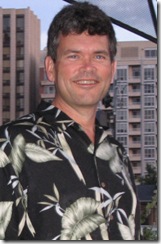
Greetings Futurismic readers. My name is Stephen Years and I’m one of the new contributors to the Futurismic blog. I’m a high-tech management professional and entrepreneur in California’s Silicon Valley. My current business endeavor is a start-up company that is focused on energy efficiency in data centers.

As a blogger I’m very interested in the intersection of technology, market-forces and culture – and how each changes and modifies the other in a bizarre, continuous feedback loop. As an example, I’m fascinated how the cost of energy is forcing the market to invest in alternative energy sources – and how those new energy sources, once employed significantly, will impact the geopolitical structure. What cultural forces will be unleashed in a Middle East deprived of its primary source of revenue?

I would like to thank Futurismic for this opportunity and I hope you will find my posts enlightening, entertaining and challenging.

My first Futurismic post: it’s all about me! Me! Me!

A photo of Edward Willett First posts are fraught with danger–"you never get a second chance to make a first impression," and all that–but at least in this instance the nerve-wracking decision of what to post about has been taken out of my hands: I’m supposed to introduce myself. (Which also removes the fear of blabbing on about something I know nothing about, I suppose: bonus!)

So. I’m Edward Willett, one of your new Futurismic bloggers. My interest in science fiction goes back to childhood, thanks to the corrupting influence of my two older brothers, and my interest in science stems very much from my interest in SF. I was born in New Mexico, but moved to Weyburn, Saskatchewan, Canada from Texas when I was eight. I studied journalism and art at Harding University in Arkansas, then returned to Weyburn, where I was a newspaper reporter/photographer/columnist/editor/cartoonist (it was a smallish paper) for eight years, before chucking it all in and becoming communications officer for the Saskatchewan Science Centre here in Regina, where I now live.

In 1993 I dumped the workaday life to become a fulltime freelance writer. I’m the author of more than 30 books. First came computer books, then I branched into children’s nonfiction, which I continue to write, on topics that have run the gamut from Ebola Virus to the Iran-Iraq War to biographies of Jimi Hendrix, Orson Scott Card, Janis Joplin and J.R.R. Tolkien (coming soon: Johnny Cash and Andy Warhol!). I’ve also written adult non-fiction, including Genetics Demystified for McGraw-Hill.

Somewhere along the way I sold a few young adult science fiction and fantasy novels to small publishers. In 2005 I sold my first adult science fiction novel, Lost in Translation, to Five Star, and in 2006 DAW Books put it out in mass-market paperback. I have a new science fiction novel, Marseguro, coming out from DAW in February.

I’m the administrative assistant for SF Canada, the association of professional speculative fiction writers of Canada, and maintain the SF Canada news blog. My own personal blog is here.

I write a weekly newspaper science column, which I also podcast. I’m married to a telecommunications engineer and have one daughter. (Oh, and on the side, I’m a professional actor and singer, so if I sneak in a few references to SFnal musical theatre productions, you’ll know why.)

Whew! I’m glad that’s out of the way. That’s way more than enough about me. Now I can think about my first real post…

[tags]bloggers, Futurismic, staff[/tags]