 Last week both Jeremy and I blogged about the promising developments of Nanowires, which have the prospect of making tiny supercomputers, possibly powered by solar. Although the current method of growing the tiny wires like grass is fascinating, it is very inefficient. To make any of these technologies useable in the real world, vast improvements in the creation of nanowires will be needed. The National Institute of Standards and Technology have improved that by adapting techniques used in the semiconductor industry. By putting tiny amounts of gold into the substrate, they can make up to 600 tiny transistors from one batch of nanowires. The field of Nanoscience still has a long way to go but with advances like this happening all the time, we’re getting closer.
All posts by Tomas Martin
Organic food proven to be better for you
 With the organic food market growing and growing, it’s easy to wonder just how much difference it makes. Are just paying more for the same input to our bodies? A group of food scientists grew a number of different crops and animal produce, one lot entirely organic, the other non-organic. They found that organic fruit, vegetables and especially milk had more antioxidants and healthy fatty acids. It’s interesting to note that the most technologically advanced option isn’t always the best one – future agriculture will have to combine new inventions with older techniques if it wants to hit the sweet spot of good food. Now I’m glad I got that subscription to Abel and Cole veg boxes.
Making the internet more like E-Coli
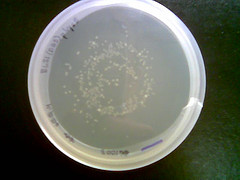 There’s fascinating article on Discover today about a control theorist called John Doyle working on ways to improve internet speeds. He compares the structure of the internet to the E-Coli bacteria – both structures resemble a bow tie in the way they homogenize information or DNA into a small knot in the centre then spread them out to their respective destinations. With the oncoming prospect of RFID on most products and wireless nodes popping up all over the place, having an internet structure that doesn’t collapse under the weight of all the signals broadcast across it is essential. Doyle thinks that by letting computers use more information about internet traffic flow and speed, they can use the quickest route more easily, speeding up transmission of data by a huge amount.
Foldable, crushable Epaper offers glimpse at the future of textual media
 Some media have crossed into the digital realm so completely the older version is struggling. Music seems to be first on the chopping block, with DRM-free mp3s small, easily transported and potentially cheaper yet still providing artists with a living, whether by the Radiohead route or by promoting their tours. Television is feeling the pinch, with UK police shutting down the popular link site tv-links earlier this week (although they don’t know if they can actually charge him with anything for just providing links to non-hosted content). The MPAA has been fighting new media for years but movies are becoming legally available on sites like Jaman and Joost.
As of yet print media hasn’t caught on. There’s some ebook piracy and sales out there but the share is small – authors like Cory Doctorow and Charles Stross have seen increases rather than decreases in their book sales by offering their ebooks for free. More and more people use blogs and online newspapers for current events but staring at a computer screen isn’t conducive to reading long tracts of text. Whilst the short story market is dwindling, there hasn’t really been a consistent idea about what will replace chapbooks and magazine.
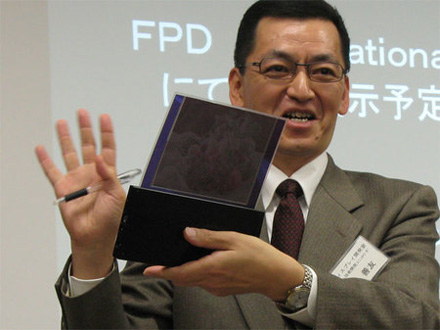
Advances in epaper might be getting us to the point where that might happen. Bridgestone’s new epaper that bends and folds like real paper whilst displaying digital information is a really promising start. Together with advances in wireless internet coverage and computer size, epaper offers a promising new business model for fiction, especially shorter works. Imagine subscribing your epaper to posts on economy from the Guardian, breaking news from the Washington Post, sport highlights from nfl.com and BBC, fiction from Asimovs and Strange Horizons and maybe a few stories and posts from Futurismic, all arriving on publication to the paper in your hands, ready to read. But like all these new media markets, it’ll need to be sustainable, DRM-free and reasonably priced. Are we prepared to make that change?
CO2 rising 25% faster than previously thought – a SF Call to Arms
 Climate scientists released a scary report this week saying that global warming is likely to be both ‘stronger than expected and arrive earlier than expected’. Since 2000 large spikes in releases of the gas have seen the amount in the atmosphere grow much faster than expected when the Kyoto treaty was drawn up in 1990. The principle reasons for this increase include the growing economy, China’s increased use of coal and most worryingly, a decrease in the amount of absorption by the world’s natural ‘sinks’.
The UK and New Zealand have both had news stories this week with ministers seeking to go back on ‘unrealistic’ Carbon emission cuts. The problem for all these countries is as the world economy is in such a delicate balance right now (and always, you could argue), to be the first one to start making the drastic changes neccessary means a massive hit to your economy and job market. 12 States including California and New York are sueing the US government for failing to do enough about the problem. All across the news, there are gloomy tales of doom if we don’t change but very little positives highlighted of changing to a less energy intensive future.
SF Writers have a huge part to play in all this. I’m not saying we should all run off and become Mundane. However, science fiction has a capacity to inspire unlike any other genre – just look at the Space Race to see the dreams of the genre in action in the real world. At the moment people understand global warming is a problem. They just don’t have an image in their head of what can replace the current state of affairs. Most of the books that deal with climate change are overwhelmingly apocalyptic, offering no respite and little hope. If we as SF writers can paint a picture of a future where we have adapted to the problems globalisation has caused us without the world ending or life becoming depressingly morbid, we can achieve something that few people are able to do. We can stop scaring people into change and start inspiring them.