 J Storrs Hall of the Foresight institute comments on what the earliest nanofactories will be like, and Michael Anissimov responds:
If nanofactories work at all, they will be very powerful. A nanofactory would be a very complicated, “huge” thing. The Center for Responsible Nanotechnology compares the complexity of a molecular assembler to that of a Space Shuttle. I think the analogy would be apt for a nanofactory as well. We are talking about a miniature factory with more moving parts and individual computers than a typical 100 million-dollar modern factory today. Difficulties with the basic technology will manifest themselves in the pre-nanofactory stage, working with individual assemblers or small ensembles of assemblers. If you’ve made it all the way to nanofactory-level MNT, you’ve already jumped the primary technological hurdles.
A point of disagreement between Anissimov and Hall is the precise definiton of “nanofactory.” Is it simply a general term for a device that can create many other things including a copy of itself, or it is a specific desktop-scale universal assembler?
Assuming the latter definition, Anissimov argues that widespread adoption of desktop nanofactories will happen much more rapidly than that of personal computers because:
There are simply too many moving parts for micromanagement to be possible — either the “code-level” operations are automated or they haven’t been established yet.
Either they work or they don’t. The smallest replicating unit is equivalent to the transistor in a personal computer – to the user it is expected to behave as a black box that performs a specific function – and if it fails to there is not much the user can do about it (if a transistor fails on a microchip can it even be repaired?).
The appropriate analogy is therefore between computers and nanofactories is between the existence of nanofactories and the existence of microchips. Microchips have found their way all over the place…
If Anissimov is right then it raises the interesting possibility that mature, desktop-scale nanofabrication may achieve widespread consumer adoption over a startlingly short period, given the ability of the machine to make copies of itself and the fact if it fulfils its basic function then it can become incredibly useful to many people very quickly.
[via Next Big Future][image from jurvetson on flickr]
 Alex at the Yorkshire Ranter reviews The Accidental Guerrilla by David Kilcullen and discusses how the strategy behind Al-Qa’ida-inspired terrorism can be thought of in the same terms as an auto-immune disease:
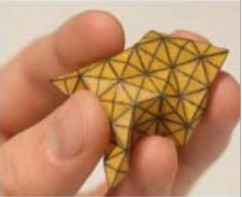 DARPA are still at it busily inventing the all the science-fictional goodness we expect and deserve. Now they’re going in for programmable matter, of a similar flavour to that found in Fire upon the Deep by Vernor Vinge, Accelerando by Charles Stross, and Dune: The Butlerian Jihad by Brian Herbert and Kevin J. Anderson. The goal of the
  Researchers at MIT
  Turns out viruses are good for more than just