All posts by Tom James

First artificial organelle

artificial_organelleResearchers have developed an artificial cellular organelle to aid in the development of artificial synthesis the life-saving anti-clotting drug heparin:

Scientists have been working to create a synthetic version of the medication, because the current production method leaves it susceptible to contamination–in 2008, such an incident was responsible for killing scores of people. But the drug has proven incredibly difficult to create in a lab.

Much of the mystery of heparin production stems from the site of its natural synthesis: a cellular organelle called the Golgi apparatus, which processes and packages proteins for transport out of the cell, decorating the proteins with sugars to make glycoproteins. Precisely how it does this has eluded generations of scientists.

To better understand what was going on inside the Golgi, Linhardt and his colleagues decided to create their own version. The result: the first known artificial cell organelle, a small microfluidics chip that mimics some of the Golgi’s actions.

As well as the utility of being able to produce drugs in this way, it is impressive the degree of control that can be exerted over the matter:

The digital device allows the researchers to control the movement of a single microscopic droplet while they add enzymes and sugars, split droplets apart, and slowly build a molecule chain like heparin.

[from Technology Review, via KurzwailAI][image from Technology Review]

Wintermute vs. Rachel Rosen

aiHere is a fine exploration of the differences and similarities in the use of artificial intelligences in Philip K. Dick and William Gibson’s writing:

Turing, whose purpose is to prevent AIs from developing too far, mirror the bounty hunters in Androids — the sole purpose of each is to control and destroy rogue intelligences, although in both novels their roles are shown from very different perspectives. In Neuromancer Turing are genuinely afraid of AIs: “You have no care for your species,” one Turing agent says to Case, “for thousands of years men dreamed of pacts with demons”.

Both Do Androids Dream of Electric Sheep? and Neuromancer portray artificial intelligences as lacking in empathy, but in different ways and for different reasons.

But would a human equivalent AI necessarily be lacking in empathy? Are humans as empathetic as we’d like to believe?

[via this tweet from SciFi Rules][image from agroni on flickr]

Games and economic misbehaviour

wolfram_fractalsGeorge Dyson has an excellent and compelling essay on game theory, economics, information theory, computer science, banking, finance, technology, and John von Neumann:

We are surrounded by codes (some Turing-universal) that make copies of themselves, and by physical machines that spawn virtual machines that in turn spawn demand for more physical machines. Some digital sequences code for spreadsheets, some code for music, some code for operating systems, some code for sprawling, metazoan search engines, some code for proteins, some code for the gears used in numerically-controlled gear-cutting machines, and, increasingly, some code for DNA belonging to individuals who serve as custodians and creators of more code. “It is easier to write a new code than to understand an old one,” von Neumann warned.

The monograph over on Edge discusses von Neumann’s intellectual antecendants and the development of game theory and statistical modelling. It also includes some interesting commentary on our recent economic difficulties. Definitely worth a read.

[image from kevindooley on flickr]

Re-engineering biology

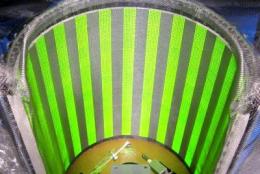
roboticsinsiAs I’ve mentioned before, we’re entering a new phase of technological progress: engineers and technologists are not just seeking inspiration in the mechanisms of the natural world, but are actually reverse- and re-engineering biology to improve synthetic technology. In this case researchers in Germany are studying how bow flies perform their incredible feats of aerial acrobatics by creating a wind tunnel for blow flies (pictured):

A fly’s brain enables the unbelievable – the animal’s easy negotiation of obstacles in rapid flight, split-second reaction to the hand that would catch it, and unerring navigation to the smelly delicacies it lives on.

Yet the fly’s brain is hardly bigger than a pinhead, too small by far to enable the fly’s feats if it functioned exactly the way the human brain does. It must have a simpler and more efficient way of processing images from the eyes into visual perception, and that is a subject of intense interest for robot builders.

While researchers use biomimetic inspiration for the development of flying robots other scientists are working to reprogram existing biological technology, in this case altering bone marrow stem cells so that they function as retinal cells:

University of Florida researchers were able to program bone marrow stem cells to repair damaged retinas in mice, suggesting a potential treatment for one of the most common causes of vision loss in older people.

The success in repairing a damaged layer of retinal cells in mice implies that blood stem cells taken from bone marrow can be programmed to restore a variety of cells and tissues, including ones involved in cardiovascular disorders such as atherosclerosis and coronary artery disease.

For all the pessimism about the future of human civilisation, it is exhilerating to live in an era with so many opportunities and challenges.

[both from Physorg][image from Physorg]

Digital Rosetta stone

stone_writingJapanese researchers are developing a means of storing data for periods of thousands of years, to help solve the problem of an imminent digital dark age:

The team, led by Professor Tadahiro Kuroda of Tokyo’s Keio University, has proposed storing data on semiconductor memory-chips made of what he describes as the most stable material on the Earth – silicon.

Tightly sealed, powered and read wirelessly, such a device, he claims, would yield its digital secrets even after 1000 years, making any stored information as resilient as it were set in stone itself.

It’s a realisation that moved the researchers to name the disc-like, 15in (38cm) wide device the “Digital Rosetta Stone” after the revolutionary 2,200-year-old Egyptian original unearthed by Napoleon’s army.

This is a very similar concept to the Long Now Foundation’s Rosetta Disk, which is intended to be a very-long-term record of contemporary languages.

It is encouraging to know this problem is being studied and so many groups are looking for solutions.

[from the BBC][image from bwhistler on flickr]